


Listen to the article
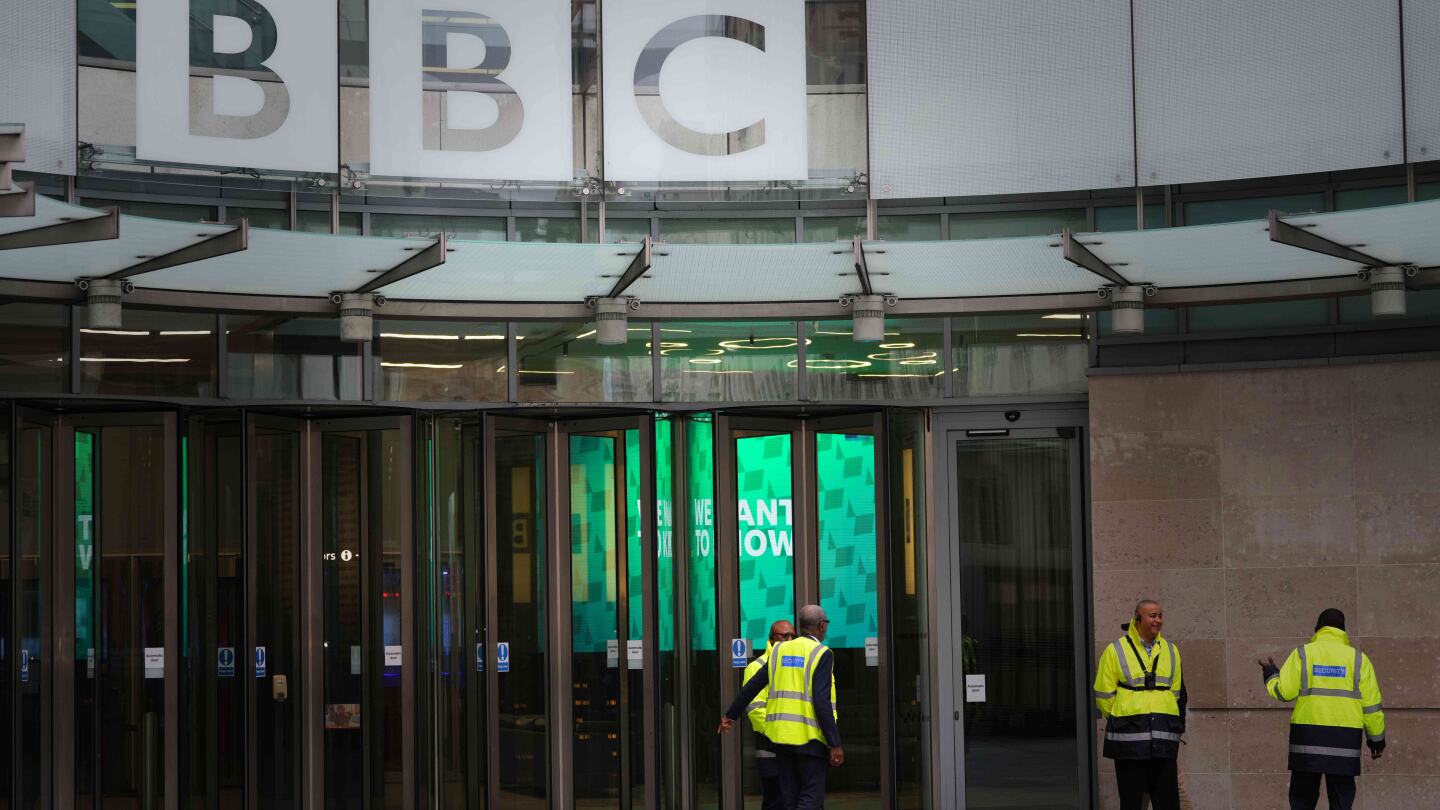
In the space of a few months, video editing practices in journalism have sparked major controversies involving President Donald Trump, leading to significant consequences for media organizations around the world. The latest casualty is Britain’s BBC, where both director-general Tim Davie and news chief Deborah Turness resigned this week following accusations of bias in a documentary about the former president.
The controversy centers on “Trump: A Second Chance,” a BBC documentary that admitted to splicing together quotes from different sections of Trump’s January 6, 2021 speech to create the impression he was directly inciting violence. The edited version combined statements made nearly an hour apart: “We’re going to walk down to the Capitol and I’ll be there with you. And we fight. We fight like hell.” The documentary also omitted portions where Trump called for peaceful demonstration.
This isn’t the first editing controversy involving Trump. CBS parent company Paramount Global recently agreed to a $16 million settlement with Trump over editing in a “60 Minutes” interview with Kamala Harris. Complaints from Homeland Security Secretary Kristi Noem about her “Face the Nation” interview led CBS to change its interview policy for that program.
“In a different time, the BBC episode would likely have led to a quick admission of a mistake, a correction, apology and everyone would have moved on,” said Mark Lukasiewicz, former NBC News executive and current dean of Hofstra University’s School of Communication. “But in an era where every editing decision taken in a newsroom is now under a microscope and can be weaponized for political purposes, it’s got to be something that is causing real caution in newsrooms all over the world.”
Trump has repeatedly used accusations of media bias as a political tool, restricting access for outlets like The Associated Press, filing lawsuits against The New York Times and Wall Street Journal, and cutting funding for public broadcasting over coverage he dislikes.
Video editing, once a behind-the-scenes technical process, has become increasingly scrutinized. Media organizations face constant pressure to condense complex material for time-constrained formats while maintaining accuracy and context.
Past controversies highlight the risks. NBC News faced backlash over a decade ago for editing George Zimmerman’s comments about Trayvon Martin in a way that suggested racial profiling. Katie Couric apologized in 2016 when an editor inserted an eight-second pause after she questioned gun rights activists, making it appear they had no response.
Jamie Hoskins, a former news producer who teaches at Syracuse University, emphasizes ethical editing practices to her students. “I talk about that in every class at every level,” she said. “You don’t want to mischaracterize what people are saying or change their meaning by piecing things together.”
The media landscape has grown more complex with the proliferation of short-form video on platforms like TikTok and Instagram, creating additional pressure on journalists. The emergence of AI-generated fake videos adds another layer of concern. Recently, racist videos falsely depicting Black food assistance recipients complaining about benefits during the government shutdown spread online, even briefly appearing in a Fox News digital story before correction.
“We live in a world now where people can get content from everywhere,” Hoskins noted. “There is a difference between content and journalism.”
In response to these controversies, news organizations are adapting their practices. After Noem’s complaints, CBS announced that “Face the Nation” would only air live interviews or taped interviews in their entirety. More networks are publishing complete, unedited transcripts of major interviews online to provide transparency.
CBS News immediately released a full transcript when it aired a pre-taped interview with Trump on November 2, but didn’t publish the Harris transcript for over three months—not until Trump had sued and the FCC launched an investigation.
“I don’t think the practices and standards are worse today than they were a few years ago,” Lukasiewicz observed. “I think the consequences of mistakes are more serious than perhaps they used to be,” he added, citing politicians’ willingness to seize on editing errors for political gain.
In an interview with Fox News on Tuesday, Trump indicated he plans to sue the BBC over the documentary editing. “I guess I have to,” he said. “Because I think they defrauded the public and they’ve admitted it.”
Fact Checker
Verify the accuracy of this article using The Disinformation Commission analysis and real-time sources.

10 Comments
Interesting how video editing has become such a sensitive issue, especially when it comes to politically charged content. It highlights the need for transparency and accuracy in journalism, even in the face of intense scrutiny.
Absolutely. Responsible media practices are critical to maintain public trust, regardless of the political affiliations involved.
The Trump-era has definitely heightened the significance of video editing in journalism. Media outlets need to be extremely careful and transparent to avoid accusations of bias or manipulation, even if unintentional.
You’re right. Perception can be just as important as reality when it comes to media credibility in these highly polarized times.
This is a complex issue that speaks to the challenges of maintaining journalistic integrity in a highly polarized media landscape. Responsible video editing practices are essential, but can also open the door to accusations of bias.
Absolutely. It’s a delicate balance that media organizations must navigate carefully to preserve their credibility and public trust.
This highlights the challenges media organizations face in an era of heightened political tensions and scrutiny. Careful video editing practices are essential, but can also open the door to accusations of bias.
It’s concerning to see the consequences that media organizations like the BBC are facing over video editing issues. Maintaining journalistic integrity is crucial, but it’s a delicate balance in today’s divisive political climate.
Agreed. Transparency and adherence to the highest editorial standards are critical, even in the face of intense political pressure.
The Trump era has certainly raised the stakes when it comes to video editing in journalism. Media outlets need to be extremely diligent to avoid any perception of bias or manipulation, even if unintentional.