


Listen to the article
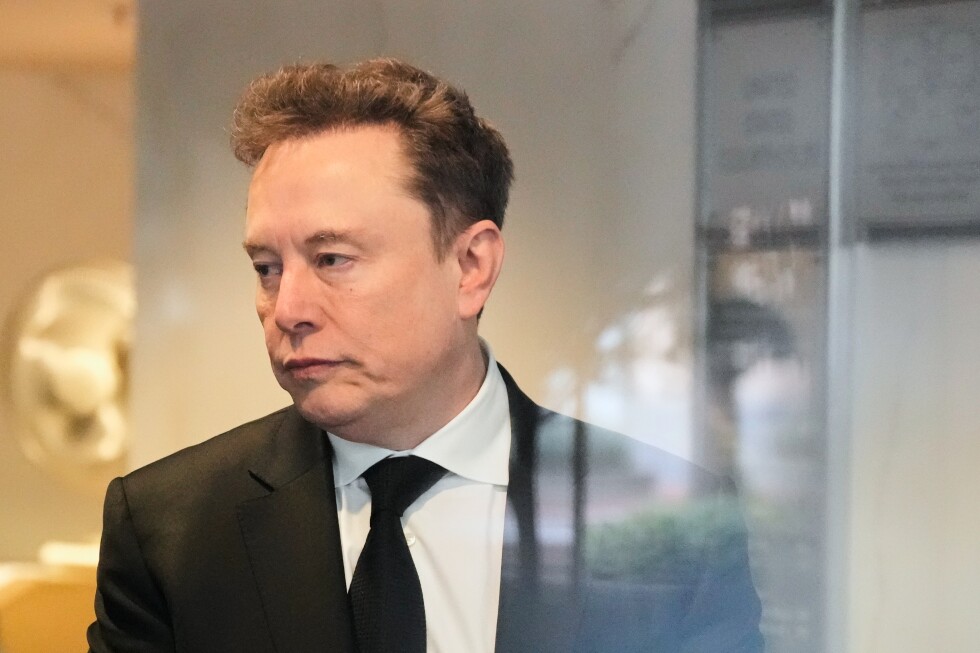
Elon Musk took the witness stand Tuesday in an Oakland, California federal courthouse, launching what promises to be a three-week legal battle centered on the future of artificial intelligence development. The billionaire Tesla CEO and world’s richest person is suing his former friend Sam Altman, along with OpenAI co-founder Greg Brockman and tech giant Microsoft, in a case that could significantly reshape the AI industry.
“Fundamentally, I think they’re going to try to make this lawsuit very complicated, but it’s actually very simple,” Musk testified. “Which is that it’s not OK to steal a charity.”
The civil lawsuit, filed earlier this year, alleges that Altman and Brockman betrayed OpenAI’s founding mission to be a steward of revolutionary technology for humanity’s benefit rather than financial gain. Musk’s attorney, Steven Molo, emphasized this point by quoting OpenAI’s original mission statement, which established the organization as a nonprofit intended to benefit humanity without constraints of generating wealth for individuals.
Musk is seeking damages and Altman’s removal from OpenAI’s board. OpenAI, now valued at $852 billion, has dismissed Musk’s claims as an attempt to undermine its rapid growth while boosting his own competing AI venture, xAI, which he launched in 2023.
The courtroom battle reveals a stark contrast in narratives about OpenAI’s transformation. William Savitt, representing OpenAI, countered that “we are here because Mr. Musk didn’t get his way with OpenAI.” According to Savitt, Musk himself attempted to take control of OpenAI and merge it with Tesla, allegedly wanting to form a for-profit company in which he would own more than 50%.
Savitt further claimed there is no record of promises that OpenAI would remain a nonprofit forever, suggesting Musk’s primary concern was winning the “AI race” against Google rather than preserving OpenAI’s nonprofit status.
Molo argued that by 2017, approximately two years after OpenAI’s founding, the organization recognized its need for additional funding. The founders eventually decided to create a for-profit arm of OpenAI that would support the nonprofit, with investor returns capped to prevent “infinite profit.”
“There is nothing wrong with a nonprofit having a for-profit subsidiary, but it has to advance the mission,” Molo said.
The lawsuit centers on Microsoft’s initial $2 billion investment in OpenAI, followed by a 2022 deal that Molo described as a “game-changer” that violated “every commitment” OpenAI had made. According to Musk’s legal team, this arrangement transformed OpenAI from an open-source organization into a for-profit company benefiting the defendants, with Microsoft gaining control of significant intellectual property through licensing agreements.
During his testimony, Musk shared details of his life story, from leaving South Africa at 17 to working as a lumberjack in Canada before coming to the United States and founding multiple companies including SpaceX and Tesla. When asked how he manages his numerous ventures, Musk said he works 80 to 100 hours weekly and doesn’t take vacations or own luxury items like vacation homes or yachts.
Musk also expressed his views on artificial intelligence, predicting AI could become “smarter than any human” as early as next year. He compared superintelligent AI to raising a child, noting that while you can’t control the child once grown, you can instill values like honesty, integrity, and goodness.
The Tesla CEO recounted his version of OpenAI’s founding, which he said originated from a conversation with Google co-founder Larry Page, who allegedly called Musk a “specieist” for prioritizing humanity’s survival over AI. Court evidence indicates Musk and Altman’s partnership formed in 2015 when they agreed to develop AI more responsibly than profit-driven companies led by Page, Sergey Brin, and Mark Zuckerberg.
Musk acknowledged early discussions about alternative funding sources for OpenAI beyond donations, stating he wasn’t opposed to a for-profit arm, but “the tail shouldn’t wag the dog.” He envisioned profit limits and expected the for-profit entity to dissolve once artificial general intelligence was “figured out.”
The high-profile trial, expected to continue for three weeks, will include testimony from OpenAI CEO Sam Altman and Microsoft CEO Satya Nadella, who helped fund ChatGPT’s late 2022 release—the chatbot that sparked the current AI boom driving stock markets to record heights.
Altman’s court appearance likely prevented him from attending an Amazon event in San Francisco where both companies announced an expanded partnership. In a prerecorded video message to attendees, Altman said, “I wish I could be there with you in person today. My schedule got taken away from me today.”
Musk is scheduled to continue his testimony on Wednesday as the trial unfolds.
Fact Checker
Verify the accuracy of this article using The Disinformation Commission analysis and real-time sources.

10 Comments
Musk’s allegation that Altman and Brockman betrayed OpenAI’s founding mission is a serious charge. The outcome could have significant implications for how AI companies balance public benefit and financial interests going forward.
You’re right, this case really highlights the tension between the public good and profit motives in the AI industry. I’m curious to see how the judge weighs those competing priorities.
This trial could have major ramifications for the entire AI industry. I hope both sides present their cases fairly and transparently, so the public can better understand the complex issues at stake.
Elon Musk is known for his bold moves, but suing his former friend Sam Altman is a high-stakes gamble. The outcome could cement Musk’s legacy as a tech visionary or paint him as a litigious egomaniac.
You raise a good point. Musk is a polarizing figure, and his motivations will likely be heavily scrutinized throughout this trial. The public perception of the winner could be just as important as the legal ruling.
As an investor in mining and energy, I’ll be watching this trial closely. The development of advanced AI could have major impacts, both positive and negative, on those industries. This will be an important test case.
This trial is shaping up to be a high-stakes battle over the future of AI development. It will be interesting to see how Musk and Altman’s differing visions for AI stewardship play out in the courtroom.
Musk’s claim that Altman and Brockman ‘stole a charity’ is a bold accusation. I’m curious to see what evidence he presents to back up that assertion and how OpenAI responds in their defense.
As someone interested in the future of mining and energy technologies, I’ll be following this trial closely. The development of advanced AI could potentially revolutionize those industries, for better or worse.
Absolutely. The outcome of this trial could shape the direction of AI innovation in ways that significantly impact industries like mining and energy. It’s a high-stakes case to watch.