


Listen to the article
U.S. consumer confidence showed a modest increase in April, despite growing concerns over rising energy prices triggered by the ongoing war in Iran, according to data released Tuesday by the Conference Board.
The consumer confidence index edged up to 92.8 in April from 92.2 in March, marking the second consecutive month of gains. However, the reading remains close to its lowest level since the COVID-19 pandemic, indicating persistent unease among American consumers.
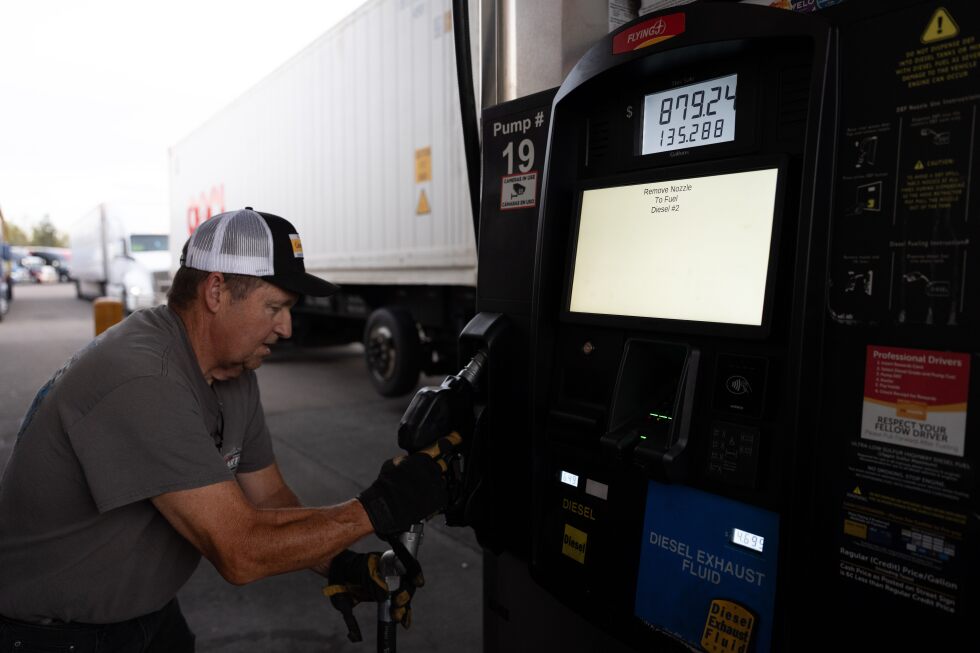
Comments from survey respondents increasingly mentioned concerns about prices, oil, gas, and the war in Iran as the national average for a gallon of gasoline in the U.S. climbed to $4.18 this week. This represents an increase of more than a dollar since the beginning of the conflict. American drivers haven’t collectively paid this much at the pump since nearly four years ago, following Russia’s invasion of Ukraine.
The surge in gasoline prices has significantly impacted inflation figures. Consumer prices rose 3.3% in March compared to a year earlier, according to the Labor Department, up sharply from February’s 2.4% increase. This represents the largest yearly increase since May 2024. On a monthly basis, prices jumped 0.9% from February to March, the biggest monthly increase in nearly four years.
March’s inflation report is particularly significant as it provides the first comprehensive look at how the Iran conflict is affecting prices. The dramatic rise in gasoline costs is putting additional strain on lower- and middle-income households, making it increasingly difficult for them to afford other necessities such as food and housing.
“Consumers are singing the blues,” said Heather Long, chief economist at Navy Federal Credit Union. “They aren’t happy with high prices for gas, housing, electricity and many other items. It’s clear consumers aren’t going to feel much better until there’s an end to the Middle East conflict.”
Even before the Iran war caused spikes in oil and gas costs, inflation was proving persistent. Government data released earlier this month showed that the Federal Reserve’s preferred inflation gauge increased by 2.8% in February compared to the previous year.
The combination of already elevated prices and the prospect of further inflation due to the Iran conflict has complicated the Federal Reserve’s monetary policy decisions. As the Fed concludes its two-day meeting on Wednesday, analysts expect the central bank to hold its benchmark interest rate steady.
The Federal Reserve had cut its benchmark rate three times toward the end of 2025 to support a weakening labor market. However, with inflation remaining above the Fed’s 2% target, the central bank has kept rates unchanged at its last two meetings. Lower interest rates can potentially exacerbate inflation pressures, a risk the Fed appears unwilling to take in the current environment.
Tuesday’s Conference Board report contained additional concerning signals. The measure of Americans’ short-term expectations regarding income, business conditions, and job market prospects rose 1.2 points to 72.2, but remained well below the critical threshold of 80 – a level below which economists often interpret as a recession warning sign. This marks the 15th consecutive month that this reading has stayed below the 80-point threshold.
Meanwhile, the index measuring consumers’ assessment of current economic conditions decreased slightly by 0.3 points to 123.8, suggesting that Americans’ perception of present economic circumstances remains somewhat strained despite the slight improvement in overall confidence.
The persistent consumer pessimism, combined with rising inflation and geopolitical tensions, presents significant challenges for policymakers as they attempt to navigate the economy through these turbulent times.
Fact Checker
Verify the accuracy of this article using The Disinformation Commission analysis and real-time sources.

8 Comments
The war in Iran is clearly having ripple effects on the US economy. I wonder if we’ll see a further dip in consumer confidence if the geopolitical situation worsens and fuel prices continue to climb. Maintaining economic stability will be crucial in these uncertain times.
$4.18 per gallon is a hefty price to pay at the pump. This must be squeezing household budgets, especially for lower-income Americans. I hope we see some relief on energy costs soon to ease the burden on consumers.
Agreed, high gas prices disproportionately impact those with less financial flexibility. Policymakers will need to find ways to provide targeted relief to the most vulnerable consumers.
Interesting to see consumer confidence ticking up despite the gas price shock. I wonder if this reflects resilience in the economy or just people getting used to higher prices. Either way, it will be important to watch how rising costs impact consumer spending in the coming months.
You raise a good point. The resilience may be temporary if inflation continues to erode purchasing power. The Fed will need to carefully balance tackling inflation while avoiding a hard landing.
With inflation running hot, it’s understandable that Americans would feel uneasy about the economic outlook. However, the modest uptick in confidence is an encouraging sign that the consumer may still have some resilience. The Fed will need to thread the needle carefully to curb inflation without triggering a recession.
Well said. The Fed’s challenge is to find the right balance between controlling inflation and avoiding an overly aggressive tightening that could derail the recovery. Careful policymaking will be essential in the months ahead.
The surge in gas prices is really squeezing household budgets. I hope we see some relief on the energy front soon, as this will be crucial for sustaining consumer confidence and spending power. Policymakers have a delicate balancing act ahead of them.