


Listen to the article
Chinese Astronauts “in Good Condition” After Space Debris Strike Delays Return
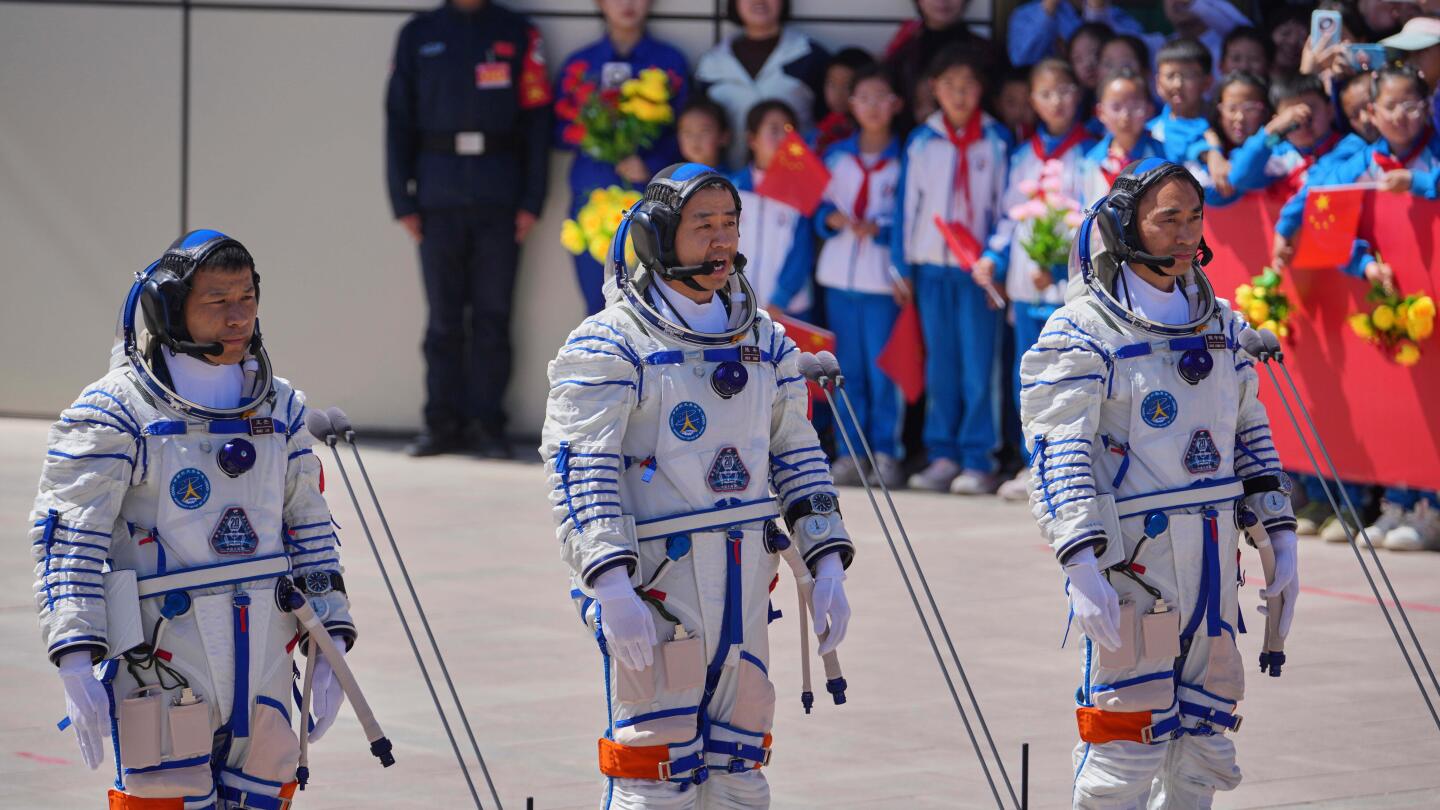
The three-member crew of China’s Shenzhou-20 mission remains in orbit following a postponed return to Earth, with officials confirming Tuesday that the astronauts are “in good condition, working and living normally” despite the unexpected extension of their mission.
China’s Manned Space Engineering office issued a statement addressing the situation after the scheduled November 5 return was aborted due to what experts believe was an impact with a small piece of space debris. The return date has been indefinitely postponed while mission controllers assess the situation.
“The Shenzhou-20 crew is carrying out tests and drills,” the statement noted, though it provided no specific timeline for when astronauts Chen Dong, Chen Zhongrui, and Wang Jie might finally make their journey home.
The three astronauts have been aboard the Tiangong space station since April, completing what was intended to be a standard six-month rotation. Their replacement crew on the Shenzhou-21 mission successfully docked with the station on November 1, creating an unusual overlap period that wasn’t part of the original mission parameters.
Space debris poses an increasing challenge for all orbital operations as Earth’s immediate vicinity becomes more congested with defunct satellites, spent rocket stages, and fragments from previous collisions. Even tiny objects can cause significant damage when traveling at orbital velocities of approximately 17,500 mph.
The Shenzhou-21 mission marked a significant milestone for China’s space program, as it carried mice to the space station for the first time, expanding the scope of biological research conducted in the orbital laboratory. This development highlights China’s growing capabilities in space-based scientific research.
China’s space program has made remarkable strides since its first crewed mission in 2003. The Tiangong space station represents one of the country’s most significant achievements in space, providing a permanent orbital foothold following years of planning and development.
Unlike the International Space Station, which is a multinational collaboration, Tiangong is wholly operated by China. The station consists of three modules: the core Tianhe module and two laboratory modules, Wentian and Mengtian. Together, they provide Chinese astronauts with approximately 110 cubic meters of habitable space.
The current situation demonstrates both the resilience of China’s space program and the challenges faced by all spacefaring nations. While mission planners build contingencies into space operations, unexpected events like debris strikes can quickly alter carefully laid plans.
China’s ambitions in space extend far beyond low Earth orbit. The country has outlined plans to land astronauts on the lunar surface by 2030, putting it in direct competition with NASA’s Artemis program, which aims to return Americans to the Moon this decade.
China has already achieved numerous lunar milestones, including the Chang’e-4 mission that made the first-ever soft landing on the far side of the Moon in 2019, and the Chang’e-5 mission that returned lunar samples to Earth in 2020.
As the delayed Shenzhou-20 mission underscores, however, even routine operations in space come with inherent risks. The current situation will likely provide valuable experience for Chinese mission planners as they prepare for more ambitious deep space missions in the coming years.
Chinese space officials have promised further updates on the status of the stranded crew, though they have not committed to a specific timeline for their return journey.
Fact Checker
Verify the accuracy of this article using The Disinformation Commission analysis and real-time sources.

6 Comments
It’s impressive that the Chinese space program has been able to keep the Tiangong station operating despite this setback. The astronauts’ resilience and adaptability in the face of unexpected challenges is admirable. I’m curious to see if this will impact future mission planning and timelines.
Space travel is always risky, but it’s reassuring that the astronauts are doing well and continuing their work on the space station. Delays like this are understandable given the hazardous environment. I hope they can safely return to Earth soon.
Glad to hear the Chinese astronauts are in good condition despite the unexpected space debris delay. Safety should be the top priority when returning from space missions. Curious to see how they manage the overlapping crew and when the original trio can finally come home.
The space debris issue complicating the astronauts’ return is a good reminder of the challenges of operating in the void. Kudos to the ground teams for ensuring the crew’s safety and keeping the mission going. I’m interested to learn more about the specific debris that caused the delay.
Space missions require immense coordination and preparedness. While this delay is certainly inconvenient, I’m glad the astronauts are unharmed and able to continue their important work. Spacefaring nations like China are pushing the boundaries of human exploration.
This delay is a good reminder of the hazards of operating in space. Still, the fact that the astronauts remain in good condition and can continue their work is reassuring. I’m eager to learn more details about the space debris incident and how the mission controllers are responding.