


Listen to the article
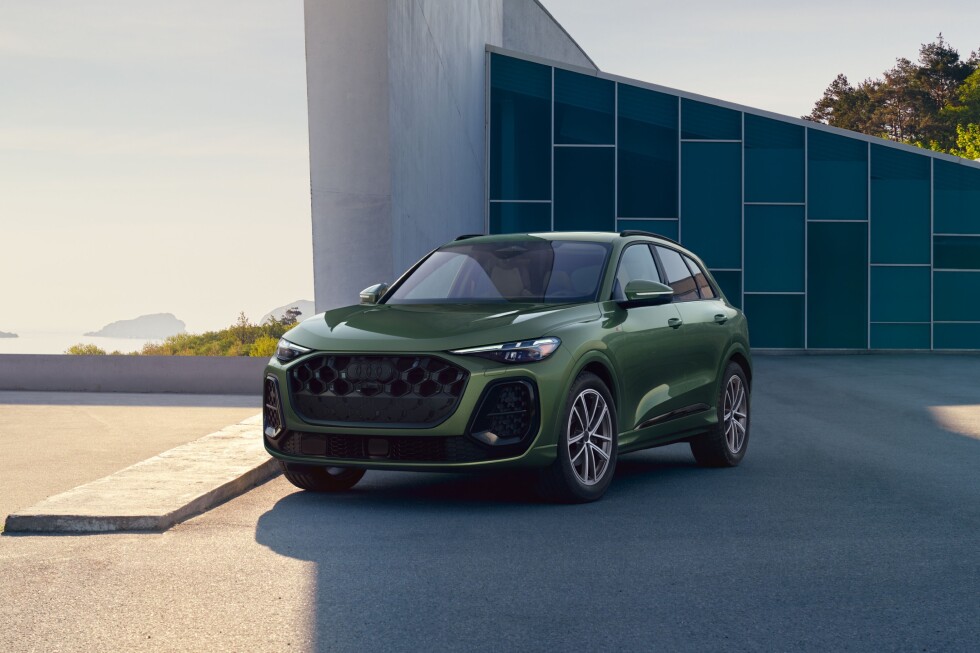
In the competitive luxury compact SUV segment, the newly redesigned Audi Q5 and BMW X3 continue to stand as frontrunners for consumers seeking premium German engineering in a practical package. Both vehicles received complete overhauls last year, with BMW taking a bold approach through radical design changes while Audi maintained its recognizable exterior styling but significantly upgraded its technological offerings.
Industry analysts note that these models represent crucial profit centers for their respective manufacturers, as the compact luxury SUV segment continues its robust growth globally. Competing in a market segment that grew by nearly 15 percent last year, both automakers have invested heavily in ensuring their offerings meet evolving consumer expectations.
Performance metrics between the two vehicles reveal subtle but noteworthy differences. The Q5’s turbocharged 2.0-liter four-cylinder engine delivers 268 horsepower, slightly edging out the X3’s 255 horsepower from its similarly sized powertrain. Despite this modest power differential, real-world acceleration testing shows nearly identical performance, with both vehicles providing confident highway merging and overtaking capabilities.
Fuel economy represents a clear advantage for BMW, with the X3 30 xDrive earning an EPA-estimated 29 mpg in combined city/highway driving compared to the Q5’s 24 mpg. This 5-mpg advantage could translate to meaningful savings for owners over the vehicle’s lifetime, particularly important as fuel prices remain volatile.
The ride quality of both vehicles reflects their German engineering heritage, with a characteristically firm but composed road feel. The Q5 Prestige trim offers an optional air suspension that can adjust ride height, providing enhanced versatility for different driving conditions. This adaptive system represents Audi’s commitment to blending comfort with performance, a balance many luxury SUV buyers prioritize.
Interior comfort comparisons favor the Audi, particularly for rear passengers. The Q5 provides more generous rear legroom and includes a reclining rear seatback, a feature absent in the X3’s fixed rear seating position. Both vehicles showcase premium front seating with extensive adjustment capabilities and firm, supportive cushioning typical of German luxury vehicles.
Cargo capacity specifications initially suggest an advantage for the BMW, but practical testing revealed comparable real-world storage capabilities between the two models. The Q5 adds versatility with its 60/40-split rear seats that can slide forward, creating additional cargo space when maximum passenger room isn’t needed.
Technology integration stands as a defining characteristic for both vehicles. Large touchscreen infotainment systems dominate their interiors, with both manufacturers migrating climate controls into their digital interfaces. This design choice requires additional concentration from drivers compared to traditional physical controls, representing an industry-wide trend toward minimalist dashboards.
Connectivity features are comprehensive in both vehicles, including wireless phone charging, USB-C ports throughout the cabin, and wireless Apple CarPlay and Android Auto integration. Digital instrument panels and integrated navigation systems come standard, reflecting the technology-forward approach both brands have embraced.
Driver assistance technologies appear evenly matched, with forward collision warning, automatic emergency braking, lane keeping systems and blind-spot monitoring included as standard equipment. The Q5 gains points for including adaptive cruise control as standard equipment, while BMW offers it as an optional feature. Conversely, the X3 provides an available hands-free driving assistance system for low-speed traffic situations up to 40 mph, a feature not currently available on the Q5.
Value considerations reveal different approaches to pricing and equipment packaging. The BMW X3 starts at $52,650, representing a $1,445 advantage over the Q5’s $54,095 base price (both including destination fees). However, the Audi includes several features as standard that require additional investment on the BMW, including all-wheel drive, a panoramic sunroof, leather upholstery, adaptive cruise control, and digital key functionality.
Market analysts point out that luxury SUV buyers typically cross-shop these German competitors alongside offerings from Lexus, Mercedes-Benz, and increasingly, Genesis. Both Audi and BMW maintain strong brand loyalty, with approximately 65 percent of current owners returning to the same brand for their next vehicle purchase.
The comparison ultimately reveals two exceptionally capable luxury SUVs with different priorities. The BMW X3 earns slightly higher overall ratings, while the Audi Q5 may better serve buyers prioritizing passenger comfort and standard feature content.
Fact Checker
Verify the accuracy of this article using The Disinformation Commission analysis and real-time sources.

13 Comments
The fact that these models are crucial profit centers for their respective manufacturers underscores the importance of getting the formula right. Compact luxury SUVs have become a hugely popular segment, so the competition is fierce.
Interesting comparison between the Audi Q5 and BMW X3 luxury SUVs. Both seem to offer premium German engineering and performance, though the Q5 has a slight power edge. Curious to see how the design and tech features stack up.
Yes, the compact luxury SUV segment is highly competitive. Consumers have a lot of great options when it comes to blending premium features with practicality.
It’s interesting to see how Audi and BMW are approaching design and technology updates for their compact luxury SUVs. Maintaining a recognizable look versus embracing bolder styling is a tricky balance for automakers to strike.
Absolutely. Consumers in this segment are looking for a blend of familiarity and innovation, so it will be key for the automakers to find the right mix.
I’m curious to see how the Q5 and X3 compare in terms of fuel efficiency and emissions, in addition to the performance metrics highlighted. The environmental impact of these luxury vehicles is an important consideration for many consumers nowadays.
Good point. As consumer preferences shift, automakers will need to balance performance, luxury, and sustainability to remain competitive in this segment.
The compact luxury SUV market is certainly a crowded one, but the Q5 and X3 have established themselves as leaders. I’m eager to see how Edmunds’ detailed analysis illuminates the strengths and weaknesses of each model.
With the Q5 and X3 offering nearly identical real-world performance despite a slight power differential, it seems the driving dynamics will come down to more nuanced factors like handling and responsiveness. I’m curious to see Edmunds’ take on that.
Good point. The driving experience is about more than just raw power numbers, so Edmunds’ in-depth analysis should provide valuable insights for consumers.
As the compact luxury SUV segment continues its robust global growth, it’s clear Audi and BMW have both invested heavily to ensure their offerings remain competitive. I’m looking forward to seeing how the Q5 and X3 stack up across the board.
The Q5 and X3 are two of the top contenders in this class. It will be fascinating to see how Edmunds’ analysis of factors like handling, interior quality, and value proposition shapes up. Both seem well-positioned to meet evolving buyer needs.
Absolutely. As these models represent crucial profit centers, the automakers have a strong incentive to keep innovating and improving their offerings to stay ahead of the competition.