


Listen to the article
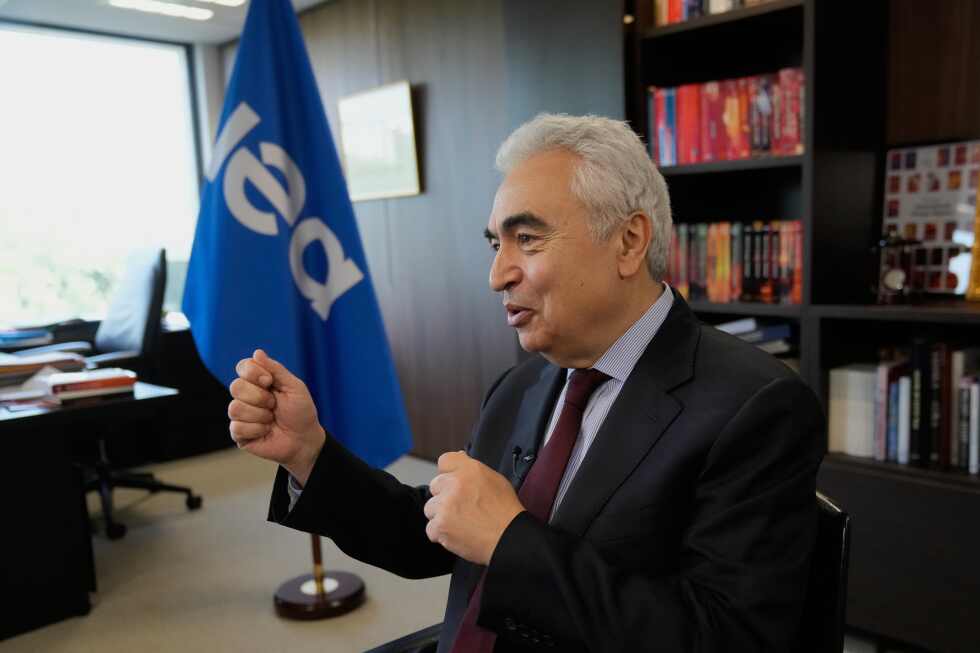
Europe faces an urgent jet fuel crisis with approximately six weeks of remaining supplies, according to International Energy Agency Executive Director Fatih Birol. In an interview conducted at his Paris office, Birol warned that flight cancellations could begin “soon” if oil supplies remain blocked by the ongoing conflict involving Iran and the critical Strait of Hormuz.
“In the past there was a group called ‘Dire Straits.’ It’s a dire strait now, and it is going to have major implications for the global economy,” Birol said, characterizing the current situation as “the largest energy crisis we have ever faced.”
Nearly 20% of the world’s traded oil typically passes through the Strait of Hormuz in peacetime. The continued blockage threatens global energy markets with significant consequences for consumers and businesses worldwide through “higher petrol prices, higher gas prices, high electricity prices,” according to the IEA chief.
While the crisis will affect economies globally, Birol emphasized that developing nations will likely bear the heaviest burden. “The countries who will suffer the most will not be those whose voice are heard a lot. It will be mainly the developing countries. Poorer countries in Asia, in Africa and in Latin America,” he explained. However, he stressed that “no country is immune to this crisis,” regardless of wealth or energy resources.
The aviation industry is already feeling the effects. Dutch airline KLM has announced cuts to 160 flights to and from Amsterdam’s Schiphol airport next month, representing about 1% of its European routes, citing “rising kerosene costs” that make certain flights “no longer financially viable.” While KLM and budget carrier easyJet stated they aren’t currently experiencing fuel shortages, travelers are already facing consequences through increased ticket prices and additional fees.
More broadly, Birol warned that failure to reopen the Strait of Hormuz by the end of May could push many nations toward economic crisis. “Many government leaders tell me that if Hormuz is not open until end of May, many countries — starting from the weaker economies — are going to face huge challenges, and this will go from the high inflation numbers to coming close to slow growth or even to recession in some cases.”
The IEA director expressed concern about Iran’s implementation of a “toll booth” system that allows ships to pass through the strait for a fee. He argued against normalizing such arrangements, warning it could set a dangerous precedent for other crucial waterways like Asia’s Malacca Strait. “If we change it once, it may be difficult to get it back,” Birol cautioned, advocating instead that “oil flows unconditionally from point A to point B.”
Currently, over 110 oil-laden tankers and more than 15 carriers loaded with liquefied natural gas remain trapped in the Persian Gulf, unable to reach global markets. While these vessels could help ease the energy crisis if released, Birol emphasized that damage to regional infrastructure presents additional challenges.
“Over 80 key assets in the region have been damaged. And out of these 80, more than one third are severely or very severely damaged,” he noted. Even with a peace agreement, Birol estimated it could take up to two years to restore pre-conflict production levels.
Birol expressed frustration that “a couple of hundred men with guns” — an apparent reference to Iranian forces — can effectively hold the global economy hostage. He noted that the IEA, which advises governments on energy policy and previously coordinated a record release of emergency oil reserves during the crisis, has long warned about the critical importance of the Strait of Hormuz.
This geopolitical crisis may accelerate adoption of alternative energy technologies, including nuclear power, and “will reshape the global energy map for the next years to come,” according to Birol.
“Energy and geopolitics have been always interwoven,” he reflected, “but I have never, ever seen such a dark and long shadow of geopolitics.” The IEA chief concluded on a personal note: “Unfortunately, energy is at the heart of many conflicts which, again, makes me, as an energy person, rather sad, to be honest.”
Fact Checker
Verify the accuracy of this article using The Disinformation Commission analysis and real-time sources.

6 Comments
This is a very concerning development. The potential jet fuel shortages in Europe could have severe economic ramifications, not just for the aviation industry but across various sectors. I wonder what contingency plans are in place to mitigate the impact and ensure the continuity of essential travel and trade.
The global energy crisis triggered by the Strait of Hormuz blockage is worrying. Developing nations will likely bear the brunt, which is deeply troubling. I wonder what mitigating measures can be taken to support the most vulnerable economies during this challenging period.
You raise a good point. Supporting developing countries through this energy crisis should be a top priority for the international community.
Jet fuel shortages within weeks is an alarming prospect. This underscores the fragility of Europe’s energy security and the need for greater investment in alternative fuels and supply chain resilience. It’s a stark reminder of the consequences of geopolitical instability.
The IEA’s warning about the potential jet fuel crisis in Europe is quite sobering. This situation highlights the importance of diversifying energy sources and building robust stockpiles to withstand supply disruptions. I hope policymakers act swiftly to avert a major crisis.
This is a concerning situation for Europe’s aviation industry. The jet fuel shortage could significantly disrupt flights and have far-reaching economic impacts. I hope policymakers can find a quick solution to secure adequate fuel supplies.