


Listen to the article
Apollo Veterans Eagerly Await NASA’s Return to the Moon, Wish Artemis Had Launched Sooner
The remaining veterans of NASA’s Apollo program—now in their 80s and 90s—are watching with anticipation as the space agency prepares to send humans back to the moon. While they celebrate this long-awaited return, many express regret that these Artemis missions didn’t happen decades earlier, when more of their colleagues were alive to witness it.
With so few remaining from the original 400,000-strong Apollo workforce, no formal reunion is planned for the upcoming Artemis II mission, which will send four astronauts around the moon as early as April 1. Those living near Florida’s Kennedy Space Center will simply observe the historic launch from their homes.
“Because it was the first time, there was an energy. There was a passion that probably is not exactly the same today and hasn’t been for a while,” reflected Charlie Mars, 90, who worked on Apollo’s command and lunar modules and later helped establish the American Space Museum in Titusville, Florida.
The half-century gap between lunar missions remains a source of frustration for many Apollo veterans. JoAnn Morgan, who made history as the lone woman in launch control during the Apollo 11 mission in 1969, still laments the cancellation of the final three Apollo moon landings under President Richard Nixon due to budget constraints and shifting national priorities.
“I’m just trying to stay alive so I can see us actually get back and step foot on the moon,” said Morgan, now 85. “I’m still feeling cheated after 53 years.”
Her sentiments are echoed by others who believe NASA has moved too slowly. “It’s a good thing I’m not in charge,” Mars commented, “because I would be out there beating the bushes and whipping up on people to get moving.”
The Artemis program does represent significant progress in gender diversity—a stark contrast to the male-dominated Apollo era. NASA’s Artemis launch director is Charlie Blackwell-Thompson, and the Artemis II crew includes Christina Koch, who holds the record for the longest single spaceflight by a woman at 328 consecutive days in orbit.
Morgan looks forward to this evolution continuing: “It will be even greater when they actually have a woman who plants her boots on the moon.”
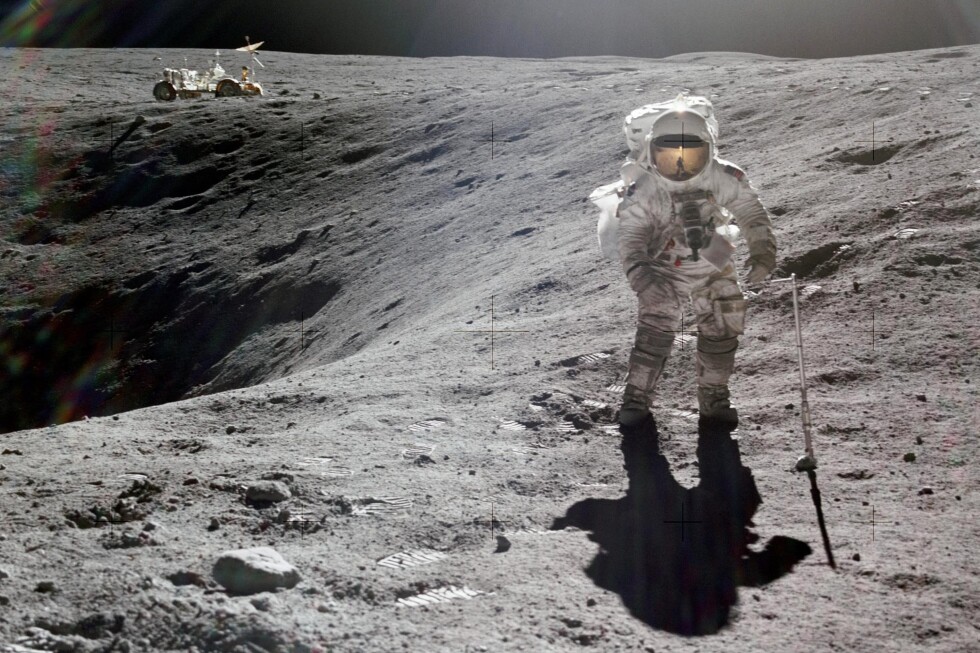
Apollo 16 astronaut Charlie Duke, one of only four living moonwalkers, points out that half the world’s population wasn’t yet born when he walked on the lunar surface in 1972. This includes NASA’s new administrator Jared Isaacman, a 43-year-old tech billionaire who has already traveled to space twice through private ventures.
The Apollo veterans are encouraged by Isaacman’s efforts to accelerate the Artemis program’s timeline, which had been plodding along at a pace of one mission every three years. He has added an orbital test flight to practice docking with lunar landers and recently unveiled a $20 billion plan for establishing a moon base over the next seven years, complete with lunar drones and rovers.
Carlos Garcia-Galan, NASA’s self-described “moon base guy,” promises “cool cameras” on all equipment to generate public excitement—something many Apollo veterans feel has been lacking in the Artemis program so far.
A clear motivation behind the accelerated timeline is the competition with China, which aims to land astronauts on the moon by 2030. NASA hopes to achieve this milestone by 2028, echoing the space race dynamics of the Apollo era when the U.S. competed against the Soviet Union.
John Tribe, 90, who managed spacecraft propulsion during Apollo, considers NASA’s revised Artemis approach “a whole lot more sensible” but remains uncertain about whether the U.S. will beat China back to the lunar surface.
Apollo 9 astronaut Rusty Schweickart acknowledges the challenge of recapturing Apollo’s historical significance, noting that while everyone remembers Columbus, few can recall “who came along 50 years afterward.”
Nevertheless, Duke believes public excitement will surge once Artemis astronauts start making lunar landings, particularly among younger generations who missed the Apollo era.
“If the first ones are successful and we start landing at the south pole,” Duke said, “I think millions are going to be watching that. I know I will if I’m still here.”
Fact Checker
Verify the accuracy of this article using The Disinformation Commission analysis and real-time sources.

15 Comments
It’s wonderful to see the Apollo veterans so invested in the Artemis program’s success. Their experience and passion will undoubtedly inspire the next generation of NASA explorers. I wonder how the technological advancements since the Apollo era will shape the Artemis missions.
The Apollo veterans’ enthusiasm for Artemis is heartwarming to see. Their dedication and pioneering spirit paved the way for this new era of space exploration. I’m curious to learn more about how the Artemis program plans to build upon the successes and lessons learned from the original moon missions.
The Apollo veterans’ excitement for Artemis is truly inspiring. Their passion and dedication laid the groundwork for this new era of space exploration. I’m curious to hear more about how the Artemis missions might build upon the successes and lessons learned from the Apollo program.
Reflecting on the half-century gap between lunar missions, it’s clear the Apollo veterans have an immense amount of pride and nostalgia for their work. I’m glad Artemis is allowing them to witness this long-awaited return to the moon, even if it’s not exactly the same as the original.
The Apollo workforce’s eagerness for Artemis is a testament to their enduring love for space exploration. Even after all these decades, they remain deeply connected to the mission and want to see it succeed. I’m curious to learn more about how they hope to see the Artemis program evolve compared to Apollo.
It’s understandable they feel a bit of wistfulness that Artemis didn’t launch sooner, but I’m sure they’re grateful to witness this historic return to the moon, even if it’s not exactly the same as the original.
It’s exciting to see the Apollo veterans eagerly anticipate the Artemis program’s return to the moon. Their passion and experience from the early space race era will surely inspire the next generation of NASA explorers.
I can only imagine how bittersweet it must feel for them, wishing the Artemis missions had launched sooner when more of their colleagues were still alive to witness it.
The half-century gap between lunar missions is certainly a long time, but I’m glad the Apollo veterans can now see the fruits of their hard work come to fruition. Artemis is an exciting new chapter in space exploration.
It’s wonderful to see the Apollo workforce so invested in the Artemis program’s return to the moon. Their experience and expertise will be invaluable as NASA embarks on this new chapter of lunar exploration. I’m curious to learn more about how the Artemis missions might differ in their approach and objectives compared to the original Apollo program.
While they may feel some nostalgia for the original Apollo era, I’m sure the veterans are honored to see their legacy continue with Artemis and to witness this long-awaited return to the moon.
It’s wonderful to see the Apollo workforce so enthusiastic about Artemis. Their dedication and pioneering spirit laid the groundwork for this historic return to the moon. I hope the Artemis missions can recapture some of that original energy and passion.
Even if a formal reunion isn’t planned, I’m sure the Apollo veterans will find ways to celebrate this milestone together in their own way.
The Apollo workforce’s eagerness for Artemis is heartwarming to see. Their contributions to the first moon landing laid the foundation for this new era of space exploration. I’m curious to hear more about how the Artemis missions will differ from the original Apollo program.
While it’s understandable they feel the Artemis program didn’t launch sooner, I’m sure the Apollo veterans are still incredibly proud to see their legacy continue with this historic return to the moon.