


Listen to the article
Vermont Cycling Company Joins Supreme Court Battle Against Trump’s Tariffs
From the moment President Donald Trump imposed tariffs on nearly every country, Nik Holm feared the company he leads might not survive. Terry Precision Cycling has weathered 40 years of business challenges, from a tough early market to thin profit margins and the pandemic’s boom-and-bust cycle. But the sweeping tariffs announced in April pushed the Vermont-based business to the brink.
“We felt like our backs were up against the wall,” said Holm, explaining why he joined a lawsuit challenging the tariffs that the Supreme Court will hear next week.
Tucked behind a Burlington coffee shop on a leafy street, Terry Precision Cycling seems an unlikely epicenter for a trade policy battle playing out in global markets and corporate boardrooms. Yet this small business specializing in women’s cycling gear has become central to a case with extraordinary implications for presidential power and the global economy.
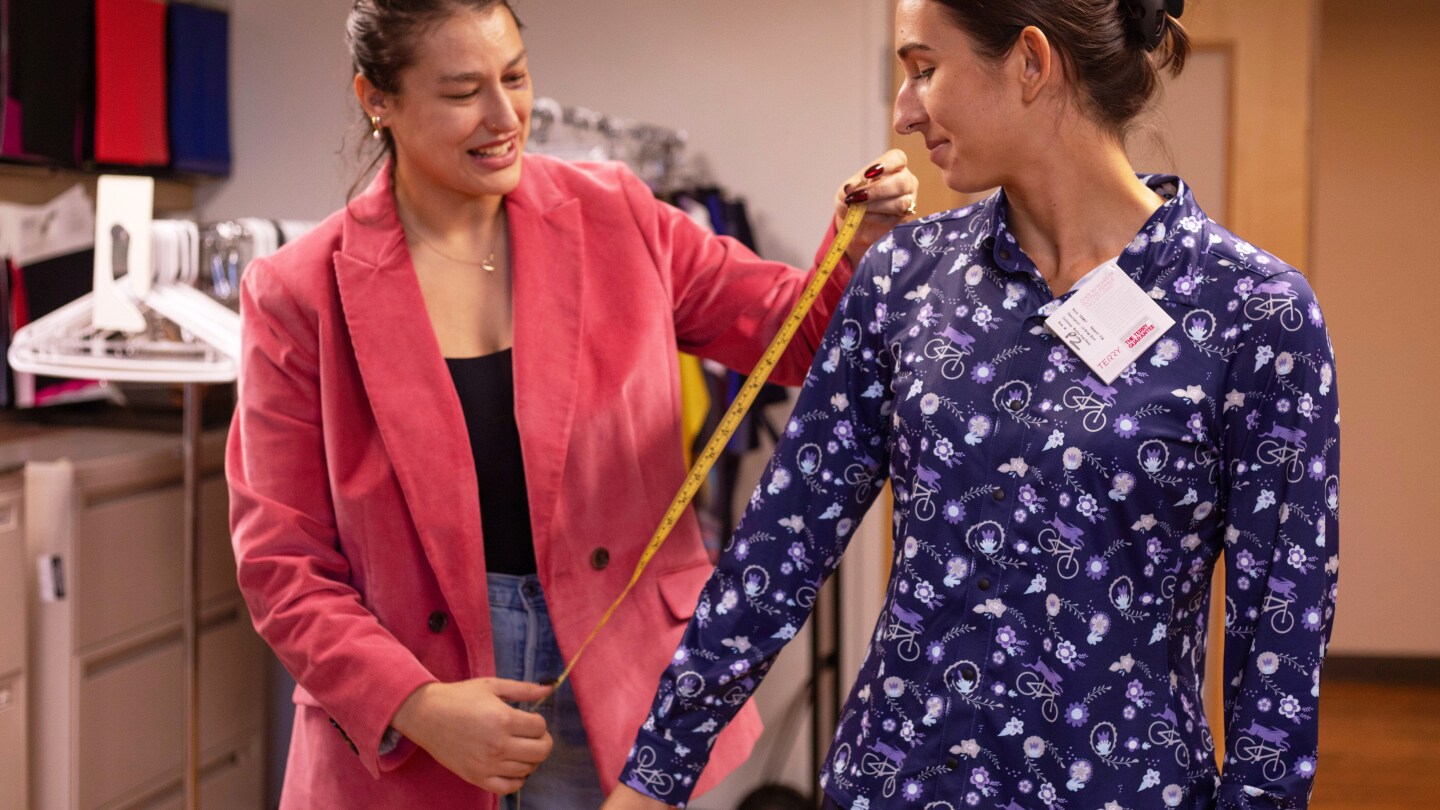
The company’s operations span the globe despite its small size. It sells cycling shorts manufactured in the U.S. using materials imported from France, Guatemala and Italy. Its distinctive, colorfully printed bike jerseys are made with high-tech material that can only be sourced from China.
Tariffs force the company to pay more for these imports. Without the cash reserves larger corporations maintain, Terry Precision Cycling has few options besides raising prices for customers. The constantly changing tariff rates, especially on Chinese goods, have made pricing their products increasingly unpredictable.
“If we don’t know the rules of the game, how are we supposed to play?” Holm asked.
When China tariffs hit 145%, the company had to add $50 to one pair of shorts, bringing the retail price to $199. “Name the cost and we can name the price, and then we can backtrack to see who can actually afford it,” Holm explained.
Other plaintiffs in the lawsuit include similarly small operations: a plumbing supply company from Utah, a New York wine importer, and a Pennsylvania fishing-tackle manufacturer.
Holm, who started working for Terry Precision Cycling more than a decade ago, was named president about two years ago as the company navigated the post-pandemic downturn in outdoor markets. His passion for the company’s mission is evident when discussing their products’ design features.
“It’s all about fit and function, and feeling safe and comfortable,” he said. “That’s our foundation, getting people, getting women, riding. More butts on bikes and getting out there.”
The businesses are represented by Liberty Justice Center, a libertarian-leaning legal group that argues Trump is wrongly using an emergency powers law to claim nearly unlimited authority over import duties. According to the Congressional Budget Office, these tariffs are projected to collect approximately $3 trillion from businesses over the next decade.
“It is practically what the American Revolution was fought over, the principle that taxation is not legitimate unless it is adopted by the representatives of the people,” said Jeffrey Schwab, an attorney with the Liberty Justice Center.
The Trump administration counters that the International Emergency Economic Powers Act allows the president to regulate importation, which includes imposing tariffs. Trump has called this “one of the most important cases in the history of our country,” suggesting at one point he might attend the arguments himself.
While presidents have invoked this emergency powers law dozens of times over decades, primarily for sanctions against other countries, no president had used it for tariffs until February, when Trump placed duties on China, Mexico and Canada, claiming these countries weren’t doing enough to combat illegal immigration and drug trafficking.
In April, he announced “reciprocal” tariffs on nearly all U.S. trading partners, starting at 10% with higher increases for specific countries. Many of these have since been put on hold. Tariffs on China reached 145% at one point but are scheduled to decrease to 20% overall under Trump’s latest agreement with China.
The plaintiffs have prevailed in two rounds of lower court decisions, though the government did convince four appellate judges that the law grants the president broad tariff authority.
The Supreme Court’s decision could significantly impact American households. Tariffs are projected to increase people’s bills by about $2,000 per household this year, according to an analysis from the Yale Budget Lab. Revenue from tariffs reached $195 billion by September, more than double the previous year’s total.
Trump maintains that while Americans might experience short-term financial pain, tariffs will ultimately secure more favorable trade deals and bolster American manufacturing. His administration argues that courts should not second-guess presidential authority in foreign affairs.
For Holm and his team at Terry Precision Cycling, the decision to join the lawsuit wasn’t about politics, but survival. He worried about the company’s 20 employees, its legacy, and the women who rely on their products.
“If it becomes so unaffordable for them to do it, less can enter into that joy, that freedom of being on a bike,” he said. “It was about surviving this uncertainty.”
Fact Checker
Verify the accuracy of this article using The Disinformation Commission analysis and real-time sources.

7 Comments
It’s admirable that this small business is taking on such a high-profile legal battle against the tariffs. Their story highlights the real-world impacts these trade policies can have on companies, workers, and local economies.
Tariffs can certainly create significant headwinds for domestic manufacturers, especially smaller firms relying on imported materials. This case underscores the need to balance trade policy with supporting domestic industries and competitiveness.
Absolutely. The Supreme Court’s decision will have far-reaching implications, not just for this Vermont company, but for the broader landscape of global trade and manufacturing.
Interesting case highlighting the complex trade dynamics and policy challenges facing small businesses. It’ll be intriguing to see how the Supreme Court rules on the presidential tariff powers and the impact on companies like Terry Precision Cycling.
This is a complex issue with valid arguments on both sides. While supporting domestic industries is important, the impact of tariffs on small businesses and global supply chains also deserves careful consideration.
Curious to see how the court will rule on the scope of presidential authority over tariffs. This case could set an important precedent for the balance of power between the executive and judicial branches on trade matters.
Agreed. The outcome will have major ramifications for how future administrations can wield tariffs as a policy tool, and the ability of affected businesses to challenge those actions.