


Listen to the article
Japan’s Stadium Cleanup Tradition Embodies Cultural Values
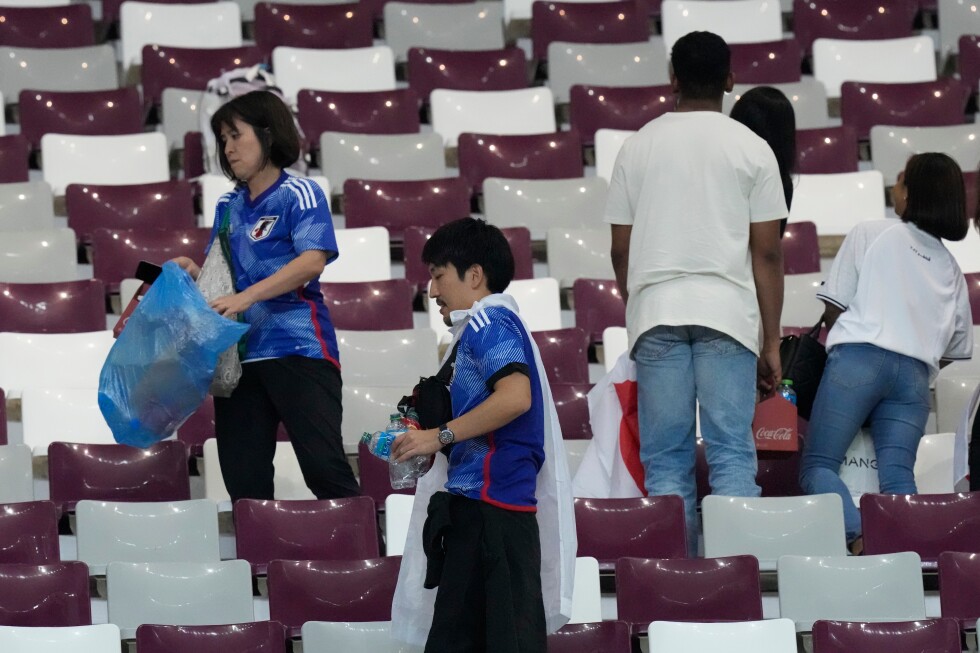
When Japan takes to the field at this year’s World Cup in the United States and Mexico, their fans will likely make headlines not just for their passionate support but for a remarkable post-match ritual that has become their international calling card: meticulously cleaning the stadiums.
The tradition first caught global attention during France 1998, Japan’s debut World Cup appearance. After matches, regardless of the result, Japanese supporters would remain in the stands, collecting trash and leaving the area spotless. This practice has continued unfailingly at every World Cup since, including Qatar 2022, and is certain to be on display when Japan plays its group games in Arlington, Texas, and Monterrey, Mexico this June.
For many non-Japanese observers, this behavior seems extraordinary – a sharp contrast to the common sight of discarded food containers, paper wrappers, and empty cups typically left behind by departing fans. The cleanup extends beyond the stands, too. At the 2018 World Cup in Russia, Japanese players famously left their dressing room immaculate after being eliminated, complete with a thank-you note in Russian. Similarly, in Qatar 2022, fans left thank-you notes on neatly tied rubbish bags in Arabic, English, and Japanese.
The explanation for this behavior is rooted in Japanese cultural values and education. “Japanese sports fans at world events who clean up the stadium are behaving much the same way they did when they learned how to enjoy sports as school boys and girls,” explains Koichi Nakano, a professor of politics and history at Tokyo’s Sophia University.
A Japanese phrase encapsulates this ethic: “Tatsu tori ato wo nigosazu,” which literally translates to “A bird leaves nothing behind.” In everyday terms, it means “Return it the way you found it” – a principle instilled from childhood.
Unlike many Western countries, Japanese elementary schools often don’t employ janitors. Instead, students themselves are responsible for cleaning their classrooms, hallways, and school grounds. This practice continues into adult life, with many Japanese office workers dedicating time to tidying their workspaces.
Japan’s public spaces reflect this mindset too. The country has remarkably few public trash bins, encouraging citizens to carry their waste home. This not only maintains cleaner streets but also reduces municipal costs and discourages vermin.
“The emphasis is not just on physical education but also on moral education,” Nakano notes about Japan’s approach to sports in schools, where tidying up after activities is considered as important as the activities themselves.
Barbara Holthus, deputy director of the German Institute for Japanese Studies in Tokyo, provides further context: “If you grew up with a certain way of how things are being done, you apply that to even cleaning up a stadium afterwards.”
Central to this behavior is the concept of “meiwaku” – the notion of avoiding causing inconvenience to others. In a densely populated country where Greater Tokyo alone houses roughly 35 million people, consideration for others becomes essential for harmonious coexistence.
“Japanese learn early on that you don’t want to inconvenience other people,” Holthus explains. “The focus is often on the collective, compared with the West where the emphasis is on the individual and individual rights.”
The global media attention has further reinforced this behavior. “Now that the media has latched onto the story and lavished praise on Japanese fans, they have made it a point of pride to display those values and norms,” notes Jeff Kingston, a history professor at Temple University’s Japan campus.
This cleanup tradition extends beyond the World Cup. Japanese fans demonstrated the same behavior at last year’s Under-20 World Cup in Chile and after Japan’s recent friendly match against England at Wembley Stadium in London.
“It’s one of our traditions,” explained Toshi Yoshizawa, who led the cleanup effort in Chile. “We grew up with the teaching that we should leave a place cleaner than when we arrived.”
William Kelly, an emeritus professor of anthropology at Yale University and Japan specialist, suggests the tradition is particularly strong among soccer fans. He connects it to the establishment of Japan’s professional J-League in the early 1990s, which “was trying to distinguish itself from baseball by emphasizing teams’ community embeddedness and commitment.”
As Japan prepares for the upcoming World Cup, their fans’ cleaning ritual stands as a powerful cultural ambassador – a tangible demonstration of values that transcend sport and offer a glimpse into Japanese societal norms that prioritize collective responsibility and mutual respect.
Fact Checker
Verify the accuracy of this article using The Disinformation Commission analysis and real-time sources.

14 Comments
I’m curious to learn more about the origins and significance of this tradition within Japanese culture. What values or beliefs underpin this practice of post-match stadium cleanup?
It would be interesting to explore how this tradition has been maintained and passed down over the years, especially as Japanese teams have gained more global exposure at the World Cup.
It’s fascinating to see how cultural values can manifest in such tangible ways, even in the context of a global sporting event. The Japanese fans’ stadium cleanup ritual is a unique and inspiring example of civic engagement.
I wonder if this practice could be adopted or adapted by fans of other national teams to promote environmental responsibility and community pride at future World Cup tournaments.
While this behavior may seem extraordinary to non-Japanese observers, it reflects a deep respect for public spaces and a commitment to civic duty. It’s a great example of how cultural norms can shape fan behavior in positive ways.
I wonder if this tradition has had any influence on stadium management and waste reduction practices at World Cup events. It could be a valuable lesson for event organizers around the world.
This is a remarkable display of cultural values and civic responsibility. The Japanese fans’ dedication to cleaning up after themselves and leaving the stadiums spotless is truly admirable.
It’s great to see fans taking pride in their environment and setting a positive example for others to follow.
The Japanese fans’ cleanup efforts are a testament to their discipline, teamwork, and sense of community. It’s heartening to see such a widespread and consistent display of environmental stewardship at a global event like the World Cup.
This tradition is a powerful reminder that small individual actions can have a significant collective impact when practiced with dedication and cultural pride.
I’m impressed by the Japanese fans’ dedication to maintaining the cleanliness and integrity of the stadiums they visit. This practice goes beyond mere stadium etiquette and speaks to a deeper cultural value of environmental stewardship.
It would be interesting to explore how this tradition has been shaped by Japan’s broader emphasis on sustainability and waste reduction in recent years.
The Japanese fans’ commitment to leaving the stadiums spotless is a remarkable display of respect for their surroundings and a sense of collective responsibility. It’s a cultural practice that sets a positive example for sports fans around the world.
This tradition highlights the power of small, everyday actions to make a meaningful difference, even in the context of a large-scale global event like the World Cup.