


Listen to the article
In Venezuela’s Post-Maduro Era, Women Lead Unprecedented Protest Movement
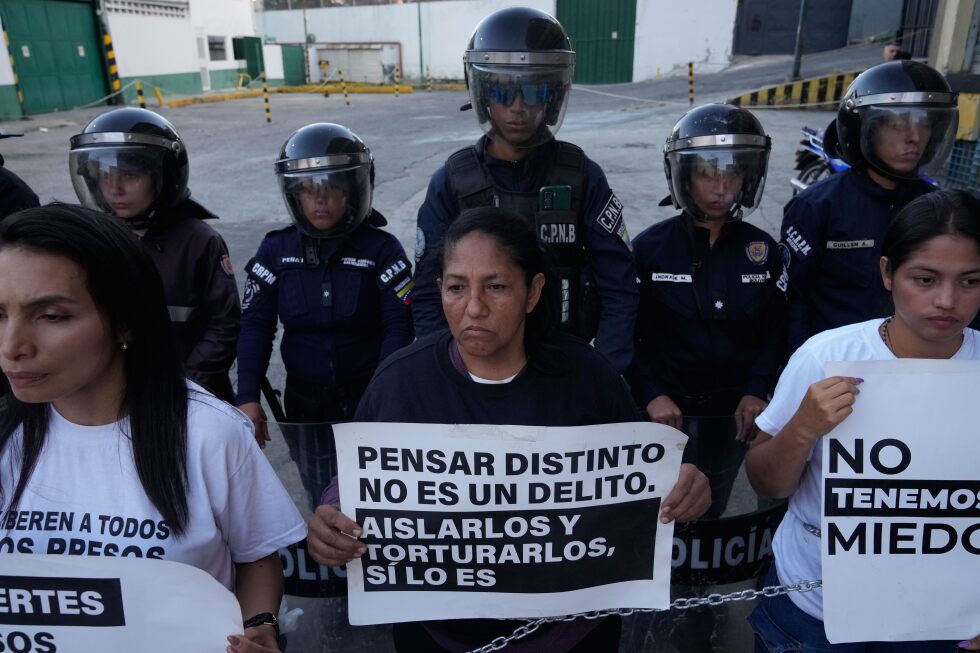
In a remarkable display of courage and resilience, dozens of Venezuelan women have challenged the nation’s new government in ways that would have been unthinkable just months ago, camping outside detention facilities for more than two months to demand the release of their imprisoned husbands and family members.
The protest movement, which lasted 64 days outside a police station in Caracas, represented the first significant challenge to Venezuela’s ruling party since the U.S. military deposed former President Nicolás Maduro in January. The women’s sustained demonstration tested not only their personal resolve but also the new government’s tolerance for public dissent.
Following Maduro’s capture, acting President Delcy Rodríguez quickly released all American prisoners but maintained the detention of hundreds of Venezuelans who human rights organizations say are being held on political grounds. Though the government announced plans to release prisoners and signed an amnesty law that could potentially benefit thousands of detainees, many remain behind bars.
“The government had made clear up until then that it had no tolerance for dissent,” said Associated Press reporter Regina Garcia Cano, who documented the women’s protest. “That was especially true in the aftermath of the 2024 presidential election, which Maduro claimed to have won despite ample credible evidence to the contrary.”
In the election’s wake, authorities detained over 2,000 people—many who hadn’t even participated in protests—creating a climate of fear that had silenced much of the population. Against this backdrop, the women’s decision to demonstrate was particularly courageous.
Among the protesters were Mendoza and Rosales, two women from different backgrounds united by a common goal. Rosales and her husband both worked for the state and had supported the ruling party, living in what was once a thriving community. Mendoza and her husband, meanwhile, were politically unaffiliated and relied primarily on private sector income.
These mostly inexperienced activists—many of them shy housewives who had never participated in political demonstrations—defied the advice of friends and family who urged them to remain quiet. Putting aside their fears of potential reprisals, they established a tent city outside the detention facility, refusing to leave until their loved ones were freed.
“The women are the first Venezuelans to challenge the ruling party in the post-Maduro era,” Garcia Cano noted. “The mostly shy housewives had never protested. They put aside their fears, defied the advice of friends and family to keep quiet and risked arrest to stand up to the government.”
The protest became more than just a political demonstration—it evolved into a support network where deep female friendships formed. The women transformed from “shy, quiet and suspicious strangers to chatty, candid and supportive friends,” Garcia Cano observed. Together, they learned practical activist skills: using megaphones, advocating to lawmakers, and navigating the complex rules of the detention system.
Their solidarity extended beyond practical matters. “They held each other when they needed to cry and cheered the others’ victories,” Garcia Cano said. “They talked through fears, love, parenting and doubts.”
Though the physical protest has concluded—the tent city dismantled and the women returned to their homes—their struggle continues. Mendoza and Rosales, like many others, are still working to secure the release of their husbands through legal and advocacy channels.
The protest represents a significant moment in Venezuela’s political landscape, occurring at a critical juncture as the country transitions to post-Maduro governance. While the new administration initially showed signs of potential reform by releasing American detainees and promising broader amnesty, the continued detention of political prisoners indicates the limits of this apparent openness.
This prolonged demonstration by ordinary Venezuelan women highlights both the ongoing human rights concerns in the country and the emergence of new forms of resistance in a nation where traditional opposition movements have been systematically suppressed for years. Their persistence in the face of potential government reprisal demonstrates that even after years of authoritarian rule, the spirit of civic activism remains alive in Venezuela—now championed by unlikely protagonists who found their political voice through personal hardship.
Fact Checker
Verify the accuracy of this article using The Disinformation Commission analysis and real-time sources.

30 Comments
Production mix shifting toward World might help margins if metals stay firm.
Good point. Watching costs and grades closely.
Good point. Watching costs and grades closely.
Interesting update on What a reporter learned covering a protest in Venezuela led by women hoping to free their loved ones. Curious how the grades will trend next quarter.
Nice to see insider buying—usually a good signal in this space.
Good point. Watching costs and grades closely.
Nice to see insider buying—usually a good signal in this space.
Good point. Watching costs and grades closely.
The cost guidance is better than expected. If they deliver, the stock could rerate.
Good point. Watching costs and grades closely.
Good point. Watching costs and grades closely.
The cost guidance is better than expected. If they deliver, the stock could rerate.
Good point. Watching costs and grades closely.
Production mix shifting toward World might help margins if metals stay firm.
Nice to see insider buying—usually a good signal in this space.
Good point. Watching costs and grades closely.
Good point. Watching costs and grades closely.
Nice to see insider buying—usually a good signal in this space.
Good point. Watching costs and grades closely.
Nice to see insider buying—usually a good signal in this space.
Good point. Watching costs and grades closely.
Silver leverage is strong here; beta cuts both ways though.
Good point. Watching costs and grades closely.
Good point. Watching costs and grades closely.
Uranium names keep pushing higher—supply still tight into 2026.
Good point. Watching costs and grades closely.
Good point. Watching costs and grades closely.
I like the balance sheet here—less leverage than peers.
Good point. Watching costs and grades closely.
Nice to see insider buying—usually a good signal in this space.