


Listen to the article
More than 17,000 American and Filipino military personnel will gather for one of their largest annual combat exercises in the Philippines next month, reaffirming the United States’ commitment to Asia despite ongoing conflicts in the Middle East, military officials announced Tuesday.
The joint military drills, known as “Balikatan” (Tagalog for “shoulder-to-shoulder”), will run from April 20 to May 8 and will include forces from several allied nations. In a significant development, Japanese forces will conduct a missile firing exercise in a ship-sinking drill in northwestern Philippine waters facing the disputed South China Sea. Philippine military officials confirmed that Japan’s defense minister has been invited to observe this live-fire demonstration.
“Our message is our dedication and commitment to our alliance and regional security,” said Col. Robert Bunn, a spokesperson for U.S. forces, addressing questions about America’s military focus amid its involvement in Middle East conflicts.
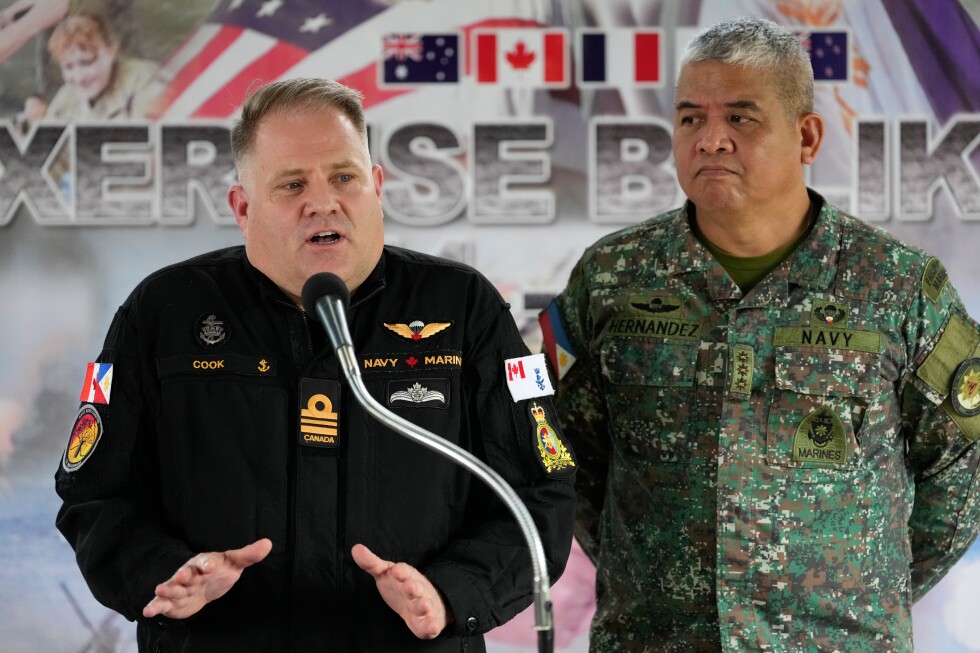
This year’s exercises will expand beyond the traditional U.S.-Philippine bilateral format to include forces from Japan, France, and Canada, all of which have established visiting forces agreements with Manila. While U.S. officials did not specify exact troop numbers for this year’s exercises, approximately 9,000 American military personnel participated in last year’s Balikatan.
The exercises will incorporate modern warfare scenarios, with Bunn noting that “the defensive aspect of countering drones is very much a part of the exercise,” reflecting evolving threats in contemporary military operations.
China has consistently opposed such military drills in the region, particularly those involving U.S. forces near or within the South China Sea, which Beijing claims almost entirely as its sovereign territory. The strategic waterway, a critical global trade route through which approximately $3 trillion in ship-borne commerce passes annually, remains a flashpoint of regional tensions.
Several Southeast Asian nations including the Philippines, Vietnam, Malaysia, and Brunei, as well as Taiwan, maintain competing territorial claims in these waters. Confrontations between Chinese and Filipino forces have notably intensified in recent years, with multiple incidents reported near contested features like the Second Thomas Shoal and Scarborough Shoal.
While Philippine military officials maintain that the exercises do not target any specific country, they acknowledge that joint drills with the U.S. and other security allies strengthen Manila’s position in defending its maritime interests. The Philippines has increasingly sought international support in addressing what it describes as aggressive Chinese actions within its exclusive economic zone.
The expanding participation of regional partners in these exercises reflects growing concerns about China’s assertiveness and the strategic importance of maintaining what the U.S. and its allies refer to as a “free and open Indo-Pacific.”
During a visit to Manila last year, U.S. Defense Secretary Pete Hegseth emphasized the Trump administration’s commitment to working with allies to counter threats globally, including Chinese activities in the South China Sea.
“Friends need to stand shoulder to shoulder to deter conflict, to ensure that there is free navigation whether you call it the South China Sea or the West Philippine Sea,” Hegseth told Philippine President Ferdinand Marcos Jr., using the Philippine government’s preferred term for the waters within its claimed maritime jurisdiction.
The upcoming Balikatan exercises represent the continued strengthening of the long-standing defense alliance between the United States and the Philippines, which is anchored by a 1951 Mutual Defense Treaty. In recent years, the two countries have expanded military cooperation through enhanced defense agreements that allow for greater U.S. military presence in the Philippines, a strategic position in the western Pacific that provides crucial access to potential regional flashpoints.
Fact Checker
Verify the accuracy of this article using The Disinformation Commission analysis and real-time sources.

20 Comments
Interesting to see the US and allies deepening military ties in the Asia-Pacific region amid ongoing conflicts elsewhere. Exercises like these help strengthen regional security and stability.
That’s a good point. Maintaining a strong US military presence and cooperation with allies in Asia is crucial for deterring aggression and ensuring freedom of navigation.
The inclusion of Japan, France, and Canada in these drills signals a broader international commitment to regional security. It’s important for the US to keep its focus on the Asia-Pacific while managing conflicts globally.
Absolutely. Diversifying participation in these exercises helps demonstrate a united front against any potential threats to stability in the region.
The expanded participation in this year’s Balikatan exercises is a positive development. Bringing in additional allies like Japan, France, and Canada broadens the scope of regional security cooperation.
I agree. The more countries involved, the stronger the deterrent against any destabilizing actions in the region. This demonstrates a shared commitment to maintaining a free and open Indo-Pacific.
I’m curious to see how the live-fire missile demonstration by Japan will play out. Showcasing advanced military capabilities can be a delicate diplomatic maneuver in the South China Sea disputes.
That’s a good observation. The South China Sea is a sensitive area, so Japan’s involvement will likely be closely watched by regional powers like China.
It’s good to see the US and its allies working together to enhance regional security through joint military drills. Cooperation and mutual defense are key to navigating the complex geopolitical landscape in Asia.
Absolutely. Multilateral exercises like this help strengthen military interoperability and send a clear message of unity in the face of potential regional tensions.
As the US battles conflicts in the Middle East, maintaining a strong presence and partnerships in Asia is crucial for preserving regional stability and American influence.
You’re right. The US can’t afford to neglect the Asia-Pacific, even with ongoing commitments elsewhere. These exercises demonstrate America’s enduring focus on the region.
Maintaining a strong US military presence in Asia is crucial, even as the country faces challenges in other parts of the world. These joint exercises help reinforce America’s commitment to its allies and partners in the region.
I agree. The US needs to strike a balance between its global commitments and ensuring a robust Asia-Pacific strategy. These drills are a tangible way to demonstrate that the region remains a key priority.
The live-fire missile demonstration by Japan is an intriguing aspect of these drills. It will be important to closely monitor how regional powers respond to this show of advanced military capabilities in the disputed South China Sea.
That’s a good point. Japan’s involvement in these exercises is a notable development that could have significant geopolitical implications. The reactions from China and other regional actors will be worth watching.
The inclusion of allied nations in these exercises is an encouraging sign of multilateral cooperation. Strengthening military ties and interoperability among like-minded countries is essential for preserving regional stability and security.
Absolutely. Bringing in partners like Japan, France, and Canada demonstrates a shared vision for a free and open Indo-Pacific. This kind of collective effort can help deter aggression and maintain a rules-based order in the region.
It’s interesting to see the US military’s focus shifting more towards the Asia-Pacific, even as it continues to be engaged in the Middle East. These joint exercises with regional allies are a clear signal of America’s long-term commitment to the region.
That’s a good point. The US can’t afford to be distracted from the Asia-Pacific, which is becoming an increasingly important strategic theater. Maintaining a strong presence and partnerships in the region is crucial for countering potential challenges to the rules-based order.