


Listen to the article
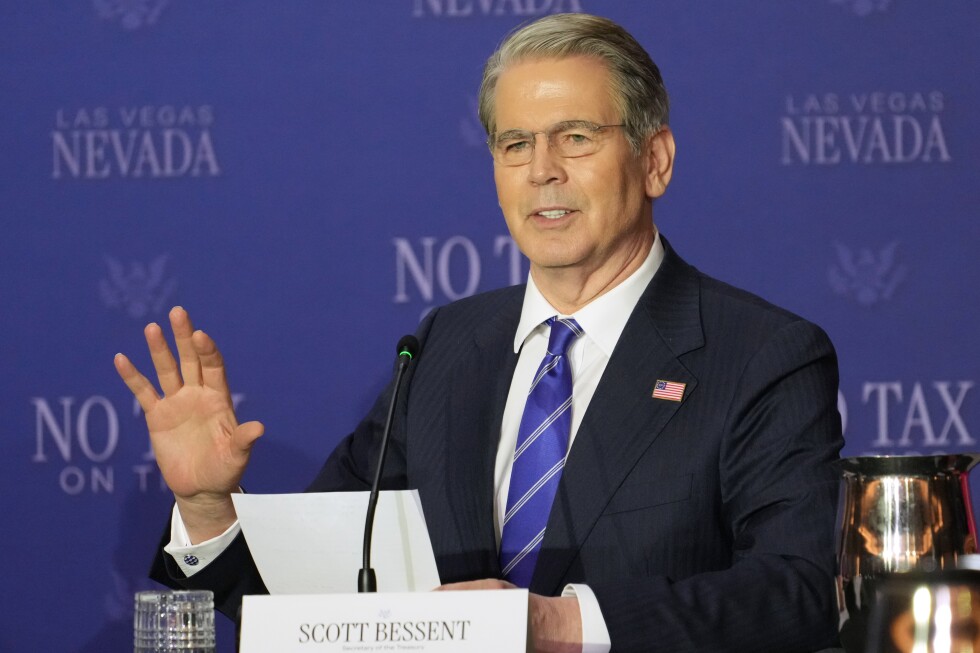
In a surprising policy reversal Friday, the U.S. Treasury Department extended its temporary pause on sanctions for Russian oil shipments, contradicting statements made just days earlier by Treasury Secretary Scott Bessent who had explicitly ruled out such an extension.
The Treasury’s action extends what officials call a “general license” that exempts certain Russian oil deliveries from U.S. sanctions for an additional 30 days. The exemption specifically applies to Russian oil loaded onto tankers as of Friday, similar to a previous 30-day exemption granted in March for oil loaded by March 11.
This policy shift highlights the complex balancing act facing the Biden administration as it attempts to manage global oil supplies disrupted by the ongoing conflict in Iran while simultaneously maintaining pressure on Russia over its invasion of Ukraine.
Energy analysts note that the extension reflects growing concerns about global oil shortages stemming from the Iran war, which has disrupted shipping routes and heightened market volatility. Oil prices had risen sharply in anticipation that the exemption would expire as Bessent had indicated.
“We will not be renewing the general license on Russian oil, and we will not be renewing the general license on Iranian oil,” Bessent had declared during a White House briefing on Wednesday. The administration has not yet provided an explanation for the apparent reversal of this position.
The situation has created an unexpected windfall for Moscow, as disruptions to Middle Eastern oil supplies have indirectly strengthened Russia’s position in global energy markets. Since the invasion of Ukraine in February 2022, Western nations have implemented numerous measures attempting to restrict Russia’s ability to profit from energy exports, which represent a critical revenue stream for the Kremlin.
Industry experts point out that this extension underscores the difficulties in isolating Russia from global energy markets without creating unintended consequences. The International Energy Agency estimates that Russian oil export revenues increased by approximately 15% in the first quarter of 2024 compared to the previous quarter, partly due to disruptions in other oil-producing regions.
“This puts the U.S. in a difficult position,” explained Elena Baranova, senior energy analyst at Global Market Strategies. “On one hand, they want to maintain pressure on Russia, but on the other, they need to prevent oil price spikes that could harm global economic recovery and affect domestic gasoline prices.”
The Treasury Department’s decision comes amid increasing pressure from European allies who face more immediate energy security concerns than the United States. Several European nations have privately urged Washington to show flexibility on Russian oil sanctions while alternative supply chains are established.
The oil market responded immediately to the news, with benchmark crude prices falling nearly 2% in afternoon trading as traders adjusted their expectations for near-term global supply.
Critics of the extension argue it undermines the unified Western response to Russia’s actions in Ukraine. Senator James Risch, ranking member of the Senate Foreign Relations Committee, called the move “a concerning signal that could embolden Putin’s war machine.”
Supporters counter that the temporary measure reflects pragmatic policymaking during a period of extraordinary global instability. They emphasize the limited nature of the exemption and its focus specifically on alleviating short-term supply disruptions caused by the Iran conflict.
The Treasury Department indicated in a brief statement that it continues to monitor global energy markets closely and will coordinate with international partners to ensure stable supply while minimizing benefits to the Russian government.
As this situation develops, energy markets remain focused on both the immediate impact of this 30-day extension and what it signals about the administration’s longer-term approach to balancing geopolitical objectives against economic realities in an increasingly complicated global energy landscape.
Fact Checker
Verify the accuracy of this article using The Disinformation Commission analysis and real-time sources.

15 Comments
It’s understandable the administration wants to avoid further disrupting global oil supplies, but this move seems to send mixed signals on the sanctions front. Will be interesting to see if this temporary waiver gets extended again or if there’s a shift back towards a harder line on Russia down the road.
Interesting policy move by the Biden team. Maintaining access to Russian oil likely helps ease near-term energy market pressures, but it also potentially undermines the broader sanctions campaign against Russia. Will be worth tracking how long this waiver lasts and what other shifts may occur.
A bit surprising to see this extension, given the administration’s previous rhetoric. But the realities of global energy markets and supply chains appear to be taking precedence for now. Curious to see if and how this policy evolves as the Ukraine conflict continues.
A pragmatic but potentially risky decision by the Biden team. Maintaining access to Russian oil may help ease price pressures, but it also signals some backing down from earlier tough talk on sanctions. Curious to see how this plays out diplomatically and politically.
The extension of the Russian oil sanctions waiver highlights the complex geopolitical and economic factors at play. Concerns over oil shortages and price volatility appear to be taking precedence, for now, over the push to ramp up pressure on Russia.
It’s a delicate balance the administration is trying to strike. Domestic political considerations around high energy prices likely also factored into this decision.
This is a bit surprising given the administration’s previous stance. But the realities of global energy markets and supply chains seem to be outweighing the desire for a harder line on Russia at the moment. It will be interesting to see if and how this policy evolves going forward.
The extension of the Russian oil sanctions waiver highlights the complex realities policymakers are facing. Trying to juggle energy market stability, inflation concerns, and the geopolitics of the Ukraine invasion is no easy feat. Curious to see if this sets a precedent for further sanctions carve-outs.
This is a pragmatic but potentially risky decision by the Biden team. On one hand, it helps ease pressure on energy markets, but on the other, it undermines the sanctions campaign against Russia. Curious to see how this plays out diplomatically and politically in the weeks ahead.
A pragmatic but potentially risky decision by the Biden team. Maintaining access to Russian oil may help ease price pressures, but it also signals some backing down from earlier tough talk on sanctions. Curious to see how this plays out diplomatically and politically in the weeks ahead.
This seems like a tricky balancing act for the administration. On one hand, they want to maintain pressure on Russia, but on the other, global energy security and prices are a major concern. It’ll be worth tracking how long this waiver extension lasts and what other policy shifts may come.
This extension of the Russian oil sanctions waiver highlights the complex balancing act the administration is navigating. Ensuring global energy supply stability seems to be taking priority over a more aggressive stance against Russia for the time being. But it’ll be interesting to see if this sets a precedent going forward.
The extension of the Russian oil sanctions waiver highlights the tricky balance the administration is trying to strike. Maintaining global energy security seems to be taking priority over a more hardline stance against Russia for now. Will be worth watching if this sets a precedent going forward.
Interesting policy decision by the Biden administration. Maintaining global oil supplies seems to be a key priority, even if it means temporarily extending sanctions waivers on Russian oil. It’ll be important to see how this balances with efforts to isolate Russia over the Ukraine invasion.
The energy market implications of the Russia-Ukraine conflict continue to be a major challenge. Extending the sanctions waiver indicates the administration is prioritizing oil supply stability over a more aggressive stance against Russia right now.