


Listen to the article
Oil Prices Plunge as Strait of Hormuz Reopens, But Gasoline Relief May Come Slowly
Oil prices tumbled 10% Friday after U.S. President Donald Trump and Iran’s foreign minister announced the Strait of Hormuz had reopened to commercial shipping following nearly seven weeks of conflict. The news sparked a stock market rally as investors responded to the potential easing of global energy supply concerns.
American motorists, who have been paying significantly higher prices since the U.S. and Israel attacked Iran on February 28, are hoping for swift relief. The national average for a gallon of regular gasoline stood at $4.08 on Friday—37% higher than pre-conflict levels but slightly lower than the previous week.
Energy experts caution that while crude oil prices may drop quickly, retail gasoline prices typically decline more gradually. Several factors will influence how quickly prices normalize, even if Iran maintains access to the vital waterway despite U.S. efforts to block Iranian vessels.
“The historical observation is that gasoline prices rise quickly but fall slowly, regardless of the particular causes of the increase,” explained Mark Barteau, a professor of chemical engineering at Texas A&M University.
Barteau noted that the logistics of the global oil supply chain create inevitable delays. “One has to take into account the time it takes for tankers to sail to refineries on other continents, for refineries to ramp up operations, and for refined products to be transported to their destinations,” he said.
Despite these constraints, some analysts express optimism about gradual price declines. Michael Lynch, distinguished fellow at the Energy Policy Research Foundation, suggested the $10-12 per barrel drop in oil prices could translate to a 25-30 cent reduction in gasoline prices per gallon.
“That doesn’t happen overnight, but within a week or two, we could be down 50 cents a gallon easily, if this holds,” Lynch said. “Part of it is, there’s a lot of tankers ready to go. And if they all come out, then that balances the market very quickly.”
Patrick De Haan, head of petroleum analysis at GasBuddy, predicted in a webcast that “every state will start seeing gas price decreases accelerate at a pace of probably 1 to 3 cents a gallon for every day or two,” potentially continuing for several weeks. He projected the national average could reach $3.45 to $3.65 by Memorial Day, though full normalization might take until late 2024 or early 2025.
Physical challenges in the strait itself could further delay the return to normal shipping operations. Patrick Penfield, professor of supply chain practice at Syracuse University, estimated it could take at least four months for shipping through the Strait of Hormuz to normalize.
“Right now, you still have potential mines that have to be removed or detonated, over 150 tankers anchored in and around the strait causing a traffic jam, and shipping rates that remain high because of limited capacity and war risk insurance,” Penfield explained.
The leaders of France and the UK welcomed the news but emphasized the need for a permanent solution to ensure freedom of navigation through the strait, which typically handles about one-fifth of the world’s oil shipments.
Shipping companies will need assurances before fully resuming operations. “Ship owners would have to be convinced to trust the Americans and Iranians, and that seems like a hard hill to climb,” Lynch noted. “I certainly wouldn’t want to be the first ship through or even the first five ships, but somebody will do it. There’s a lot of money on the table.”
If the strait remains open and tankers begin leaving the Persian Gulf, it could still take weeks for these vessels to reach their destinations. Richard Joswick, global head of near-term oil analysis at S&P Global Energy, emphasized this timeline: “If you open the strait today to get a ship and bring it around to Europe and run a refinery, turn it into products, you’re talking 10 weeks of lag time. It will be two to three months before things can start to get back to normal.”
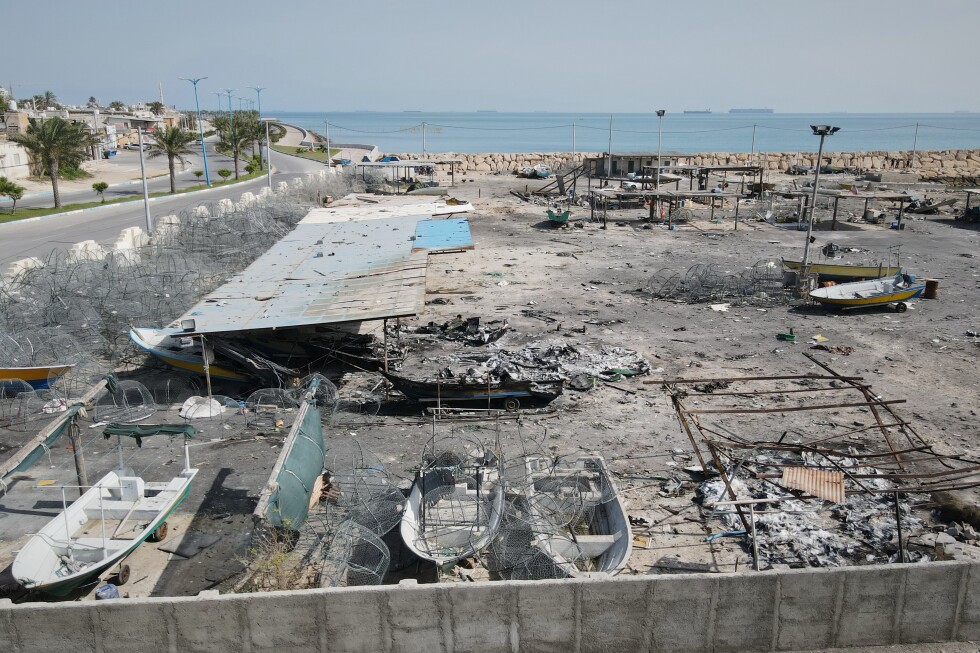
Complicating matters further is the extensive damage to energy infrastructure throughout the Middle East. Refineries in Saudi Arabia and Kuwait and oil tanker terminals in the United Arab Emirates and Iran were damaged during the conflict. While some repairs have been completed, significant work remains.
Additionally, several oil-producing nations reduced or halted production when shipping through the strait became impossible, as their storage facilities reached capacity. Restarting production isn’t instantaneous, though Lynch noted that some Middle Eastern producers, particularly Saudi Arabia, have demonstrated the ability to ramp up output quickly in the past.
As the situation develops, consumers should expect gradual improvement in prices rather than an immediate return to pre-conflict levels, with the full normalization process likely extending well into the coming months.
Fact Checker
Verify the accuracy of this article using The Disinformation Commission analysis and real-time sources.

7 Comments
Glad to see the Strait of Hormuz reopened, but the article’s warning about slow price relief at the pump is a bit concerning. I hope consumers don’t have to wait too long to feel the benefits of this development.
The reopening of the Strait of Hormuz is certainly good news for consumers. But the expert’s point about gasoline prices rising quickly yet falling slowly is a fair one. Even with crude oil prices dropping, it may take time for the relief to trickle down to the pump.
As an investor, I’ll be watching this situation closely. The quick drop in oil prices is a good sign, but the potential for a gradual decline in gasoline prices is an important consideration. I wonder how this will impact energy and commodity stocks in the near term.
While the drop in oil prices is encouraging, I’m not surprised to hear that gasoline prices may take longer to normalize. The complexities of the global energy supply chain are significant, and it’s prudent to expect a gradual process rather than an immediate correction.
It’s promising to see the Strait of Hormuz back in operation, but I’m curious to hear more about the other factors that could influence how quickly gasoline prices normalize. Surely the global supply chain and refining capacity will play a role as well.
The reopening of the Strait of Hormuz is definitely a positive development, but I agree that the potential for slow gasoline price declines is a concern. It will be interesting to see how this all plays out in the coming weeks and months.
Interesting development in the Strait of Hormuz situation. If the waterway remains open, that should help ease global energy supply concerns and potentially bring down gasoline prices over time. However, as the article notes, the price drop may be gradual rather than immediate.