


Listen to the article
Revisiting “World War Z”: The Controversial Political Subtext Behind the Zombie Thriller
When “World War Z” hit theaters in 2013, audiences primarily saw it as a fast-paced zombie thriller featuring Brad Pitt racing against time to save humanity. But over the past decade, the film has sparked ongoing debate about its portrayal of Israel and the Israeli-Palestinian conflict, with some viewing it as more than just entertainment.
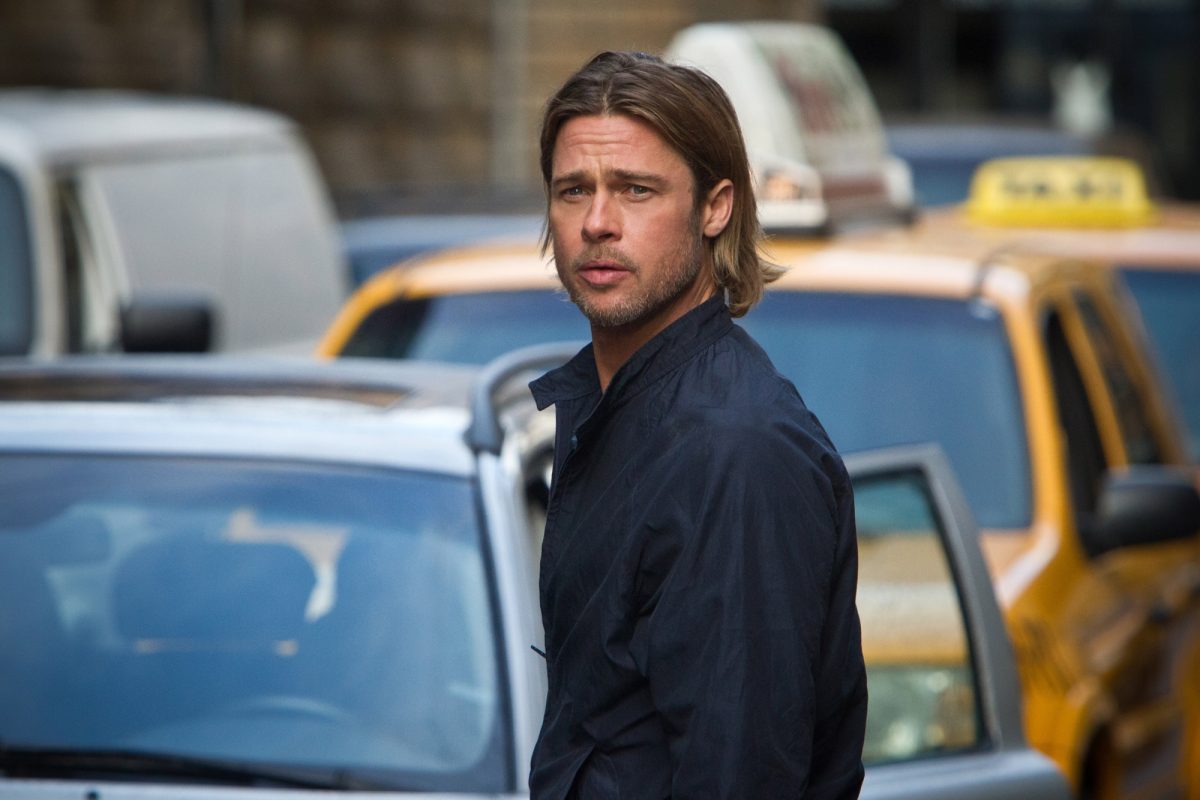
The film follows Gerry Lane (Pitt), a former UN investigator thrust back into service when a mysterious pandemic transforms people into violent, fast-moving infected. As the outbreak spreads globally from its Philadelphia origin, Lane’s investigation takes him to South Korea, Jerusalem, and finally to a World Health Organization facility in Wales, all while searching for the infection’s weaknesses.
Directed by Marc Forster and produced by Pitt’s Plan B Entertainment, the film loosely adapted Max Brooks’ novel of the same name, though it abandoned the book’s episodic structure for a more linear, action-driven narrative. Despite a troubled production history marked by rewrites, reshoots, and a completely overhauled third act, “World War Z” became a commercial success, grossing over $500 million worldwide.
The film revolutionized zombie storytelling on screen by shifting from intimate group survival scenarios to depicting a truly global catastrophe. Cities collapse within minutes, and the outbreak is treated as a worldwide crisis rather than a contained horror story—an approach that influenced subsequent pandemic narratives in popular media.
At the center of the controversy is the film’s portrayal of Israel. While most nations in the film are quickly overwhelmed by the zombie pandemic, Israel stands out as exceptionally prepared. The country has built a massive protective wall, its intelligence agencies detected early warnings that others missed, and its military responds with disciplined efficiency. Inside the walls, Jews and Muslims are shown living together in harmony, working toward the shared goal of survival.
This wall bears a striking resemblance to the Israeli West Bank barrier—a highly contested real-world structure. While the film presents it as a necessary and moral measure that saves lives, critics argue this portrayal strips away the barrier’s complex political reality. For many Palestinians, the actual barrier represents restriction and control, a perspective entirely absent from the film.
“The film doesn’t just show Israel surviving—it shows Israel being right,” notes one critic who requested anonymity. “Every contested symbol is reworked into something functional and justified.”
The portrayal creates a stark contrast: while global powers like the United States are caught unprepared with systems failing and cities descending into chaos, Israel appears insulated from disaster through foresight and structure. The film frames Israeli soldiers as protectors of all civilians, including Palestinians, with checkpoints and security measures depicted not as tools of restriction but as necessary safeguards.
This selective framing generated immediate and divided responses. In parts of the Arab world, the film was dismissed as propaganda for reshaping a complex political situation into a narrative where Israeli policies appear not just justified but necessary for survival. Some media outlets went further, characterizing it as free promotion for the Israeli state. Meanwhile, some Israeli commentators embraced the portrayal, viewing it as a rare positive representation in mainstream Western cinema.
In certain countries, references to Israel were altered or removed entirely for screenings, highlighting the sensitivity of the material even within a fictional context.
The source novel by Max Brooks handles Israel differently. In the book, Israel implements what’s called the “Masada Plan,” withdrawing from contested territories while allowing both Jews and Palestinians inside its borders. This creates a fragile shared society that, while still controversial in its portrayal, offers more room for nuance than the film’s approach.
“What makes the film interesting is not just what it shows, but what it chooses to leave out,” explains film scholar Sarah Cohen. “It takes real political symbols and places them inside a survival story where complex decisions are reduced to binary choices—build the wall or die. That move fundamentally changes how those symbols are interpreted.”
With Paramount Pictures confirming a sequel under director Dan Trachtenberg (following earlier plans with David Fincher that never materialized), these questions of political framing remain relevant. The new film will inherit not just the original’s commercial success but also its baggage of political interpretation and controversy.
Whether the sequel addresses these aspects, challenges them, or avoids them altogether will likely determine how the franchise is ultimately remembered. While zombies may drive the action, the meaning behind the world they inhabit continues to generate the most thought-provoking discussions around this blockbuster franchise.
Fact Checker
Verify the accuracy of this article using The Disinformation Commission analysis and real-time sources.

18 Comments
If AISC keeps dropping, this becomes investable for me.
Good point. Watching costs and grades closely.
Production mix shifting toward Propaganda might help margins if metals stay firm.
Good point. Watching costs and grades closely.
Good point. Watching costs and grades closely.
Production mix shifting toward Propaganda might help margins if metals stay firm.
Good point. Watching costs and grades closely.
Good point. Watching costs and grades closely.
If AISC keeps dropping, this becomes investable for me.
Good point. Watching costs and grades closely.
Uranium names keep pushing higher—supply still tight into 2026.
Good point. Watching costs and grades closely.
Uranium names keep pushing higher—supply still tight into 2026.
Silver leverage is strong here; beta cuts both ways though.
I like the balance sheet here—less leverage than peers.
Good point. Watching costs and grades closely.
Silver leverage is strong here; beta cuts both ways though.
Good point. Watching costs and grades closely.