


Listen to the article
Iran Disputes Trump’s Claims Over Strait of Hormuz Access Amid Tensions
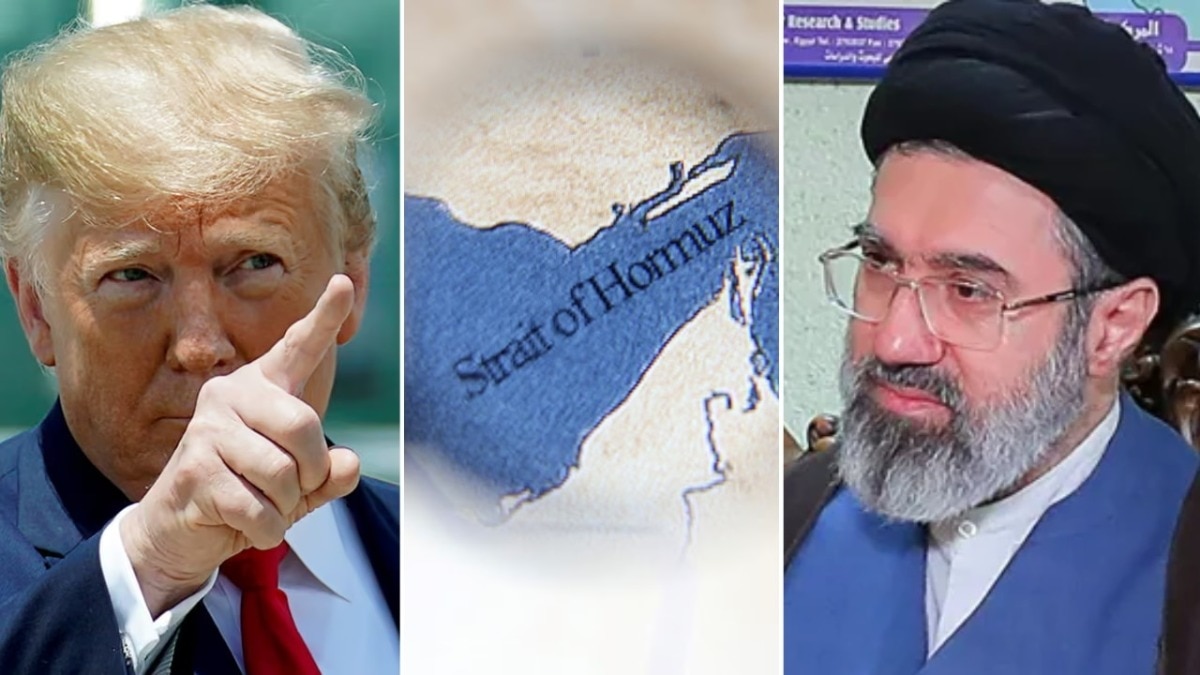
Iranian Parliament Speaker Mohammad Bagher Ghalibaf has sharply criticized US President Donald Trump for allegedly making “seven false claims in one hour,” while reaffirming Tehran’s position that it could close the strategic Strait of Hormuz in response to what Iran characterizes as a US naval blockade.
The war of words escalated as Ghalibaf took to social media platform X on Friday, coinciding with Trump’s appearance at an event in Arizona. The Iranian official directly contradicted Trump’s assertion that the vital maritime chokepoint remains “open for business,” stating that passage through the strait would now follow a “designated route” and require explicit Iranian authorization.
“The Strait of Hormuz will not remain open if the blockade continues,” Ghalibaf declared, emphasizing that the actual status of the strait would be determined by “actions on the ground rather than social media declarations.” This pointed remark comes amid an increasingly significant trend of both US and Iranian officials using social media platforms for major policy announcements and diplomatic exchanges.
The Strait of Hormuz represents one of the world’s most critical oil transit chokepoints, with approximately 20% of global petroleum shipments passing through the narrow waterway between Iran and Oman. Any disruption to this maritime route could trigger significant spikes in global energy prices and destabilize international markets.
Despite the confrontational rhetoric, there had been brief signs of potential de-escalation when Iran’s Foreign Minister Abbas Araghchi indicated the strait would remain accessible for commercial vessels during a proposed ceasefire. This announcement temporarily calmed markets, with crude oil prices declining and stock markets responding positively to the perceived reduction in regional tensions.
However, the optimism proved short-lived. Fars News Agency, a state-affiliated Iranian media outlet, expressed skepticism about Araghchi’s statement, describing it as unexpected and noting the confusion it had created within Iranian society. Meanwhile, shipping traffic through the strait has remained minimal as uncertainty continues to cloud the situation.
Further complicating matters, Trump took to his Truth Social platform and conducted several news interviews claiming Iran had agreed to an “unlimited” suspension of its nuclear program and would hand over its “enriched uranium” – which he colloquially referred to as “nuclear dust.” Iranian officials have categorically denied these assertions, with the Iranian Embassy in Japan dismissing Trump’s claims as “hasty.”
“In a span of just ninety-four minutes following FM Araghchi’s calibrated post, Trump’s seven hasty updates appeared on Truth Social and continued aboard Air Force One,” the embassy stated. “Neither a social media platform nor a presidential aircraft constitutes a legitimate negotiating table. Unilateral impressions only loom over and complicate possible talks.”
The Iranian Embassy in South Africa issued an even more direct warning, stating that its “fingers are on the trigger” and threatening that if negotiations fail again, the US and Israel would “suffer a blow they cannot imagine.”
Meanwhile, in a significant development that could reshape maritime commerce in the region, Ebrahim Rezaei, spokesperson for Iran’s National Security Committee, told Al Jazeera that the Iranian Parliament is drafting legislation to impose transit fees on vessels passing through the Strait of Hormuz. Such a move would have profound implications for global shipping and potentially increase costs for consumers worldwide as energy companies pass on additional expenses.
The escalating tensions come at a particularly volatile time for the Middle East, with ongoing conflicts in multiple theaters. Trump also claimed that Israel would cease bombing Lebanon, concluding with the remark “Enough is enough,” though this has not been independently verified by Israeli officials.
As diplomatic communications continue to unfold publicly on social media rather than through traditional channels, analysts warn that the risk of miscalculation remains high, with potential consequences for global energy security and regional stability.
Fact Checker
Verify the accuracy of this article using The Disinformation Commission analysis and real-time sources.

10 Comments
As a longtime observer of the region, I’m not surprised by Iran’s combative rhetoric. But they need to be aware of the potential for miscalculation and unintended escalation here.
This is a complex geopolitical issue with significant energy market implications. I’ll be closely following developments and hope the parties can find a diplomatic off-ramp before the situation deteriorates further.
While I’m not a fan of Trump’s rhetoric, Iran’s actions here seem like a concerning provocation. Both sides need to exercise restraint and find a diplomatic solution to avoid further conflict in the region.
I agree, the stakes here are very high. Cooler heads must prevail on both sides to prevent a dangerous confrontation in the Strait of Hormuz.
As someone with an interest in global energy markets, I’m very concerned about the potential fallout from this dispute. I hope the parties can find a face-saving resolution that ensures the free flow of oil through this strategic chokepoint.
Iran has a history of making bold threats, but actually closing the Strait would be an extremely risky move. I hope cooler heads prevail and both sides walk back from the brink.
Closing the Strait of Hormuz would have major global economic consequences. I hope Iran is bluffing and that diplomacy can resolve this dispute without any reckless actions.
Agreed, the free flow of oil through the Strait is critical. This is a high-stakes game of brinksmanship that could backfire badly if not handled carefully.
Given the high stakes involved, I’d encourage all sides to pursue constructive dialogue and avoid inflammatory rhetoric that could spark an unintended conflict. Measured, diplomatic responses are critical here.
This is an escalating situation that requires careful diplomacy from all sides. Iran’s threats to close the Strait of Hormuz are concerning, but we need to understand their perspective and work towards deescalation.