


Listen to the article
As Jimmy Lai’s son awaits Trump-Xi meeting, hope persists for father’s release from Hong Kong prison
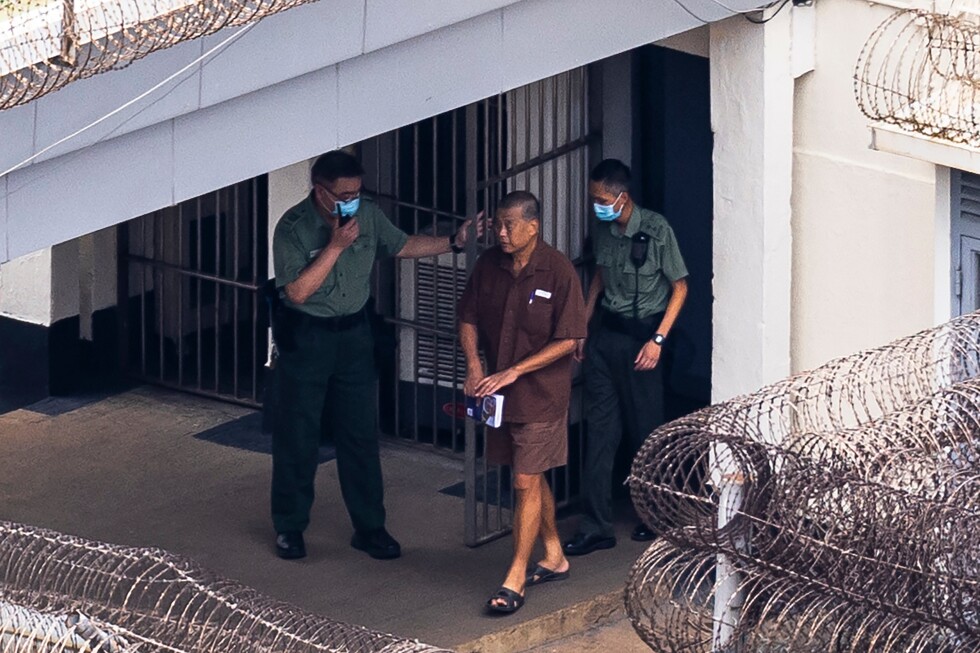
Pro-democracy activist Jimmy Lai once looked to former U.S. President Donald Trump for help in preventing Hong Kong’s controversial national security law. That law not only took effect but was later used to sentence the 78-year-old media mogul to 20 years in prison.
Now, with Trump expected to meet Chinese President Xi Jinping in Beijing next week, Lai’s son Sebastien is hoping the president-elect can secure his father’s freedom.
“My father will die in prison if he’s not freed,” Sebastien Lai, 31, told The Associated Press in a recent interview. “The Chinese government would be complicit in killing him.”
Jimmy Lai, a British citizen and founder of the now-shuttered pro-democracy newspaper Apple Daily, has become a symbol of Hong Kong’s diminishing freedoms since the former British colony returned to Chinese rule in 1997. His case represents one of the most high-profile prosecutions under the national security law imposed by Beijing following massive anti-government protests in 2019.
Trump has already expressed sympathy for Lai’s plight. “I feel so badly,” he told reporters last December after Lai was convicted of conspiracy to collude with foreign forces and publishing seditious articles. According to sources familiar with diplomatic discussions, Trump raised Lai’s case during his October meeting with Xi.
Mark Clifford, president of the Committee for Freedom in Hong Kong Foundation, said people briefed on that meeting told him that Xi and his staff “noted” Trump’s remarks without pushing back aggressively – potentially signaling willingness to discuss the matter.
Behind the scenes, Trump has reportedly instructed Treasury Secretary Scott Bessent to raise the issue of Lai’s release during trade discussions with China. According to Clifford, Bessent mentioned Trump’s desire to free Lai in a recent meeting with Chinese representatives, who acknowledged it without significant comment.
“It is positive that senior Chinese officials have stopped pushing back on the issue,” Clifford noted.
However, Beijing’s public stance remains firm. In March, Chinese Foreign Ministry spokesperson Guo Jiakun called Lai the mastermind behind the 2019 Hong Kong protests. This week, the ministry avoided directly addressing whether China would consider releasing Lai, instead reiterating that Hong Kong issues are internal affairs and foreign interference is not permitted.
The Hong Kong government maintains that Lai’s case has nothing to do with press freedom, insisting he was convicted after an open and fair trial.
U.S. diplomatic efforts to secure prisoner releases from China have had mixed results in recent years. In 2024, American pastor David Lin was freed after nearly two decades in Chinese prison as part of a broader prisoner exchange between Washington and Beijing.
But human rights advocates say China has grown increasingly resistant to releasing political prisoners under Xi’s leadership. Nobel Peace Prize laureate Liu Xiaobo died in Chinese custody in 2017 despite international calls for his medical release abroad.
“China knows that by taking a very tough and unrelenting position that most countries in the world are not going to be willing to do more than privately raise a case,” said human rights lawyer Jared Genser, who previously represented Liu. “That self-censorship to me is the biggest factor… in our inability to secure the release of political prisoners under Xi Jinping, as compared to Hu Jintao.”
John Kamm, founder of the Dui Hua Foundation, which advocates for political prisoners, believes China might consider concessions if it wants something in return. “China could agree to release Lai if the U.S. makes concessions on Beijing’s other priorities,” he said.
Thomas Kellogg, executive director of Georgetown Center for Asian Law, sees potential incentives for both sides to reach an agreement. Releasing Lai would allow China to signal it’s ready to move forward after nearly six years since the security law was imposed, while giving the Trump administration a diplomatic victory.
“If the Trump administration is pushing very hard for Jimmy Lai’s release, then we could get a positive outcome,” Kellogg said.
Over 100 U.S. lawmakers from both parties sent a letter to the White House on Thursday urging Trump to seek Lai’s release at the upcoming summit with Xi.
Meanwhile, Lai’s legal challenges continue to mount. The Hong Kong government is seeking to confiscate his assets on national security grounds, and his family reports he suffers from heart palpitations and diabetes. Sebastien Lai, who maintains contact with his father through letters, says the older Lai has decided not to appeal his conviction.
“It’s a lose-lose scenario for every single person,” the younger Lai said, adding that his father’s imprisonment would devastate the family and potentially turn him into a martyr – something he believes benefits no one.
Fact Checker
Verify the accuracy of this article using The Disinformation Commission analysis and real-time sources.
