


Listen to the article
NATO Faces Growing Capability Gap as Alliance Relies Heavily on US Military Power
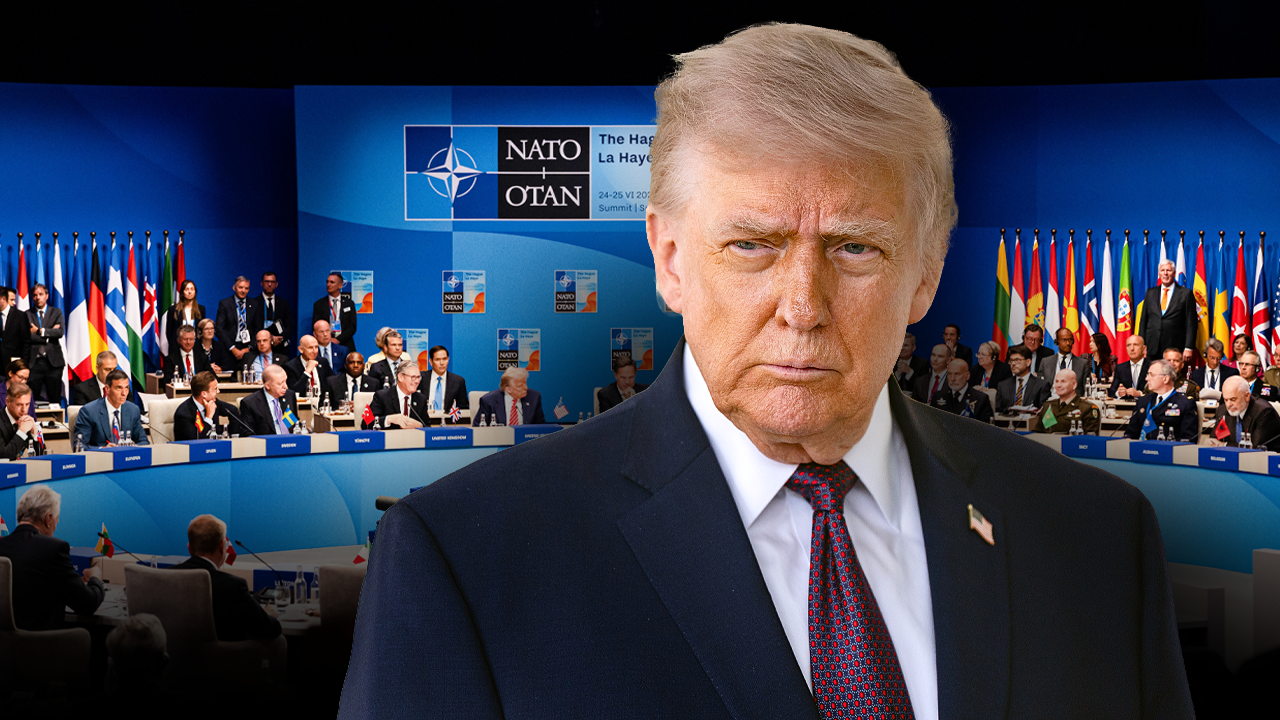
NATO has evolved into a “bloated architecture” overly dependent on American military might, according to former senior national security advisor Keith Kellogg in an exclusive interview with Fox News Digital.
As President Donald Trump increases pressure on NATO allies to boost defense spending—including the ordered withdrawal of 5,000 U.S. troops from Germany and potential cuts in Spain and Italy—a fundamental concern is emerging: despite years of increased European defense budgets, NATO remains heavily reliant on American military capabilities across critical domains.
This widening gap between political commitments and actual military capability has sparked calls for structural reforms within the alliance as NATO confronts intensifying threats from Russia and ongoing instability in the Middle East.
“I told the president… maybe you ought to talk about a tiered relationship with NATO,” Kellogg described from conversations with Trump during his first term. “We need to develop a new defensive alignment with Europe.”
Kellogg argues the alliance has expanded politically without corresponding military growth, creating what he views as an increasingly dangerous capability shortfall.
“You started with 12, and you went to 32, and in the process, I think you diluted the impact,” he stated, describing today’s NATO as “a very bloated architecture.”
The retired lieutenant general pointed to serious readiness issues among key allies: “Their defense industry and defense forces have atrophied. When you look at the Brits right now, they could barely deploy forces: they have two aircraft carriers, both under maintenance. Their brigades are like one out of six that work.”
Not everyone shares this pessimistic assessment. John R. Deni, research professor at the U.S. Army War College, contends that NATO “has never been more relevant” to U.S. national security.
“The reason for that is twofold,” Deni explained. “One, it’s our comparative advantage versus the Chinese and the Russians… they don’t have anything like this.” He added that “NATO underwrites the security and stability of our most important trade and investment relationship” between North America and Europe.
By around 2010, the United States accounted for approximately 65% to 70% of NATO defense spending, according to analysis from Barak Seener of the London-based Henry Jackson Society think tank.
“They’ve always been dependent on the U.S.,” Kellogg noted of European allies.
Deni acknowledged that “in the past… it was fair to say that the European allies were overly reliant upon the Americans for conventional defense,” particularly during the 2000s when Washington pushed European allies to focus on operations in Afghanistan and Iraq rather than territorial defense.
The asymmetry is most apparent in nuclear deterrence, with the U.S. providing the overwhelming majority of NATO’s nuclear arsenal. This includes intercontinental ballistic missiles, submarine-launched systems and strategic bombers—meaning deterrence ultimately depends on the assumption of American retaliation.
A NATO official told Fox News Digital: “The U.S. nuclear deterrent cannot be replaced, but it is clear that Europe needs to step up. There’s no question. There needs to be a better balance when it comes to our defense and security.”
Beyond nuclear weapons, the dependency extends throughout NATO’s operational infrastructure. Seener highlighted U.S.-provided intelligence, surveillance and reconnaissance—as well as logistics and command systems—as essential to NATO operations.
“Without U.S. intelligence and surveillance, NATO loses situational awareness and early warning capabilities,” Seener explained. “So that means that Russia, for example, can attack Europe. And theoretically, if there’s no NATO and the U.S. is not involved, Europe would not be aware, or it would take it too long to be able to defend itself.”
Kellogg also pointed to air and missile defense as a critical gap, noting that while European countries rely on U.S.-made systems such as Patriot and THAAD, “they don’t have a system that’s comparable.”
The picture today shows some improvement, Deni argues, noting that “alliance defense spending has been up… and has spiked far more after 2022,” with Russia’s 2014 invasion of Crimea serving as a turning point.
Several European countries including Poland, Romania, Norway and Denmark are acquiring F-35 fighter jets from the U.S., but these capability improvements take time to materialize. “You can’t build an F-35 overnight,” Deni explained.
A NATO official acknowledged that the alliance “needs to move further and faster” to meet growing threats, highlighting new capability targets agreed by defense ministers in June 2025. These include a fivefold increase in air and missile defense, “thousands more” armored vehicles and tanks, and “millions more” artillery shells, along with doubling key enabling capabilities like logistics, transportation and medical support.
Kellogg’s warning is stark: NATO’s deterrence fundamentally depends on U.S. presence, particularly against Russia. If American forces are engaged elsewhere, NATO could face serious challenges in critical areas like intelligence and logistics.
“The one you always have to worry about… is Russia,” said Kellogg, who served as Trump’s special envoy for Ukraine and Russia in 2025.
The central question is not whether NATO still functions, but whether allies can adapt quickly enough to maintain its effectiveness in a rapidly changing security environment.
Fact Checker
Verify the accuracy of this article using The Disinformation Commission analysis and real-time sources.

10 Comments
This issue of NATO lagging behind the US militarily is certainly concerning. Given the geopolitical tensions with Russia and instability in the Middle East, the alliance needs to bolster its own defense capabilities. I’m curious to see if and how NATO members respond to Trump’s calls for increased spending.
Absolutely. The Trump administration seems intent on pushing NATO members to step up their military commitments. It will be interesting to see if this results in meaningful improvements in European defense capabilities.
Interesting article on NATO’s military capability gap versus the US. It highlights the need for greater defense spending and capability alignment within the alliance to address emerging threats. I wonder what kind of “tiered relationship” with NATO the Trump administration had in mind.
Yes, the article raises valid concerns about NATO’s over-reliance on US military power. Structural reforms and a more equitable sharing of defense responsibilities will be crucial for the alliance’s future.
The Trump administration’s push for greater NATO defense spending is understandable, but the “tiered relationship” concept seems problematic. A strong, unified alliance should be the priority, not creating divisions. Hopefully the allies can find a constructive path forward on this issue.
You make a fair point. NATO’s collective security approach is crucial, and any structural changes need to be carefully considered to avoid weakening the alliance. Balancing burden-sharing with alliance cohesion will be the challenge.
This article highlights the long-standing challenge of ensuring NATO’s military capabilities keep pace with evolving threats. Increased European defense spending is a step in the right direction, but more work is clearly needed to address the capability gap with the US. It will be a complex issue to resolve.
Agreed. NATO needs to find the right balance between political commitments and tangible military capabilities. Reforms to the alliance’s structure and burden-sharing may be necessary, but should be done in a way that preserves unity and collective defense.
While I understand the US desire for greater burden-sharing within NATO, I’m a bit skeptical of the “tiered relationship” concept proposed. Maintaining a strong, cohesive alliance should be the priority, not creating divisions. Hopefully the allies can find a constructive way forward on this issue.
You raise a fair point. NATO’s unity and collective security approach is crucial. Any structural changes need to be carefully considered to avoid weakening the alliance. Balancing burden-sharing with alliance cohesion will be the challenge.