


Listen to the article
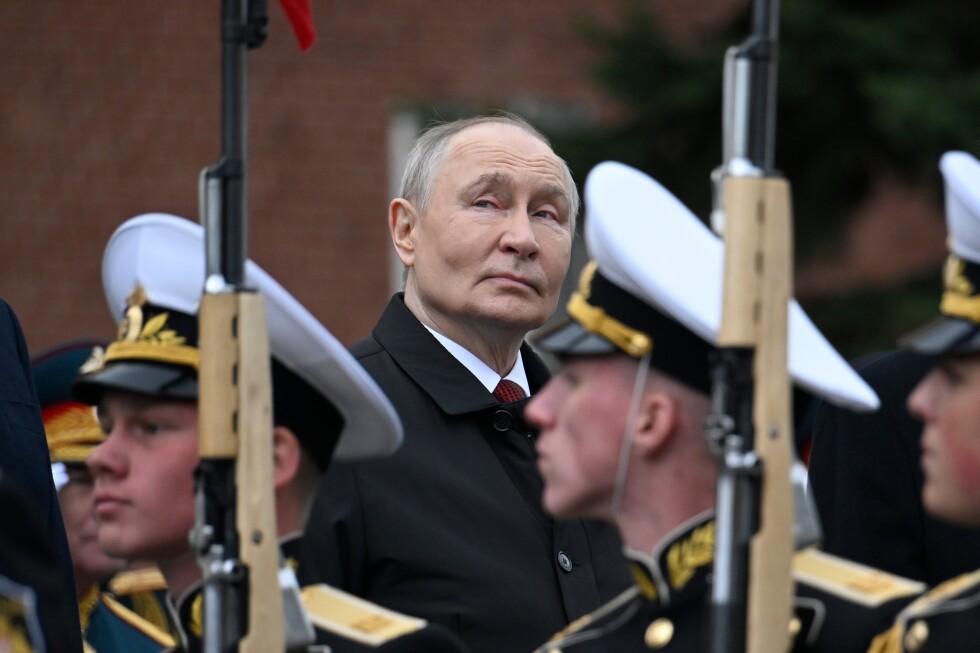
Russian forces marched across Moscow’s Red Square on Saturday in a scaled-down Victory Day parade that, for the first time in nearly two decades, featured no heavy weaponry. President Vladimir Putin used the occasion to project confidence about Russia’s military campaign in Ukraine, now entering its fifth year.
“Victory has always been and will be ours,” Putin declared to assembled troops. “The key to success is our moral strength, courage and valor, our unity and ability to endure anything and overcome any challenge.”
The annual May 9 celebrations, commemorating the Soviet Union’s defeat of Nazi Germany in World War II, took place amid heightened security concerns and a three-day ceasefire brokered by former U.S. President Donald Trump. Though officials cited “current operational situation” as the reason for the sudden format change, the absence of tanks and missile systems highlighted Moscow’s wariness about potential Ukrainian attacks on the capital.
In a significant diplomatic gesture, North Korean troops participated in the parade for the first time, acknowledging Pyongyang’s recent military support in the Russia-Ukraine conflict. North Korea has deployed soldiers to fight alongside Russian forces in repelling Ukrainian incursions into Russia’s Kursk region.
Security measures in Moscow were extensive, with authorities restricting mobile internet access and text messaging services throughout the capital. The government has steadily tightened internet censorship since the beginning of what it calls its “special military operation” in Ukraine.
The ceasefire surrounding the Victory Day celebrations has had a complicated trajectory. Russia initially declared a unilateral pause for Friday and Saturday, while Ukrainian President Volodymyr Zelenskyy announced a truce meant to begin on May 6. Neither held as both sides accused each other of continuing attacks. Trump’s announcement of a three-day ceasefire running through Monday included provisions for prisoner exchanges, which he suggested could mark the “beginning of the end” of the conflict.
Zelenskyy had previously suggested that Russian authorities feared drone attacks on Red Square during the celebrations. In a provocative move, he issued a decree mockingly “permitting” Russia to hold its Victory Day events and declaring Red Square temporarily off-limits for Ukrainian strikes. Kremlin spokesman Dmitry Peskov dismissed this as a “silly joke,” stating, “We don’t need anyone’s permission to be proud of our Victory Day.”
Despite Russia’s territorial gains along the 1,000-kilometer front line due to its superior military resources, Ukraine has demonstrated increasing capability in long-range warfare. Ukrainian forces have successfully targeted Russian energy facilities, manufacturing plants, and military depots using domestically developed drones capable of reaching targets more than 600 miles inside Russian territory.
Russian authorities had warned that if Ukraine attempted to disrupt the festivities, Russia would launch a “massive missile strike on the center of Kyiv,” advising civilians and foreign diplomatic staff to evacuate the Ukrainian capital. The European Union stated its diplomats would remain in Kyiv despite these threats.
The Victory Day celebrations hold profound significance in Russian national identity. The Soviet Union lost 27 million people in what Russians call the “Great Patriotic War,” creating a deep scar in the national psyche that transcends political divisions.
“We celebrate it with feelings of pride and love for our country, with understanding of our shared duty to defend the interests and future of our Motherland,” Putin said at the parade. “Our soldiers suffered colossal losses, made a colossal sacrifice in the name of freedom and dignity of the peoples of Europe.”
Several international leaders attended the Moscow celebrations, including Malaysia’s King Sultan Ibrahim Iskandar, Laos President Thongloun Sisoulith, Kazakhstan’s President Kassym-Jomart Tokayev, Uzbekistan’s President Shavkat Mirziyoyev, and Belarus’ President Alexander Lukashenko. Slovakia’s Prime Minister Robert Fico, representing an EU member state, met with Putin and laid flowers at the Tomb of the Unknown Soldier but did not attend the Red Square parade.
Since 2008, Victory Day parades have typically featured an extensive array of heavy weaponry, including nuclear-capable intercontinental ballistic missiles. This year’s scaled-down event, along with similar reductions in parades across Russia, reflects the Kremlin’s concerns about security amid the ongoing Ukraine conflict.
Fact Checker
Verify the accuracy of this article using The Disinformation Commission analysis and real-time sources.

7 Comments
The decision to forgo the display of heavy military equipment during the parade is likely a pragmatic move, considering the security risks and the current operational situation. It will be interesting to see how Russia navigates the balance between showcasing military might and maintaining public safety.
The absence of heavy weaponry in the Victory Day parade is a notable shift, likely driven by security concerns and the operational challenges faced by Russia in Ukraine. This decision seems to reflect a more cautious approach by the Kremlin, even as Putin seeks to project confidence.
Putin’s remarks about moral strength, courage, and unity seem aimed at rallying domestic support, but the format changes to the parade suggest some uncertainty or vulnerability. The inclusion of North Korean troops adds an intriguing international dimension to the event.
It will be worth monitoring the broader diplomatic implications of North Korea’s participation, as it could signal a deepening of ties between Moscow and Pyongyang in the context of the ongoing conflict.
Interesting to see the scaled-down Victory Day parade in Moscow amid heightened security concerns and the ongoing conflict in Ukraine. It seems Putin is trying to project confidence, but the absence of heavy weaponry suggests some caution as well.
The participation of North Korean troops is a notable diplomatic gesture, highlighting the geopolitical complexities surrounding the Russia-Ukraine conflict.
The participation of North Korean troops in the Moscow parade is an intriguing development that underscores the geopolitical complexities surrounding the Russia-Ukraine conflict. It will be important to follow how this evolving military and diplomatic relationship between Russia and North Korea unfolds in the coming months.