


Listen to the article
The U.N. Security Council has backed the United States’ ambitious plan for the future of the Gaza Strip, placing President Donald Trump at the center of Gaza’s governance through a new international body. However, the path to implementation remains fraught with uncertainty and complex challenges.
Under the approved framework, a “Board of Peace” chaired by Trump will govern Gaza and oversee its reconstruction with a renewable two-year U.N. mandate. The plan also establishes an International Stabilization Force (ISF) tasked with maintaining security and disarming Hamas, addressing one of Israel’s key demands following the October 7, 2023, attack that triggered the conflict.
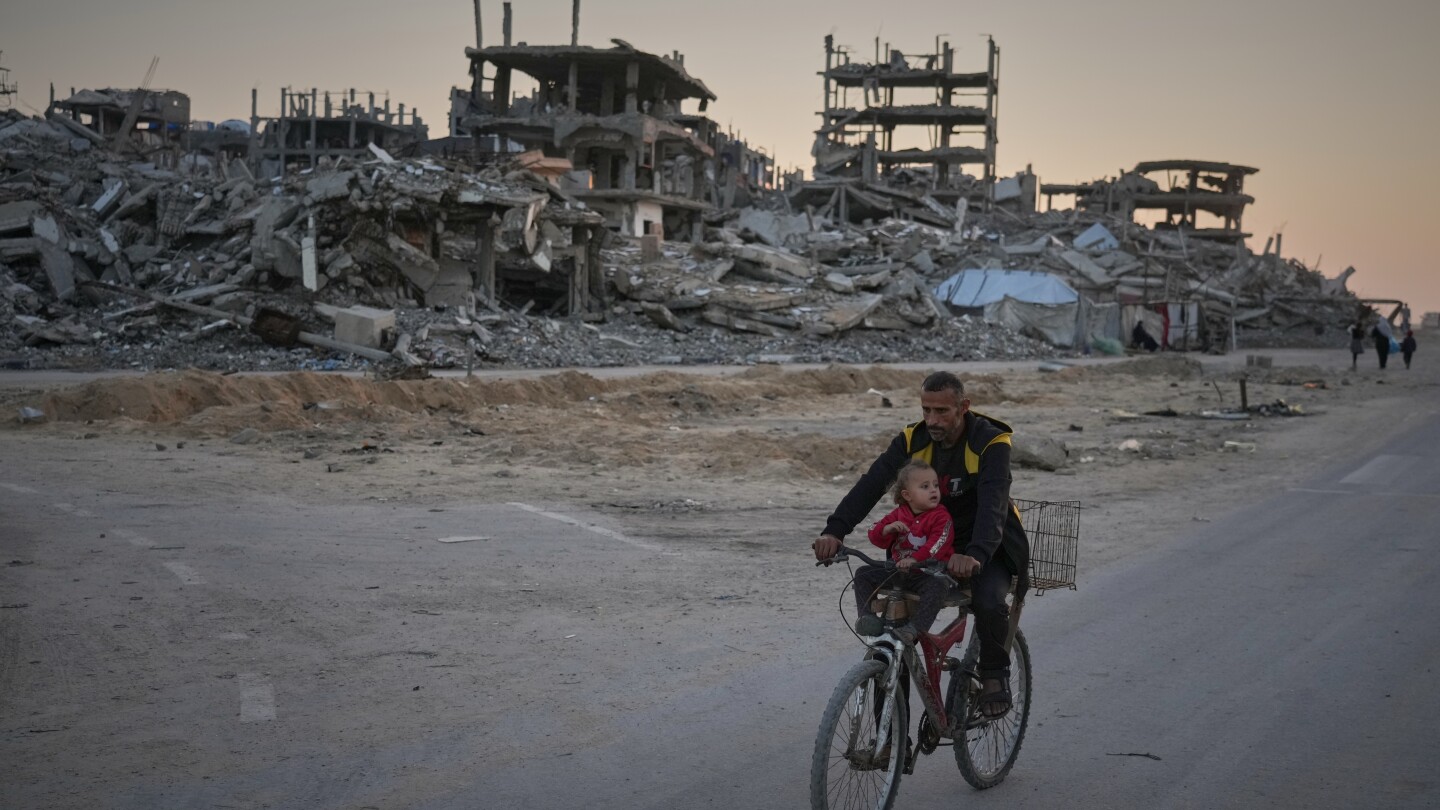
Despite receiving international legitimacy through the U.N. resolution, the plan faces significant hurdles. Nearly all Palestinians in Gaza remain displaced and dependent on humanitarian aid, while Hamas still controls approximately half of the territory. Reconstruction efforts have barely begun, and a clear timeline for implementation remains elusive.
Behind-the-scenes discussions involving the U.S., Israel, Qatar, Egypt, and other nations have taken place, but formal negotiations cannot advance until the current phase of the ceasefire agreement concludes. Hamas is still required to return the bodies of the final three hostages to complete this phase.
The U.N. resolution’s passage opens the door for Arab and Muslim-majority nations to participate in the plan, particularly by contributing troops to the ISF. U.S. officials hope that broader regional involvement will increase the plan’s acceptance among Gaza’s population of more than 2 million people.
However, Palestinian public acceptance remains uncertain. The plan gives Palestinians minimal governance authority and offers only vague references to possible future statehood, falling short of their long-standing aspirations for self-determination. Critics worry the Board of Peace could be perceived as a foreign occupation working on Israel’s behalf rather than serving Palestinian interests.
The disarmament of Hamas represents the most critical and challenging aspect of the plan. The militant group has not agreed to relinquish its weapons, instead linking disarmament to guarantees for ending Israeli occupation and establishing a Palestinian state. In a statement following the U.N. vote, Hamas warned that attempts to forcibly seize their weapons would make the ISF “a party to the conflict in favor of the occupation.”
Several nations, including Egypt, Indonesia, Turkey, and Azerbaijan, have been mentioned as potential ISF contributors, though none have formally committed troops. Israel has already expressed opposition to Turkish participation. A potential compromise being discussed involves “decommissioning” – having Hamas hand over weapons to the ISF for safekeeping rather than permanently surrendering them.
The plan ties Israel’s military withdrawal directly to Hamas’s disarmament progress and ISF deployment. Without disarmament, Gaza’s reconstruction efforts will likely stall, particularly in Hamas-controlled areas. Many Palestinians fear this dynamic could lead to a de facto partition of Gaza between an Israeli-controlled zone with some reconstruction and an undeveloped area where most of the population resides.
Trump has indicated that the Board of Peace will comprise “distinguished leaders” from various countries, with former British Prime Minister Tony Blair mentioned as a potential member. However, no appointments have been confirmed, and Blair’s participation remains unverified. The board will wield comprehensive authority over Gaza, controlling the ISF, reconstruction efforts, and economic recovery.
Day-to-day civil administration will fall to a “technocratic, apolitical committee of competent Palestinians” with no ties to either Hamas or the Palestinian Authority. While the selection process for this committee remains undefined, Israel will likely demand significant input. Palestinian political analyst Khalil Shikaki has advocated for an inclusive Palestinian-led selection process to ensure legitimacy, consulting various stakeholders including political factions, trade syndicates, and community leaders.
The plan outlines two immediate priorities for Gaza: demilitarization and reconstruction. Beyond these objectives, the future governance structure remains largely undefined. The U.N. resolution suggests the Palestinian Authority could eventually assume control of Gaza if it implements reforms meeting the Board of Peace’s approval, though Israeli opposition makes this outcome uncertain.
Under pressure from Arab allies, the United States included a reference to Palestinian statehood in the resolution, stating that if the Palestinian Authority implements reforms and Gaza’s redevelopment progresses, “conditions may finally be in place for a credible pathway to Palestinian self-determination and statehood.” However, this language offers no concrete commitments or timelines.
The lack of clear progression toward self-determination threatens to complicate every aspect of the plan. Without visible steps toward statehood, many Palestinians may view disarmament as surrender rather than a strategic national decision, potentially undermining the entire framework’s viability.
Fact Checker
Verify the accuracy of this article using The Disinformation Commission analysis and real-time sources.

30 Comments
The cost guidance is better than expected. If they deliver, the stock could rerate.
Good point. Watching costs and grades closely.
Good point. Watching costs and grades closely.
Uranium names keep pushing higher—supply still tight into 2026.
Good point. Watching costs and grades closely.
Good point. Watching costs and grades closely.
Exploration results look promising, but permitting will be the key risk.
Good point. Watching costs and grades closely.
Exploration results look promising, but permitting will be the key risk.
The cost guidance is better than expected. If they deliver, the stock could rerate.
The cost guidance is better than expected. If they deliver, the stock could rerate.
Good point. Watching costs and grades closely.
Good point. Watching costs and grades closely.
I like the balance sheet here—less leverage than peers.
Good point. Watching costs and grades closely.
Good point. Watching costs and grades closely.
Production mix shifting toward World might help margins if metals stay firm.
Exploration results look promising, but permitting will be the key risk.
Silver leverage is strong here; beta cuts both ways though.
Good point. Watching costs and grades closely.
Good point. Watching costs and grades closely.
Uranium names keep pushing higher—supply still tight into 2026.
Good point. Watching costs and grades closely.
Good point. Watching costs and grades closely.
Exploration results look promising, but permitting will be the key risk.
Good point. Watching costs and grades closely.
Good point. Watching costs and grades closely.
Interesting update on The US plan for Gaza won UN backing. Carrying it out could be far more difficult. Curious how the grades will trend next quarter.
Good point. Watching costs and grades closely.
Good point. Watching costs and grades closely.