


Listen to the article
Thailand Halts U.S.-Brokered Ceasefire After Border Mine Explosion Injures Soldiers
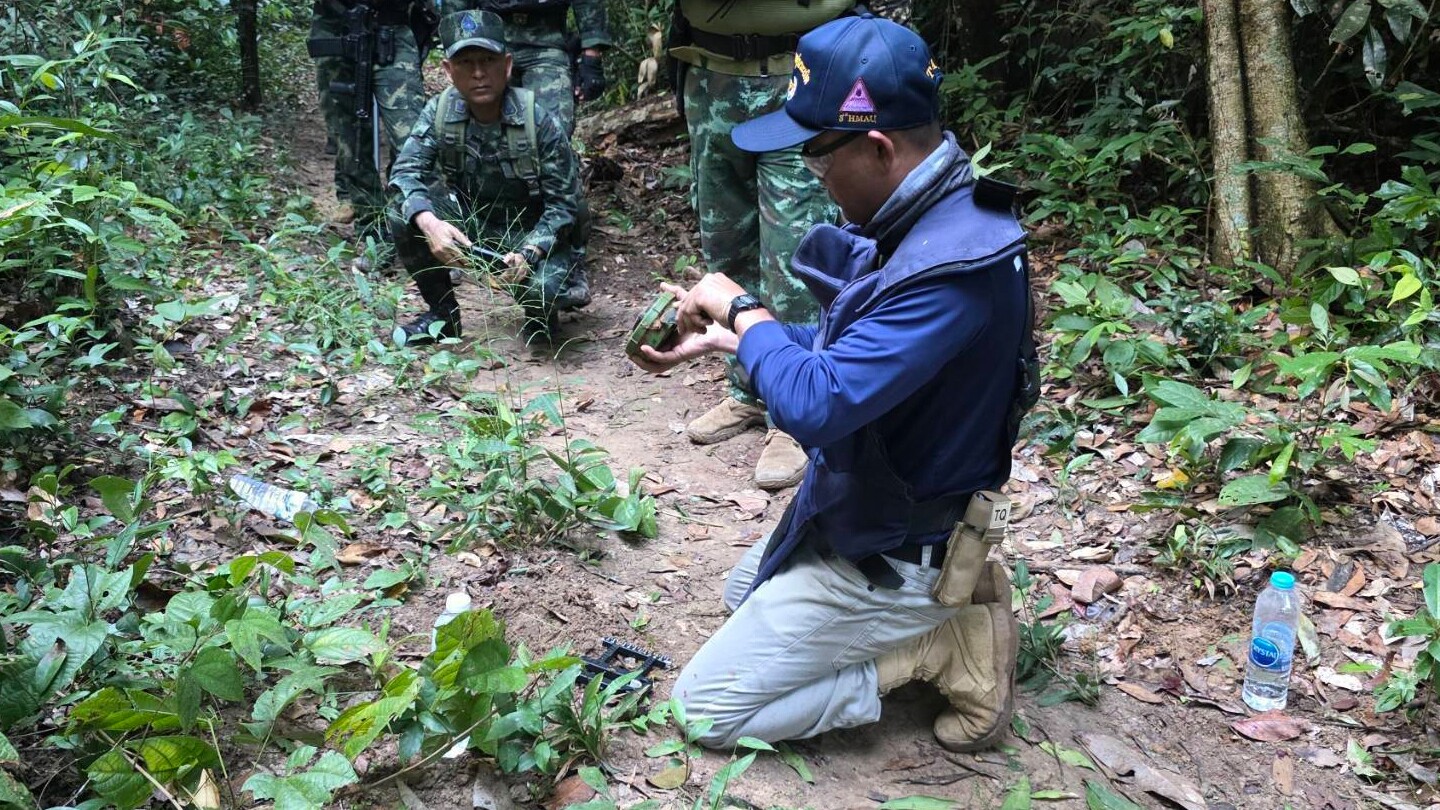
Thailand has indefinitely suspended implementation of a U.S.-brokered ceasefire with Cambodia following a land mine explosion that injured four Thai soldiers at their shared border. The incident, which occurred Monday in Sisaket province, has reignited tensions between the Southeast Asian neighbors just weeks after they signed a truce agreement.
Thai Prime Minister Anutin Charnvirakul visited the wounded soldiers Tuesday as the Thai military accused Cambodia of planting new mines in violation of the peace agreement. One soldier lost his right foot in the explosion, while three others sustained minor injuries.
“Cambodia’s utter lack of sincerity” was on display in this incident, Thai Foreign Ministry spokesperson Nikorndej Balankura said Tuesday. Thailand is demanding an apology, a thorough investigation, and preventive measures before resuming implementation of the ceasefire. The government has also postponed the planned release of 18 Cambodian soldiers captured during July’s border clashes.
Cambodia has denied responsibility for the explosion. Defense Ministry spokesperson Maly Socheata attributed the incident to “remnants of past conflicts” and urged Thai troops to avoid patrolling in known minefield areas. She reaffirmed Cambodia’s commitment to working with Thailand to “promote peace and stability between the two countries, especially ensuring the security and safety of civilians.”
The border dispute between Thailand and Cambodia erupted into five days of intense fighting in late July, resulting in dozens of casualties among soldiers and civilians on both sides. The conflict has historical roots in territorial disagreements, with sporadic mine explosions occurring both before and after the July clashes.
Malaysia initially mediated the ceasefire talks, but the breakthrough came after U.S. President Donald Trump threatened to withhold trade privileges from both countries. The deal was eventually signed during the Association of Southeast Asian Nations summit in October.
Matthew Wheeler, Southeast Asia senior analyst for the Belgium-based International Crisis Group, expressed skepticism about the durability of the agreement. “It was predictable that the agreement would break down, because it was plainly concluded to placate President Trump on matters unrelated to the conflict, namely, trade and Trump’s desire to be perceived as a peacemaker,” Wheeler noted.
He also pointed to strong nationalist sentiment in Thailand as an obstacle to resolving the conflict through diplomatic means. This domestic political factor has made it difficult for the Thai government to adopt a conciliatory approach without appearing weak to its domestic audience.
The ceasefire terms had included provisions for both countries to remove heavy weapons and land mines from the contested border region. The Thai government claims some progress had been made on arms removal before this week’s incident halted the process.
Both Thailand and Cambodia are important economic players in Southeast Asia, with their border tensions representing one of several territorial disputes complicating regional integration efforts within ASEAN. The conflict also highlights the continued danger posed by unexploded ordnance and land mines in a region that has experienced multiple conflicts in recent decades.
Thai officials have indicated that the situation need not escalate if Cambodia demonstrates sincerity in addressing their concerns. However, with trust severely damaged, the path to fully implementing the ceasefire appears increasingly uncertain, potentially requiring renewed international diplomatic intervention to prevent further deterioration in bilateral relations.
Fact Checker
Verify the accuracy of this article using The Disinformation Commission analysis and real-time sources.

5 Comments
The Thai government’s request for an apology and investigation seems reasonable. Both sides should strive for open communication and take responsibility for the safety of their soldiers and citizens along the border. Resolving these disputes through diplomatic channels is crucial.
Absolutely. Avoiding tit-for-tat escalation and finding a peaceful, negotiated settlement should be the top priority here. Transparency and good faith efforts by both parties will be key to restoring stability.
While the details are still emerging, the use of land mines is extremely concerning. Both countries should abide by international humanitarian laws and norms prohibiting indiscriminate weapons. I hope they can work together to clear any remaining mines and prevent future incidents.
This is a concerning incident, and I hope the injured soldiers recover fully. Land mines are incredibly dangerous and have no place in modern conflict resolution. Both countries need to work together to prevent further escalation and find a peaceful solution to their border disputes.
Agreed. Unresolved land mine issues can lead to tragic accidents and undermine efforts to build trust. The governments should prioritize demining and transparency to avoid future incidents.