


Listen to the article
Russian airstrikes killed at least two people in Ukraine on Sunday, including a teenager, as the conflict continued to exact a heavy civilian toll. Meanwhile, Ukrainian forces struck back with a significant attack on a drone factory in southwestern Russia.
In Chernihiv, northern Ukraine, a nighttime drone strike killed a 16-year-old boy and injured four adults, according to Dmytro Bryzhynskyi, head of the city’s military administration. The attack damaged several homes and caused fires in the area, highlighting the ongoing threat to civilian infrastructure.
The southern Ukrainian city of Kherson also came under attack, where Russian drones targeted a civilian van driving through the city center. One man died from his wounds, while another was hospitalized with blast injuries, reported Oleksandr Prokudin, head of the regional administration.
Ukraine’s air force reported that Russia launched 236 drones into Ukrainian territory overnight. Ukrainian defenses managed to shoot down 203 of these unmanned aircraft, though 32 successfully hit targets across 18 locations throughout the country. The high number of drones deployed illustrates Russia’s continued reliance on unmanned systems to conduct widespread attacks.
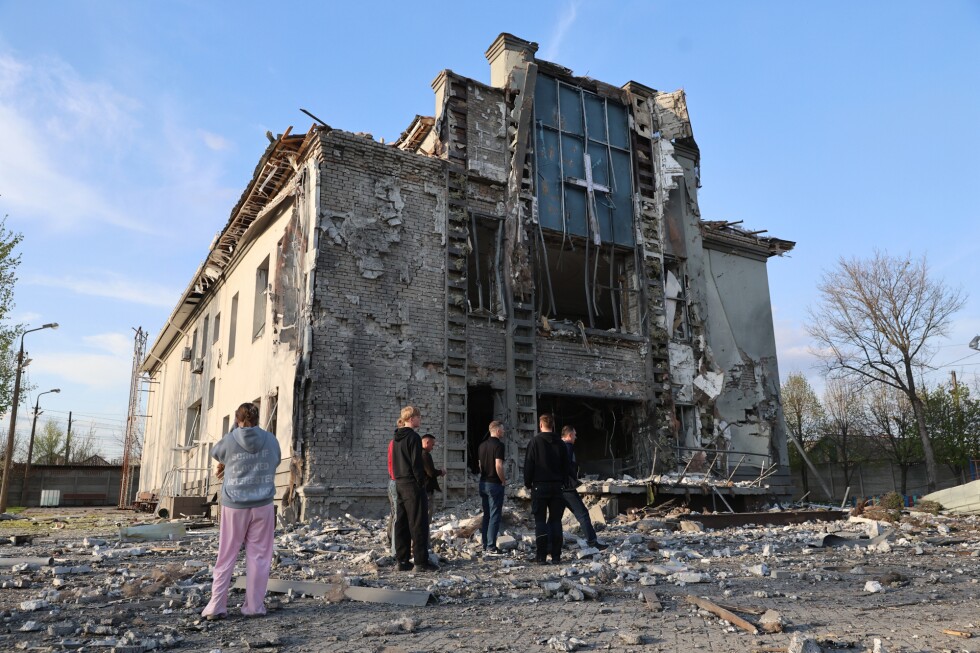
In a significant counterstrike, Ukraine targeted the Atlant Aero factory in Taganrog, a Russian city approximately 55 kilometers east of Russian-occupied eastern Ukraine. According to Ukraine’s General Staff, the factory designs and produces reconnaissance and strike drones, including components for larger unmanned aerial vehicles capable of carrying guided bombs weighing up to 250 kilograms.
Ukraine’s navy claimed responsibility for the attack, stating it used domestically manufactured Neptune cruise missiles to hit what it described as “an important part of the Russian military-industrial complex.” The strike appears to be part of Ukraine’s strategy to disrupt Russia’s drone manufacturing capabilities, which have become increasingly central to Moscow’s war effort.
Russian regional governor Yuri Slyusar confirmed that three people were injured in the nighttime air attack on “commercial infrastructure” in Taganrog, though he did not specifically identify the Atlant Aero facility as the target. The strike reportedly set warehouses ablaze and damaged a vocational school and multiple vehicles, according to Taganrog Mayor Svetlana Kambulova.
Russia’s Defense Ministry claimed its forces intercepted 274 Ukrainian drones during the night, along with guided aerial bombs and a Neptune cruise missile, though it did not specify how many projectiles reached their intended targets.
In Kyiv, authorities are still reeling from a shocking mass shooting that occurred Saturday, leaving six people dead and at least 14 others wounded. The Interior Ministry has launched an official inquiry into the incident, which saw a 58-year-old gunman, reportedly born in Russia, open fire with an automatic weapon before barricading himself in a supermarket with hostages. Police eventually shot and killed the attacker.
Interior Minister Ihor Klymenko described the shooter as “clearly unstable” and announced that several police officers have been suspended for allegedly failing to respond appropriately during the initial stages of the attack. Despite the incident, Klymenko indicated there are no plans to tighten gun ownership laws, arguing that firearms in the hands of law-abiding citizens have aided Ukraine’s defense against Russia.
The mass shooting, which took place in a busy central district of Kyiv, is highly unusual in the wartime capital since Russia’s full-scale invasion began in 2022.
On the international front, Ukrainian President Volodymyr Zelenskyy expressed dismay over the Trump administration’s decision on Friday to extend its pause on sanctions for Russian oil shipments. “Every dollar paid for Russian oil is money for the war,” Zelenskyy wrote on social media platform X, arguing that oil revenue directly finances attacks against Ukraine.
The U.S. extension means sanctions won’t apply for 30 days on deliveries of Russian oil loaded on tankers as of Friday. The measure, intended to ease global supply constraints, follows a similar 30-day license issued in March for Russian oil loaded by March 11.
As the conflict approaches its third year, both sides continue to employ increasingly sophisticated strategies in what has become a war of attrition with significant international economic and humanitarian implications.
Fact Checker
Verify the accuracy of this article using The Disinformation Commission analysis and real-time sources.

5 Comments
The reliance on drones by Russia is troubling, as they seem to be a key part of their military strategy. Ukraine’s air defenses appear to be having some success in shooting them down, but the sheer volume being used is alarming. I wonder what technological countermeasures Ukraine could develop to further disrupt these drone attacks.
That’s a good point. Drone warfare is becoming increasingly common, and Ukraine will need sophisticated anti-drone capabilities to protect its people. Hopefully, they can receive the necessary military aid and technology to bolster their defenses against these unmanned threats.
Tragic that civilians continue to bear the brunt of this conflict. The drone factory attack highlights Ukraine’s efforts to disrupt Russia’s military capabilities, but the high civilian toll is deeply concerning. I hope both sides can find a diplomatic solution to end the bloodshed soon.
You’re right, the human cost of this war is heartbreaking. Civilians should never be targeted, regardless of the military objectives. I hope the international community can put more pressure on both sides to negotiate a ceasefire and eventual peace agreement.
This escalation of the conflict, with strikes on both sides, is deeply concerning. I hope the leaders on both sides can find the courage to return to the negotiating table and work towards a peaceful resolution, before more innocent lives are lost.