


Listen to the article
Russia’s Massive Aerial Assault Leaves at Least 16 Dead Across Ukraine
Russia launched one of its most devastating aerial attacks in weeks on Ukraine Thursday, bombarding civilian areas with nearly 700 drones and dozens of missiles that killed at least 16 people and wounded more than 100 others, according to Ukrainian authorities.
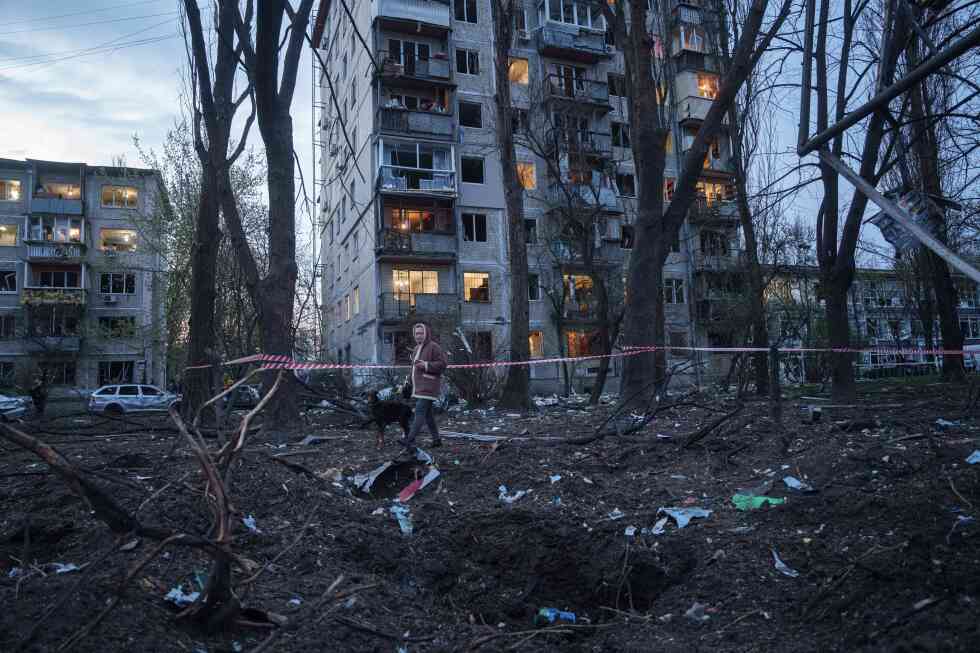
The widespread assault struck multiple cities as Ukrainians slept, with victims including a 12-year-old in Kyiv. Four people died in the capital, nine in the southern port city of Odesa, and four in the central Dnipro region, as Russia’s forces targeted urban centers across the country.
Tetiana Sokol, a 54-year-old Kyiv resident, described the terrifying moments when two missiles struck near her home. “On the third attack everything broke, everything flew, we were shocked, we didn’t know where to run. I grabbed whatever came to hand and ran away with the dog,” she told The Associated Press.
Ukrainian air defense systems struggled to intercept the barrage, with officials acknowledging that vital stocks of advanced interceptors are running dangerously low. Yuriy Ihnat, head of communications for the Ukrainian air force, emphasized that Russia’s attack heavily utilized ballistic missiles, which can only be reliably countered by sophisticated Patriot systems.
“We desperately need more missiles for the Patriot systems,” Ihnat told Ukraine’s private TV channel 1+1, highlighting the urgent equipment shortage facing Ukrainian defenders.
The massive assault came just after Ukrainian President Volodymyr Zelenskyy completed a 48-hour diplomatic tour through Germany, Norway, and Italy specifically aimed at securing additional air defense systems. Ukraine has developed a significant domestic arms industry capable of producing drones and missiles, but still lacks the technological sophistication of Western-made air defense systems needed to counter Russia’s most advanced weapons.
Adding to Ukraine’s concerns is the growing fear that the conflict between Israel and Iran could further deplete global stockpiles of the advanced American-made air defense systems Ukraine desperately needs. Ukrainian officials have expressed strong opposition to a U.S. pause on Russian oil sanctions, arguing that any economic relief for Moscow will only fuel further aggression.
“Another night has proven that Russia does not deserve any easing of global policy or lifting of sanctions,” Zelenskyy wrote on the social platform X following the attack.
Russia’s Defense Ministry claimed the operation targeted military-related facilities “in retaliation” for Ukrainian strikes deep inside Russian territory against oil refineries and weapons plants. However, the pattern of attacks on residential areas and civilian infrastructure follows Moscow’s established strategy throughout the war.
Since Russia’s full-scale invasion began more than four years ago, Moscow’s forces have struck civilian areas almost daily. According to United Nations estimates, these attacks have claimed more than 15,000 Ukrainian civilian lives. European Council President António Costa condemned Thursday’s strikes as “yet another horrendous attack” targeting people as they slept in their homes.
In the central city of Cherkasy, residents declared a day of mourning Thursday for eight-year-old Bohdan Serhiiev, killed in a separate Russian drone strike earlier in the week. Mourners left flowers and stuffed toys beside the child’s open casket, while classmates held white balloons and a sign reading “Eternal Memory.”
The boy’s 15-year-old brother, Denys Zhuk, shared his grief with reporters: “He was such a happy kid. He was always running around and he loved me so much. We played together, went to soccer together. I love my younger brother so much. I just wish he was here with me.”
As Ukraine continues to face these devastating attacks, international support remains crucial for the country’s ability to defend its population centers. Military analysts note that Russia’s strategy of targeting civilian areas appears designed to demoralize Ukrainian resistance and strain the country’s defensive resources, which continue to rely heavily on Western partners for sophisticated air defense capabilities.
Fact Checker
Verify the accuracy of this article using The Disinformation Commission analysis and real-time sources.
