


Listen to the article
In a simmering culinary dispute that blends gastronomy with national pride, Greece and Turkey find themselves at odds over the origins of a traditional soup made from bovine parts – the latest chapter in centuries of competing cultural claims between the neighboring nations.
Dimitris Tsarouhas, owner of a specialty restaurant in Thessaloniki, Greece, is spearheading an effort to register “patsa” – a soup made from cow bellies and legs – with UNESCO as a uniquely Greek traditional dish. His campaign has stirred controversy across the Aegean Sea, where Turks claim the same dish, known to them as “iskembe,” as their own cultural heritage.
“We believe that we have all the tools to secure and certify it as such,” Tsarouhas told The Associated Press. He has assembled an extensive documentation file with the assistance of a local cultural organization and author Lena Oflidis, who wrote the only book chronicling the soup’s history.
The Greek restaurateur traces patsa’s origins to ancient times, specifically citing references in Homer’s “The Odyssey.” According to Tsarouhas, the epic poem mentions a feast prepared by Penelope, Odysseus’ wife, featuring bovine bellies filled with suet and blood. “If this isn’t patsa, then what else could it be?” he argues.
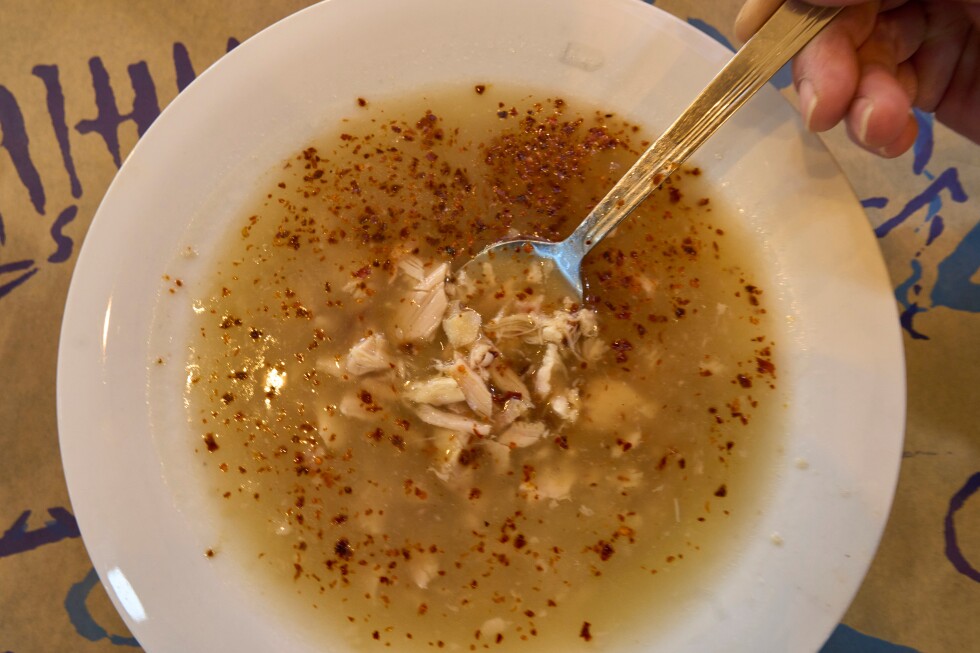
In Thessaloniki, patsa has developed a devoted following, particularly among those seeking relief after a night of heavy drinking. Patrons frequent Tsarouhas’ establishment at all hours, especially in the early morning, to enjoy the soup garnished with seeds and hot peppers. While not scientifically proven, many believe the soup can alleviate stomach ulcers, hangovers, and other ailments.
Chef Pantazis Koukoumvris, who has 22 years of experience preparing patsa, describes the cooking process as almost ritualistic. “This is where the art begins from the morning,” he says, explaining how bellies and legs are boiled to create the broth. Koukoumvris suggests the recipe was passed from ancient Greeks to Byzantines and later to Ottomans.
Across the border, Turkish restaurateurs like 59-year-old Ali Turkmen strongly contest Greek claims to the dish. “Just like with baklava and many other things, they want to claim it as their own,” Turkmen said. “But it will probably be difficult for them to claim something unique to us. Because it’s been a staple in our culture for centuries. Tripe is something specific to Turks.”
At Turkmen’s Istanbul restaurant, Alem Iskembe, the preparation process begins at 4 a.m. daily when chef Ali Ohtamis starts boiling cleaned cow stomachs. The cooking continues for eight to nine hours before the meat is cut according to customer preferences.
While both versions revolve around a rich, garlicky broth, the Turkish iskembe uses only tripe, whereas the Greek patsa incorporates both bovine bellies and legs.
The dispute has ignited passions in Turkish media, which accuse Greece of “appropriating” a nationally celebrated Turkish dish. Some cite historical evidence, including 17th-century traveler Evliya Celebi’s “Book of Travels,” which describes vendors selling tripe and trotters soup in Istanbul approximately 400 years ago.
Alem Iskembe customer Murat Pajik believes Turkey should prevent Greece’s recognition bid. “I don’t know exactly who is responsible, but measures need to be taken. Tripe soup is one of the dishes we should be promoting to the world,” he said.
Another Turkish patron, Engin Cakar, sees the Greek effort as futile. “This tripe dish is from our grandfathers, our mothers,” he insisted.
The ongoing debate adds another layer to the long-standing culinary rivalry between Greece and Turkey, which already encompasses disputes over various foods including coffee, stuffed grape leaves, and baklava – cultural overlaps resulting from centuries of Ottoman rule in the region.
Despite the tensions, Tsarouhas maintains a conciliatory tone. “We don’t have anything to divide with our neighbors — rather the taste unites us,” he said, while still firmly believing in the Greek origin of the dish.
For regular patrons like Christos Mousoulis in Greece, the issue is simply about cultural familiarity: “I don’t doubt that the taste of patsa, either Greek or Turkish, which I haven’t tried, may be similar, but we grew up with Greek patsa.”
As UNESCO deliberates on the application, this savory dispute continues to simmer, reflecting how deeply food traditions are intertwined with national identity in this historically complex region.
Fact Checker
Verify the accuracy of this article using The Disinformation Commission analysis and real-time sources.

10 Comments
This dispute over the origins of a humble soup highlights the complexities of food and national identity. While the historical evidence seems to favor the Greek claim, the Turkish connection also appears quite strong. Perhaps a compromise could be reached that acknowledges the dish’s multicultural lineage.
Regardless of the outcome, this debate underscores the deep cultural significance that traditional foods can hold for people. I’m eager to learn more about the unique flavors and preparations of both ‘patsa’ and ‘iskembe’.
The fact that this culinary controversy has escalated to the point of UNESCO involvement speaks to the high stakes involved. I wonder if there are any precedents for such disputes being resolved through international cultural heritage organizations. This could set an interesting precedent.
Regardless of the outcome, I hope the two sides can find a way to celebrate the shared aspects of their culinary traditions rather than get bogged down in nationalist claims. Food has a unique power to transcend borders and bring people together.
The references to ‘patsa’ in Homer’s ‘The Odyssey’ are quite intriguing. If the Greek restaurateur can successfully document the soup’s ancient Hellenic origins, that would certainly bolster their case for UNESCO recognition. However, the Turkish claim of ‘iskembe’ as part of their cultural heritage shouldn’t be dismissed either.
Ultimately, I hope the two countries can find a way to amicably resolve this dispute and perhaps even celebrate the shared culinary influences that have shaped this traditional dish over the centuries.
This is a fascinating clash of national pride and culinary heritage. While the Greek claim of ancient origins seems compelling, the Turkish counter-assertion of ‘iskembe’ as their own traditional dish shouldn’t be dismissed. I’ll be following this dispute with great interest to see how it unfolds.
Ultimately, I hope the two countries can find a way to collaborate and perhaps even co-claim this traditional soup as a shared cultural treasure. That would be a much more inspiring outcome than a zero-sum nationalist battle.
This is a fascinating cultural dispute over the origins of a traditional healing soup. I’m curious to learn more about the history and culinary traditions behind ‘patsa’ and ‘iskembe’ – it seems there are deep roots and national pride at stake on both sides of the Aegean Sea.
Tracing the origins of traditional dishes can be a complex endeavor, with competing claims often reflecting centuries of cultural exchange and influence between neighboring regions. It will be interesting to see how this culinary controversy plays out.