


Listen to the article
The International Red Cross Releases Audio from Tehran Resident as Operation Epic Fury Continues
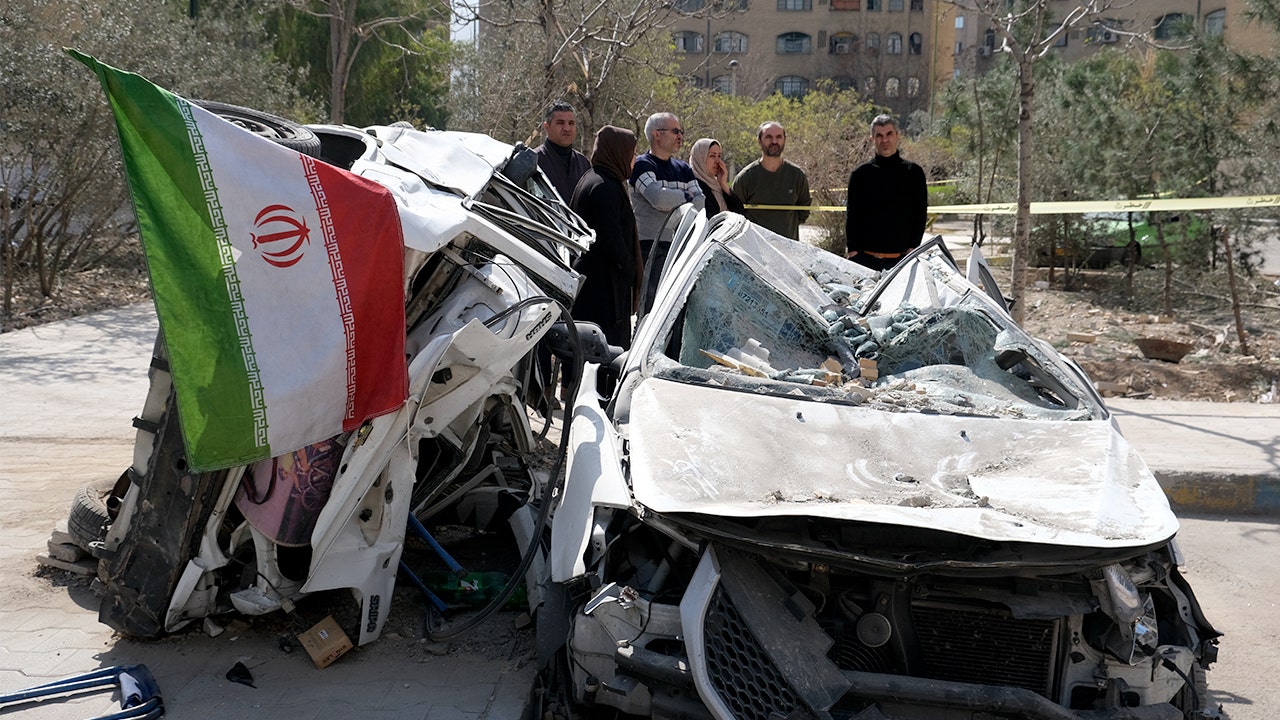
A Tehran civilian has described the psychological toll of constant explosions and a city transformed into a ghost town as the U.S. and Israeli military operation against Iran enters its fifth day. In audio released Thursday by the International Committee of the Red Cross (ICRC), the unidentified resident painted a vivid picture of life under bombardment.
“To us here, the war did not start four days ago. It started when we heard the initial news of a piling up of the forces in the region and preparations for war,” the civilian said in the recording. “Now, with the war going on, we hear constant explosions, and there is no respite from this.”
The resident described how the ongoing airstrikes have created a state of continuous anxiety among Tehran’s population. “Any moment you can expect a loud noise. This has made us so nervous that any loud noise, including the noise of a car passing by, gives us a panic attack,” they explained.
Perhaps most striking is how the once-bustling Iranian capital has been transformed. “As a person who was born and lived his whole life in this city, I have never seen the city so quiet,” the resident noted. Many citizens have fled, while others remain indoors to avoid being caught in aerial attacks.
Operation Epic Fury, a joint U.S.-Israeli military campaign that began on Saturday, has resulted in significant casualties. According to The Associated Press, at least 1,230 people in Iran have been killed since the operation’s commencement. The conflict has also claimed the lives of six U.S. service members stationed in Kuwait.
The ICRC has expressed growing alarm about the humanitarian impact of the escalating conflict. Mirjana Spoljaric, ICRC President, warned on the first day of operations that the military escalation could have “devastating consequences for civilians.” In a subsequent statement, she cautioned that “the scale of major military operations flaring across the Middle East risks embroiling the region — and beyond — into another large-scale armed conflict that will overwhelm any humanitarian response.”
The organization has emphasized that without urgent de-escalation and adherence to international humanitarian law, civilian suffering will only intensify. “Civilians are already suffering the consequences of war,” Spoljaric stated.
Beyond the immediate danger from airstrikes, the Tehran resident voiced concerns about potential resource shortages if the conflict continues. “The supplies are available in the shops that are open and work. But what if the situation gets worse or continues as it is now? Will the supplies being stocked be of any help, or will they be meaningless in the face of what can happen?” the civilian wondered.
Those with health conditions face additional challenges. “It is especially more worrying for people like me, who have to take care of people with medical complications that require special care. We are now under a lot of stress, worried to see what can come next,” the resident added.
The conflict represents the most significant direct military confrontation between the United States and Iran in decades. Military analysts have noted that Iran’s use of drone swarm tactics has imposed substantial costs on U.S. forces, potentially extending the duration of hostilities. Meanwhile, Pentagon officials have claimed that coalition forces are “winning decisively” and will achieve “complete control” of Iranian airspace within days.
As Operation Epic Fury continues, international humanitarian organizations maintain their calls for restraint and protection of civilian populations caught in the crossfire of this rapidly evolving Middle East conflict.
Fact Checker
Verify the accuracy of this article using The Disinformation Commission analysis and real-time sources.

27 Comments
Silver leverage is strong here; beta cuts both ways though.
Interesting update on Red Cross Releases Audio of Iranian Civilian Describing Dire Situation in Tehran. Curious how the grades will trend next quarter.
If AISC keeps dropping, this becomes investable for me.
Good point. Watching costs and grades closely.
If AISC keeps dropping, this becomes investable for me.
Good point. Watching costs and grades closely.
Good point. Watching costs and grades closely.
The cost guidance is better than expected. If they deliver, the stock could rerate.
Good point. Watching costs and grades closely.
Good point. Watching costs and grades closely.
Uranium names keep pushing higher—supply still tight into 2026.
I like the balance sheet here—less leverage than peers.
Good point. Watching costs and grades closely.
Good point. Watching costs and grades closely.
Uranium names keep pushing higher—supply still tight into 2026.
Good point. Watching costs and grades closely.
Good point. Watching costs and grades closely.
Interesting update on Red Cross Releases Audio of Iranian Civilian Describing Dire Situation in Tehran. Curious how the grades will trend next quarter.
Good point. Watching costs and grades closely.
Nice to see insider buying—usually a good signal in this space.
Good point. Watching costs and grades closely.
Good point. Watching costs and grades closely.
I like the balance sheet here—less leverage than peers.
Good point. Watching costs and grades closely.
Good point. Watching costs and grades closely.
Production mix shifting toward World might help margins if metals stay firm.
I like the balance sheet here—less leverage than peers.