


Listen to the article
Northern Marianas Face Weeks Without Power, Water After Devastating Typhoon
Parts of the Northern Marianas could remain without power and water for weeks following the devastating impact of Super Typhoon Sinlaku, officials reported Thursday. The U.S. Pacific territory, home to approximately 45,000 people, is reeling from what meteorologists have described as the strongest tropical cyclone of the year.
The islands of Saipan and Tinian bore the brunt of the storm, which made landfall Tuesday night local time, unleashing sustained winds of up to 150 mph (241 kph) and torrential rainfall that continued for hours into Wednesday.
“It’s pretty bad conditions right now,” said Ed Propst, a former lawmaker currently working in the governor’s office. Propst noted that Saipan’s only hospital experienced severe flooding, while major resorts reportedly lost backup power generators.
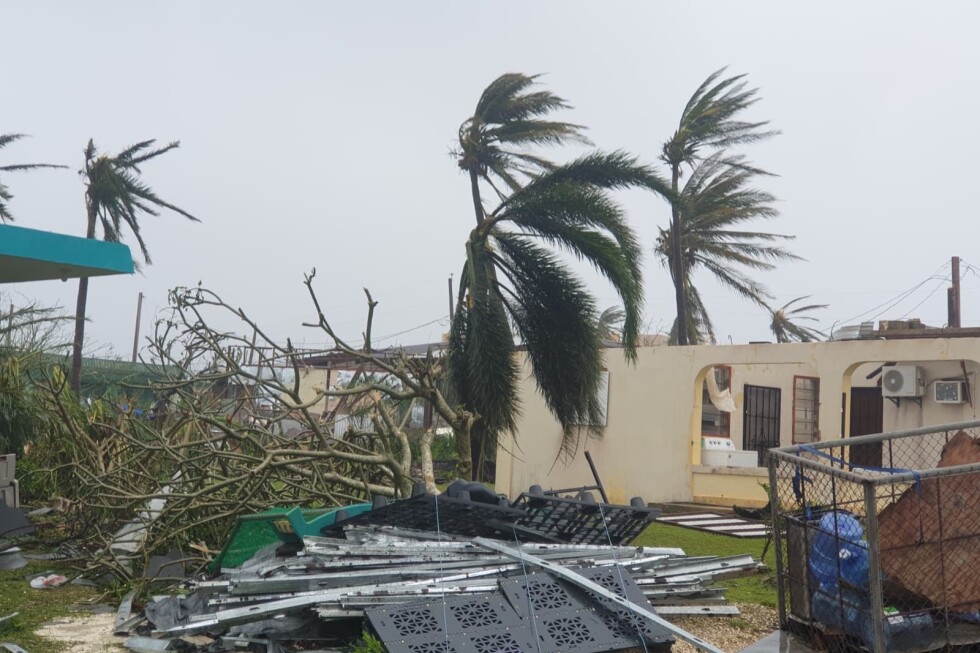
The initial damage assessment reveals a grim picture: flipped vehicles, toppled utility poles, and homes with tin roofs completely torn away. Residents are preparing for an extended period without basic utilities as authorities begin the difficult task of evaluating the destruction across the archipelago.
Bernard Villagomez, public information officer for the territory’s Office of Homeland Security and Emergency Management, explained that comprehensive assessment efforts have been hampered by ongoing safety concerns. “We still have a shelter in place so first responders have not been able to do a full damage assessment,” Villagomez told The Associated Press.
The American Red Cross and its partners have mobilized quickly, currently sheltering over 1,000 residents across Guam and the Northern Marianas, according to agency spokesperson Stephanie Fox. Meanwhile, the Federal Emergency Management Agency (FEMA) has announced plans to deploy additional personnel and increase shipments of vital supplies to the affected region.
Local resident Mathew Masga reported that while some stores on Tinian had reopened Thursday, allowing residents to purchase essential supplies, the island’s infrastructure had sustained significant damage. “While driving around, I noticed numerous wooden and semi-concrete houses with damaged rooftops due to the passing typhoon,” Masga told the AP. “Notably, many of our power poles and power lines are down.”
Visual evidence from both Saipan and Tinian reveals residential areas strewn with debris and severely damaged vegetation. At one sports field, metal bleachers were completely crumpled by the force of the winds. In a particularly striking example of the storm’s power, resident Dong Min Lee captured video footage of one car that had been lifted onto two others in an apartment building parking lot.
The U.S. Commonwealth of the Northern Mariana Islands, a strategic location in the Western Pacific approximately 3,800 miles west of Hawaii, consists of 14 islands, with Saipan, Tinian, and Rota being the most populated. Nearby Guam, another U.S. territory and home to critical American military installations, was also affected by the storm, experiencing tropical force winds though avoiding the direct impact sustained by its northern neighbors.
As of Thursday, Super Typhoon Sinlaku was located approximately 170 miles (274 kilometers) northwest of Saipan, according to the National Weather Service. While many monitoring sensors on the island were rendered inoperable by the storm, meteorologists estimated that winds had decreased to about 60 to 70 mph (97 to 113 kph). The typhoon is expected to curve toward the sparsely populated volcanic islands in the far northern Marianas as it continues its path.
Fortunately, despite the extensive damage to infrastructure and property, no deaths have been reported in connection with the typhoon as of Thursday. However, officials caution that the full scope of the disaster will only become clear once comprehensive assessments can be conducted and more remote areas are reached.
The recovery effort will likely prove challenging for this remote Pacific territory, which has previously demonstrated resilience in the face of powerful storms. Local and federal agencies are now coordinating their response to address immediate humanitarian needs while beginning to plan for the substantial rebuilding effort that lies ahead.
Fact Checker
Verify the accuracy of this article using The Disinformation Commission analysis and real-time sources.

8 Comments
This is a tough situation for the Northern Marianas. Having no power or water for weeks will put a huge strain on the population. I hope the US government and aid organizations are able to move quickly to provide generators, clean water, and other emergency relief. The recovery effort is going to be challenging.
Wow, a 150 mph typhoon is no joke. The level of destruction described is really alarming. I feel for the people of the Northern Marianas having to deal with this kind of natural disaster. Hopefully the US government can provide substantial aid to help with the recovery.
You’re right, a storm of that magnitude can cause catastrophic damage. The need for emergency supplies, temporary shelter, and rebuilding efforts will be immense in the coming weeks and months.
This is a sobering reminder of the increasing intensity of tropical storms due to climate change. The Northern Marianas are going to need a lot of support from the US and international community to bounce back from this. I hope the residents can access the resources and assistance they need to rebuild.
This is devastating news for the Northern Marianas. The power and water outages will be a huge challenge for the residents, especially with the hospital sustaining damage. I hope the recovery and restoration efforts can get the islands back on their feet as soon as possible.
With the islands being so remote, the recovery efforts will require significant resources and coordination. Restoring the critical infrastructure like the power grid and water systems will be the top priority.
The loss of the hospital’s backup power is very concerning. That’s a critical piece of infrastructure that needs to be restored quickly to provide medical care for injured and vulnerable residents. I hope the authorities are able to get temporary power solutions in place soon.
Agreed, the hospital situation is especially worrying. Portable generators and field hospitals may be needed in the interim to ensure people can access essential healthcare.