


Listen to the article
Israeli Airstrikes Deliver Major Blow to Hezbollah Command Structure
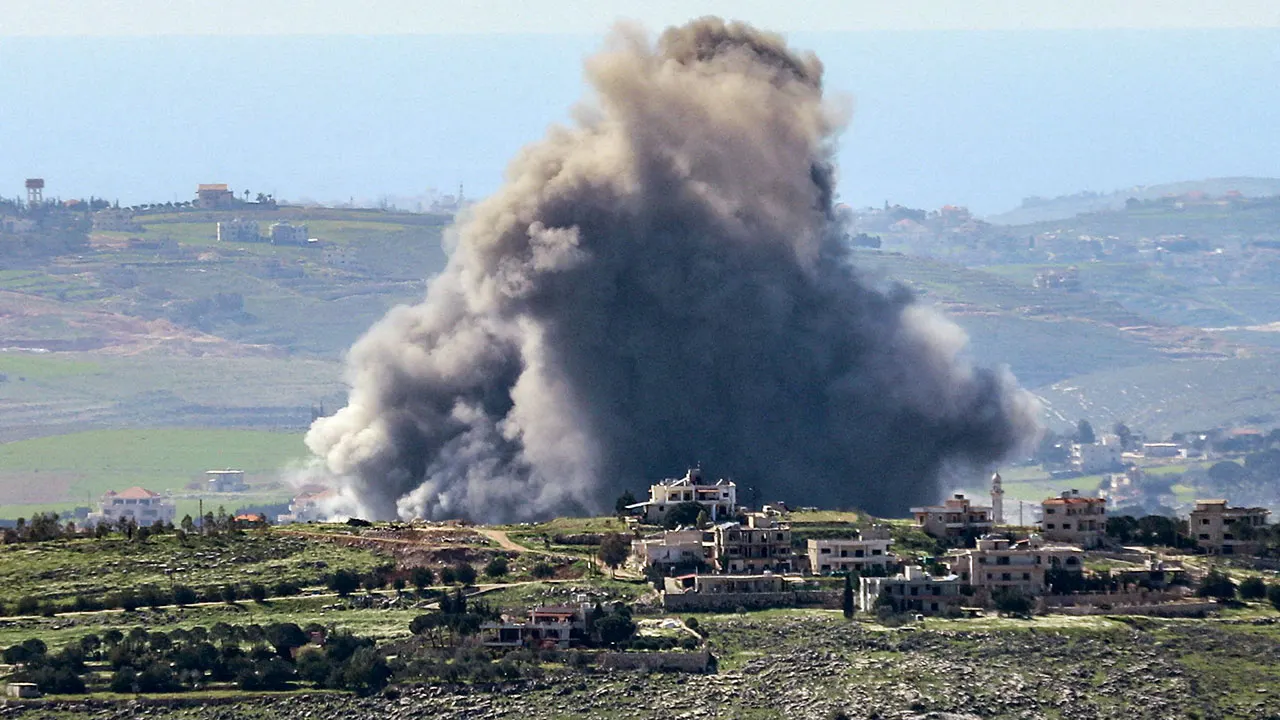
In one of the most devastating operations of the ongoing conflict, approximately 50 Israeli aircraft struck more than 100 Hezbollah targets across Lebanon on April 8, dealing a crippling blow to the Iran-backed militant group’s command structure.
Explosions tore through Beirut, the Beqaa Valley, and southern Lebanon almost simultaneously, targeting what the Israel Defense Forces (IDF) described as the nerve centers of Hezbollah: command rooms, intelligence headquarters, and strategic planning offices rather than conventional weapons depots or rocket launchers.
“Within only a minute, the IDF eliminated 250 Hezbollah terrorists in three areas simultaneously,” the Israeli military said in a statement, adding that assessment of the operation’s impact is ongoing.
IDF spokesman Lt. Col. Nadav Shoshani told reporters the strike resulted from weeks of meticulous intelligence gathering, during which Israeli intelligence agencies tracked Hezbollah operatives moving between apartments, offices, and safe houses across Lebanon.
“The timing had to do with the preparations. There was weeks of amazing intelligence,” Shoshani said, highlighting Israel’s continued intelligence capabilities within Hezbollah territory despite months of conflict.
The strike draws comparison to last September’s “beeper operation,” when thousands of pagers and walkie-talkies used by Hezbollah operatives exploded simultaneously across Lebanon and Syria in an operation widely attributed to Israel. That attack killed more than 40 people and wounded roughly 4,000, according to Lebanese authorities.
Many of those killed in the recent strike reportedly belonged to Hezbollah’s elite units, including the Radwan Force—the group’s most capable combat unit—along with intelligence apparatus, missile units, and aerial Unit 127.
The Israeli military claimed most targets were embedded within civilian areas. “Most of the infrastructure that was struck was located within the heart of the civilian population,” the IDF said, adding that warnings were issued to civilians before the strikes, though Hezbollah reportedly moved operatives to new civilian locations afterward.
The conflict between Israel and Hezbollah significantly escalated on March 2 when Hezbollah entered the fight in support of Iran, one day after U.S. and Israeli strikes on Iran and the killing of Iran’s Supreme Leader, Ayatollah Ali Khamenei. Since then, Hezbollah has fired rockets, drones, and anti-tank missiles into northern Israel, while Israel has responded with intensifying airstrikes and a ground offensive inside southern Lebanon.
Lebanese President Joseph Aoun condemned the strikes, while United Nations Human Rights Chief Volker Türk called the scale of killing and destruction “horrific,” saying: “Such carnage, within hours of agreeing to a ceasefire with Iran, defies belief.”
Hezbollah responded to the attack by firing rockets at Israel the following day, stating: “This response will continue until the Israeli-American aggression against our country and our people ceases.”
A former Israeli intelligence official, speaking on background, suggested the strike may not have reached the scale of last year’s beeper operation but appeared to hit an unusually broad layer of Hezbollah’s middle ranks. The official noted that Hezbollah remains in shock from the blow, even if that has not yet translated to reduced rocket fire against Israel.
Despite the significant strike, Israeli officials acknowledge Hezbollah remains a major threat. Before the war, the group possessed between 150,000 and 200,000 rockets and missiles, and still maintains substantial firepower. “They still are a real threat for our civilians,” Shoshani noted.
The strike coincided with the opening of the first direct talks between Israel and Lebanon in more than three decades, hosted at the U.S. State Department in Washington. Lebanese President Joseph Aoun has signaled willingness to discuss normalization and the eventual disarmament of Hezbollah, while Israeli Prime Minister Benjamin Netanyahu insists there will be no ceasefire until Hezbollah is dismantled and pushed back from the border.
Yet within hours of this diplomatic opening, the cycle of violence continued with Israeli warplanes again striking Lebanon while Hezbollah fired rockets into northern Israel, underscoring the significant challenges facing any potential peace process.
Fact Checker
Verify the accuracy of this article using The Disinformation Commission analysis and real-time sources.

10 Comments
The level of coordination and intelligence-gathering required for this strike is impressive, but the human cost is sobering. I hope both sides can find a way to de-escalate tensions and work towards a lasting peace, though that seems increasingly difficult given the animosity between them.
I agree, the precision and scale of this operation is quite remarkable. However, the long-term consequences remain uncertain, and I’m concerned about the potential for further escalation and loss of life on both sides.
The IDF’s ability to gather detailed intelligence and coordinate such a complex operation is impressive. However, the human cost of this conflict is tragic. I hope both sides can find a path towards a lasting peace, though that seems elusive at the moment.
The precision and scale of this strike is certainly concerning. I wonder what the long-term ramifications will be, both in terms of the regional security situation and the potential for further escalation.
This Israeli strike seems to have dealt a major blow to Hezbollah’s command structure. The precision and coordination of the operation is impressive, though the loss of life is tragic. I’m curious to see how Hezbollah responds and whether this will shift the balance of power in the region.
The scale and impact of this strike is quite concerning. I wonder if it will provoke further escalation or if it will lead to a pause in hostilities as both sides assess the situation.
This Israeli operation appears to have been a significant tactical victory, but the broader strategic implications remain unclear. The loss of life is regrettable, and I hope this conflict can be resolved through diplomatic means rather than further violence.
You raise a good point. While the IDF claims this strike was a major blow to Hezbollah, the group has proven resilient in the past. It will be important to monitor how they respond and whether this leads to a shift in the regional power dynamics.
Wow, eliminating 250 Hezbollah terrorists in one operation is a significant tactical victory for Israel. However, the long-term strategic implications remain uncertain. This conflict seems to be intensifying with no clear end in sight.
I agree, this latest strike is a major blow to Hezbollah, but the group has shown resilience in the past. It will be important to monitor how they respond and whether this leads to a shift in the regional balance of power.