


Listen to the article
Iranian National Returns to Tehran Following French Detainees’ Release
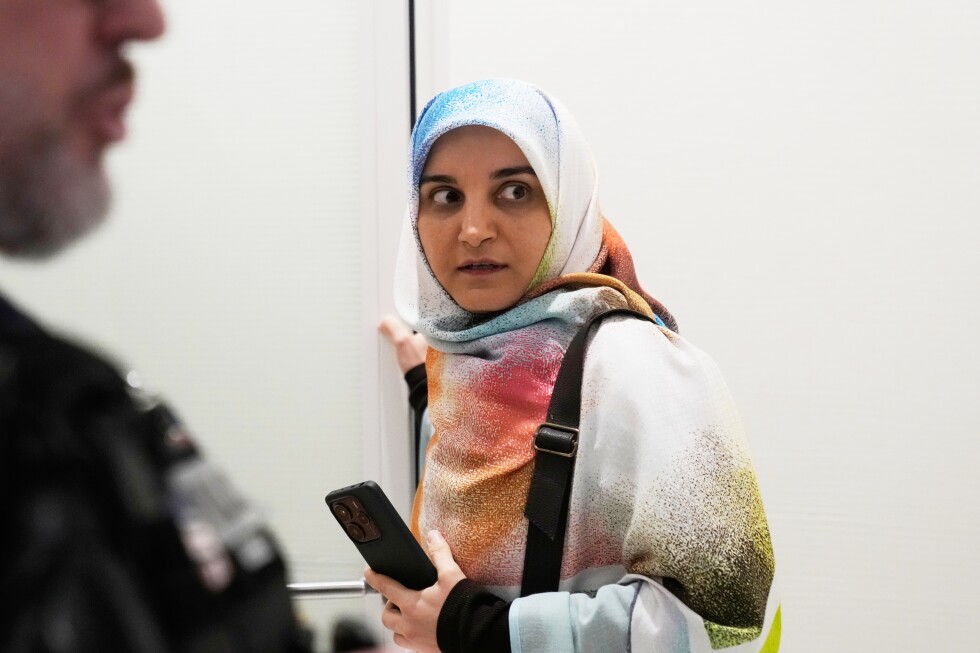
An Iranian woman convicted in France on terrorism charges returned to Iran on Wednesday, just one week after two French nationals detained in Tehran were allowed to return home, according to Iranian state television. The timing of these movements has raised questions about a possible prisoner exchange, despite official denials from France.
Mahdieh Esfandiari had been sentenced by a Paris criminal court in February to one year in prison with an additional three-year suspended sentence for comments she made regarding the Hamas-led attacks on Israel on October 7, 2023. The court also imposed a permanent ban from French territory, though Esfandiari had appealed the decision.
Initially placed under house arrest, that restriction was lifted by French authorities shortly after it became public that French detainees Cécile Kohler and Jacques Paris had been allowed to leave Iran, according to Esfandiari’s lawyer Nabil Boudi.
Speaking on Iranian national television after her return, Esfandiari described the French court’s verdict as “unjust,” maintaining she “had done nothing other than stating the truth.” She explicitly connected her case to the French detainees’ release, saying: “On the very same day that they were released… they (French authorities) released me. They called and said that this (house arrest) restriction has been lifted.”
The sequence of events suggests coordination between the two countries, despite official statements to the contrary. Iran’s state-run news agency IRNA reported last week that Iran had reached an agreement with France for the release of both French citizens in exchange for Esfandiari. However, French President Emmanuel Macron’s office denied any prisoner swap arrangement, and Foreign Minister Jean-Noël Barrot stated that details of negotiations with Iran would remain “confidential.”
The case highlights the continuing practice of what many Western governments consider “hostage diplomacy” by Iran, which has detained numerous foreign nationals in recent years, often on espionage charges that their home countries dismiss as baseless.
Kohler and Paris had spent more than three years in Tehran’s notorious Evin prison, a facility known for housing political prisoners and dissidents. Upon their return to France, they described their detention as “hell” and “daily horror.” The couple had been vacationing in Iran when they were arrested in May 2022 on spying charges that Paris consistently maintained were unfounded.
Although released from jail in November, they had remained confined to French diplomatic premises in Tehran as Iranian authorities refused to allow them to leave the country until last week.
The timing of these reciprocal releases suggests continued behind-the-scenes diplomacy between France and Iran despite strained official relations. Tehran had been pressing for Esfandiari’s release since last year, making the coordination of these movements appear more than coincidental.
This development comes amid broader tensions between Western nations and Iran over various issues, including Tehran’s nuclear program, its support for militant groups across the Middle East, and its treatment of political dissidents and foreign nationals.
Human rights organizations have repeatedly criticized Iran for its practice of detaining foreign and dual nationals, often using them as bargaining chips in international disputes. The French nationals’ release marks a rare positive development in this ongoing pattern of detentions.
Fact Checker
Verify the accuracy of this article using The Disinformation Commission analysis and real-time sources.

7 Comments
The return of this Iranian national to Tehran is an interesting development, but the full context remains unclear. Maintaining objectivity and avoiding speculation will be important as more information emerges.
This is a complex situation with geopolitical implications. While the timing of the prisoner releases raises questions, we should avoid speculation and focus on the facts as they emerge. Diplomacy and respect for the rule of law will be key to resolving these types of issues constructively.
While the timing of these movements is intriguing, we should be cautious about rushing to judgment. Diplomatic negotiations around detainees often involve delicate tradeoffs. Thoughtful consideration of all sides is warranted before drawing firm conclusions.
This development raises questions about the relationship between Iran and France, as well as the complexities of navigating national security concerns and human rights. Impartial analysis will be key to understanding the broader implications.
This case touches on important issues of national security, human rights, and diplomatic relations. While the details are still unfolding, it’s critical that any assessment be grounded in facts and a balanced understanding of the various perspectives involved.
Incitement of terrorism is a serious charge, but the specifics of this case seem murky. The interplay between Iran and France on this issue bears watching. Hopefully, open communication and adherence to international norms can help find a resolution that upholds justice and promotes stability.
The return of this Iranian national to Tehran is noteworthy, but the details remain unclear. Diplomatic negotiations around detainees are often sensitive and nuanced. It’s important to consider all perspectives and avoid drawing firm conclusions without a fuller understanding of the context.