


Listen to the article
Europe Refocuses on Palestinian Issues as Hungary’s Political Shift Opens Diplomatic Doors
Europe has pivoted its diplomatic attention to Palestinian matters following a significant political shift in Hungary, where the defeat of Prime Minister Viktor Orbán has removed a key obstacle to the European Union’s Middle East policy.
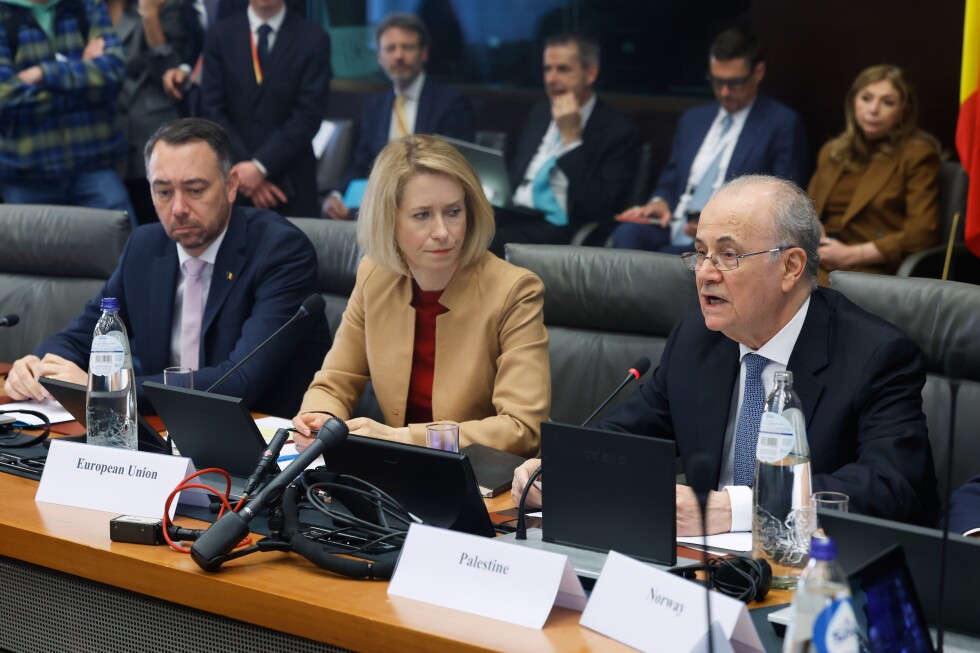
On Monday, representatives from more than 60 nations gathered in Brussels to discuss stability, security and long-term peace with Palestinian officials. This diplomatic push comes at a critical time for EU involvement in the region.
Despite being the largest provider of aid to Palestinians and a major advocate for a two-state solution, the European Union has largely been relegated to the sidelines in recent Middle East peace efforts. The bloc maintains significant economic leverage as Israel’s top trading partner and a major purchaser of Israeli weapons, yet it played no meaningful role in negotiating the October ceasefire that ended two years of devastating conflict in Gaza.
The political shift in Hungary appears poised to change this dynamic. Péter Magyar, Hungary’s incoming leader, has signaled a departure from Orbán’s staunchly pro-Israel stance. Magyar has indicated he will pursue “pragmatic relations” with Israel while also rejoining the International Criminal Court, which issued an arrest warrant for Israeli Prime Minister Benjamin Netanyahu over actions in Gaza—a warrant that Orbán openly defied while hosting Netanyahu in 2025.
“We have 27 countries and 26 countries want to put violent settlers sanctions in place,” said EU foreign policy chief Kaja Kallas after the Brussels meeting. “The one who doesn’t want the sanctions on violent settlers has gotten their upper hand. Now, this country had elections, and we’ll have a new government.”
The diplomatic landscape is further complicated by Spain’s more assertive approach. Spanish Prime Minister Pedro Sánchez is pushing for the EU to suspend its Association Agreement with Israel, a framework that has governed trade and cooperation between the parties since 2000. Spain has announced plans to formally propose this measure at an EU foreign ministers’ meeting scheduled for Tuesday.
However, analysts consider a full suspension unlikely, as countries like Austria and Germany have historically maintained more supportive positions toward Israel. The EU has previously found indications that Israel violated terms of the agreement during its military campaign in Gaza, but taking punitive action requires significant consensus.
With Orbán’s veto power soon to be neutralized, other targeted measures against Israeli settlers in the West Bank could move forward if a “qualified majority” of EU nations—15 of the 27 member states representing at least 65% of the EU’s population—agree to them.
Belgian Foreign Minister Maxime Prévot expressed growing concern about the viability of a two-state solution given continued violence by Israeli settlers in the West Bank and ongoing devastation in Gaza. “The two-state solution is being made more difficult by the day,” Prévot said. “But Belgium and many European and Arab partners continue to believe that this remains the only realistic path to a lasting peace.”
During the Brussels conference, Palestinian Prime Minister Mohamed Mustafa emphasized the need for unity in Gaza’s governance. “Our common objective of achieving one security structure under the legitimate authority should guide the effective coordination between the International Stabilization Force, the Palestinian Authority, security institutions and other international actors. Security must not be fragmented,” he stated.
Mustafa called for “the gradual and responsible collection of arms from all armed groups and also the full Israeli withdrawal from Gaza”—highlighting a major challenge to implementing the Gaza ceasefire. He also revealed his first meeting with Nikolay Mladenov, the Bulgarian diplomat appointed by the Trump administration to direct the Board of Peace initiative. “We see eye to eye on many things, and I think that we will be meeting again in the near future,” Mustafa noted.
Palestinians have reported that Israel has used the cover of broader regional conflict to strengthen its position in the West Bank, with settler attacks increasing and additional military restrictions on movement being imposed under security justifications.
The EU has carefully positioned itself alongside United Nations frameworks rather than directly joining the Trump administration’s Board of Peace initiative for Gaza. However, the bloc is increasingly concerned about being diplomatically sidelined in a region directly across the Mediterranean from its borders—making this renewed focus on Palestinian matters all the more significant for European foreign policy.
Fact Checker
Verify the accuracy of this article using The Disinformation Commission analysis and real-time sources.

10 Comments
The EU’s ability to play a constructive role will hinge on its capacity to balance the interests of all parties involved. Maintaining impartiality while exerting pressure will require deft diplomacy and nuanced understanding of the regional dynamics.
The EU’s economic leverage in the region could be a useful tool, but past efforts have struggled to translate into concrete results. Hopeful this new momentum can break the deadlock and put the peace process back on track.
Agreed, the EU has a significant economic carrot it can wield, but it will take deft diplomacy to translate that into substantive progress on the ground.
This renewed EU focus on Palestine is an important development, but the road ahead will be challenging. Past failures have bred skepticism, so the EU must demonstrate a clear strategy and sustained commitment to regain credibility as a peace broker.
The shift in Hungary’s stance is an intriguing development. Orbán’s pro-Israel position was a major obstacle, so Magyar’s signaled departure could open new avenues for EU involvement. Cautiously optimistic this could be a positive step.
Absolutely, Orbán’s obstructionism was a major hindrance. If Hungary takes a more balanced approach, it could help build the diplomatic consensus the EU needs to be an effective player.
After years of being on the sidelines, the EU seems determined to reassert its influence in the Israeli-Palestinian conflict. However, the path to a lasting peace agreement remains elusive. Cautious optimism is warranted, but significant challenges lie ahead.
Interesting to see the EU refocusing on the Palestinian issue after years of being sidelined. Curious to see how this diplomatic push shapes up and whether it can make meaningful progress on the long-standing conflict.
Given the complexity of the Israeli-Palestinian conflict, I’m curious to see what specific initiatives the EU plans to pursue. Enhancing economic ties and development aid are obvious options, but creative political solutions will be key.
Agreed, the EU will need to think outside the box to break the longstanding impasse. Leveraging its economic clout while also pushing for bold diplomatic breakthroughs will be crucial.