


Listen to the article
European Union countries must direct energy aid primarily to vulnerable households and industries to avoid wasting billions of euros as the Iran conflict drives up oil and gas prices, European Commission President Ursula von der Leyen cautioned on Wednesday.
The escalating U.S.-Israel war, coupled with Iran’s retaliatory measures such as potential disruptions to the strategically vital Strait of Hormuz, is costing the EU approximately 500 million euros ($600 million) daily. This has led to rising fuel prices and growing concerns about a possible jet fuel shortage that could materialize within weeks.
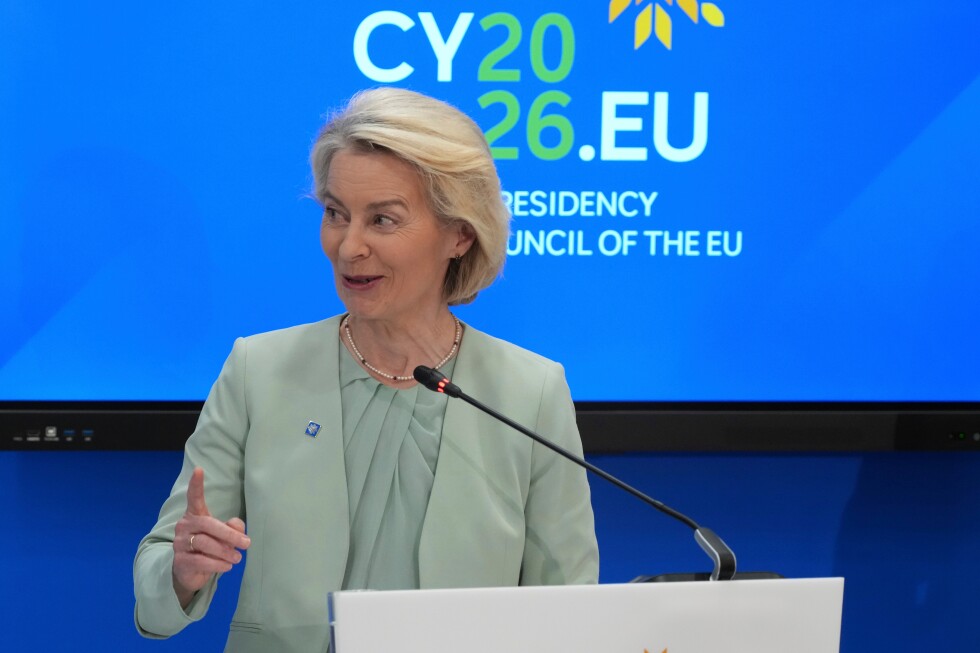
Speaking to EU lawmakers in Strasbourg, France, von der Leyen emphasized the importance of learning from mistakes made during the 2022 energy crisis, when Russia leveraged its energy resources against European nations to undermine their support for Ukraine.
“More than 350 billion euros were spent on untargeted measures and this had a huge impact on member states finances,” she said. “So let us not make the same mistake again, and let’s focus our support where it matters most.”
The Commission President stressed that Europe must end its dependence on external energy supplies, just as it broke its energy reliance on Russia following the invasion of Ukraine. She advocated for greater utilization of renewable energy sources like wind and solar, as well as nuclear power.
“Our over dependency on imported fossil fuels makes us vulnerable,” von der Leyen stated, highlighting Europe’s exposure to geopolitical energy shocks.
The EU has made significant progress in reducing Russian energy imports since 2022. Gas imports from Russia have plummeted from 45% to just 12% last year. Coal imports were halted entirely through sanctions, while oil imports decreased dramatically from 27% in 2022 to merely 2%, with only Hungary and Slovakia continuing to purchase Russian oil.
Von der Leyen warned that the repercussions of the Iran conflict “may echo for months or even years to come.” She outlined a vision for energy independence based on “homegrown, affordable, clean energy supply from renewables to nuclear.”
The Commission President urged EU member states to increase their use of electricity generated from renewable and nuclear sources for transportation, home heating, and industrial processes to reduce fossil fuel dependency. Currently, electricity constitutes less than a quarter of the bloc’s total energy consumption, indicating significant potential for electrification as a strategy to enhance energy security.
EU Energy Commissioner Dan Jørgensen painted an even more concerning picture last week, describing the current situation as “a crisis that is probably as serious as the 1973 and the 2022 crises combined.” The 1973 oil crisis caused global economic shockwaves after Arab oil producers imposed an embargo that quadrupled prices, while the 2022 crisis stemmed from Russia’s weaponization of energy supplies following its invasion of Ukraine.
Jørgensen acknowledged Europe’s limited control over the unfolding situation. “Even in a best-case scenario, it’s still bad,” he admitted. “Whether or not we will be in a security of supply crisis is primarily a result of what goes on in the Middle East. What we can do is to try and prevent, and limit” the damage.
The warnings from EU leadership come at a critical time for European energy markets, which had only recently begun to stabilize after the tumultuous period following Russia’s invasion of Ukraine. The potential for supply disruptions through the Strait of Hormuz is particularly concerning, as approximately 20% of global oil shipments pass through this narrow waterway.
Energy analysts suggest that European countries may need to accelerate their energy transition plans while simultaneously securing alternative fossil fuel suppliers in the short term. The crisis underscores the strategic importance of the EU’s Green Deal and related initiatives to reduce dependency on imported fossil fuels through domestic clean energy production.
Fact Checker
Verify the accuracy of this article using The Disinformation Commission analysis and real-time sources.

7 Comments
Interesting to see the EU facing such significant financial losses due to the Iran conflict and its impact on energy prices. It’s crucial they focus aid on vulnerable households and industries to avoid wasteful spending.
This highlights the strategic importance of the Strait of Hormuz and the vulnerability of the EU’s energy security. Proactive contingency planning and supply chain resilience will be critical.
The EU needs to learn from past mistakes and ensure their energy support is targeted and effective. Reducing dependence on external energy supplies should be a top priority to improve resilience.
Agreed. Diversifying energy sources and increasing domestic production will be key to shielding the EU from geopolitical disruptions in the future.
Untargeted energy aid measures have clearly been ineffective in the past. The Commission’s focus on directing support where it’s most needed is a sensible approach to minimize waste and maximize impact.
It’s alarming to see the EU losing $600M daily due to the Iran conflict. Transitioning to renewable and domestic energy sources seems like the best long-term solution to mitigate such geopolitical risks.
The EU’s energy crisis is a complex issue with far-reaching economic and political implications. I’m curious to see how they balance support for vulnerable sectors with long-term energy independence goals.