


Listen to the article
China’s Diplomatic Role Expands in Iranian Conflict as US-China Summit Approaches
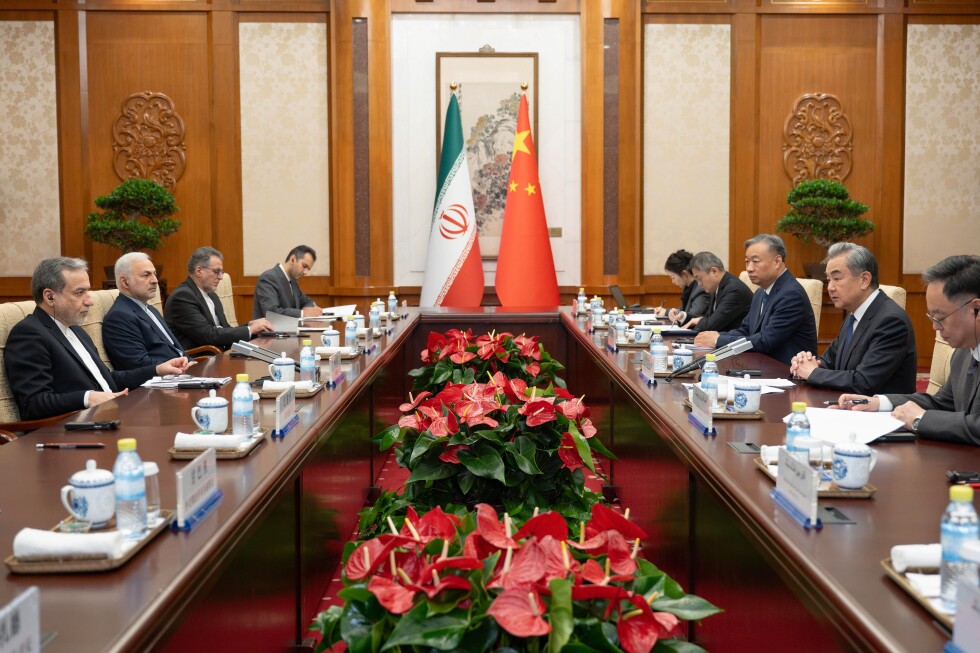
China’s diplomatic influence in the Iran conflict has gained prominence following high-level talks between Chinese Foreign Minister Wang Yi and his Iranian counterpart Abbas Araghchi in Beijing on Wednesday. The meeting comes at a critical juncture, just days before U.S. President Donald Trump is scheduled to meet with Chinese President Xi Jinping.
During the discussions, Wang called for a “comprehensive ceasefire” and expressed China’s deep concern over the ongoing war that began on February 28. He emphasized the international community’s shared interest in restoring safe passage through the Strait of Hormuz, a vital maritime chokepoint currently under Iranian control.
“The international community shares a common concern for restoring normal and safe passage through the Strait, and China hopes the relevant parties will respond as quickly as possible to the strong calls from the international community,” Wang stated, according to China’s official Xinhua news agency.
The timing of Araghchi’s visit to Beijing carries significant weight. U.S. Secretary of State Marco Rubio has explicitly urged Chinese officials to leverage this diplomatic opportunity to press Tehran on reopening the critical waterway. Wang’s renewed call for free passage could potentially catalyze progress toward an agreement between Washington and Tehran.
For his part, Araghchi—making his first visit to China since the conflict began—expressed optimism, stating that “it is possible to resolve the issue of reopening the Strait of Hormuz as soon as possible.” Wang also acknowledged Iran’s legitimate right to peaceful nuclear energy while appreciating Tehran’s pledge not to develop nuclear weapons.
Tuvia Gering, a nonresident fellow at the Atlantic Council’s Global China Hub, noted that the meeting demonstrates coordinated messaging between Beijing and Tehran while reinforcing China’s desire to participate in any future regional agreement. However, he cautioned that without concrete initiatives, this does not necessarily represent a significant shift in China’s role.
Some analysts point out that Araghchi’s visit occurred at Beijing’s request, suggesting China is actively exercising its leverage. “It’s China exercising their leverage… to summon the Iranian foreign minister,” said Hoo Tiang Boon, a professor of Chinese foreign policy at Nanyang Technological University.
China occupies a unique position in this diplomatic landscape as an important economic partner for many countries involved in mediating the conflict, including Pakistan and key Arab Gulf states. Beijing can offer substantial incentives for postwar reconstruction and commercial relief that few other nations can match.
George Chen, a partner at The Asia Group consultancy, emphasized China’s irreplaceable role in the Iranian situation. As Tehran’s largest oil buyer, China’s counsel carries substantial weight. Furthermore, China is among the few countries that have expressed sympathy for Iran at the United Nations.
Beijing’s growing portfolio as a global mediator includes its significant diplomatic achievement in 2023, when it helped facilitate the restoration of official engagement between Saudi Arabia and Iran. This breakthrough substantially reduced the risk of direct and proxy conflicts in the region.
Muhammad Zulfikar Rakhmat, a researcher at Indonesia’s Center of Economic and Law Studies, observed that China’s mediation tends to be “opportunistic and low-risk,” often occurring when conditions are already conducive to agreement. This strategic approach allows Beijing to maximize diplomatic wins while minimizing potential setbacks.
China has also demonstrated its diplomatic capabilities in other regional conflicts. It played an active role in mediating between Thailand and Cambodia, hosting multiple meetings and participating in ceasefire talks alongside the United States. Beijing has even issued peace proposals for the Ukraine conflict, despite maintaining what it describes as a “no-limits” friendship with Russia.
Experts note that China’s diplomatic efforts typically follow a consistent pattern, with Beijing emphasizing respect for the UN Charter and national sovereignty. In addressing the Iran conflict, President Xi has called for “upholding the principles of peaceful coexistence, upholding national sovereignty, upholding the rule of international law, and coordinating development and security.”
As global powers adjust to the Trump administration’s negotiation approaches, China appears positioned to enhance its diplomatic standing. Thitinan Pongsudhirak, a professor of international relations at Thailand’s Chulalongkorn University, observed that while U.S. actions may be causing widespread concern, “China is displaying global leadership and exerting its global role by speaking to the rules-based international system.”
The upcoming Trump-Xi summit will likely address the Iran conflict among other pressing international issues, potentially marking a crucial moment in both the resolution of the current crisis and the evolving landscape of global diplomacy.
Fact Checker
Verify the accuracy of this article using The Disinformation Commission analysis and real-time sources.

8 Comments
This diplomatic push by China comes at a pivotal time, with the U.S.-China summit just around the corner. It will be intriguing to see if they can parlay this into broader progress on the Iran issue.
China’s role as a mediator in the Iran conflict is a notable shift, especially given the heightened tensions with the U.S. It will be critical for all parties to approach this diplomatically and avoid further escalation.
The shared interest in safe passage through the Strait of Hormuz is a key concern that China seems well-positioned to help address. Their influence with Iran could be crucial in de-escalating the situation.
Absolutely, China’s willingness to get involved diplomatically shows they understand the high stakes involved. Maintaining open shipping lanes is critical for the global economy.
The timing of the Araghchi visit to Beijing is quite strategic. China seems intent on asserting its diplomatic influence as a counterweight to the U.S. pressure on Iran. This could lead to some interesting dynamics at the upcoming summit.
You’re right, China’s outreach to Iran puts them in an interesting position relative to the U.S. It will be fascinating to see how this plays out in their discussions with President Trump.
As a major oil importer, China has a strong incentive to help resolve the Iran conflict and restore stability in the Strait of Hormuz. Their engagement could prove vital in finding a diplomatic solution.
China’s diplomatic role in the Iran conflict is certainly an interesting development ahead of the Trump-Xi summit. It will be important to see if they can help facilitate a ceasefire and restore stability in the Strait of Hormuz.