


Listen to the article
Australian Jews Testify About Rising Antisemitism at National Inquiry Following Bondi Beach Massacre
A landmark Australian inquiry into antisemitism heard emotional testimony Monday from Jewish Australians who described living in constant fear amid escalating hatred, just months after a deadly attack at a Hanukkah celebration in Sydney.
The Royal Commission on Antisemitism and Social Cohesion, Australia’s highest form of public inquiry, began public hearings in Sydney where witnesses recounted personal experiences of discrimination, harassment, and violence that have fundamentally altered their sense of safety and belonging.
“The sharp spike in antisemitism that we’ve witnessed in Australia has been mirrored in other Western countries and seems clearly linked to events in the Middle East,” said Commissioner Virginia Bell during the opening session. “It’s important that people understand how quickly those events can prompt ugly displays of hostility toward Jewish Australians simply because they’re Jews.”
The inquiry was established in response to the December massacre at Bondi Beach, where 15 people were killed when father and son Sajid and Naveed Akram opened fire at a Hanukkah celebration. Authorities have linked the attack to Islamic State inspiration, a shocking development in a country with strict gun control laws.
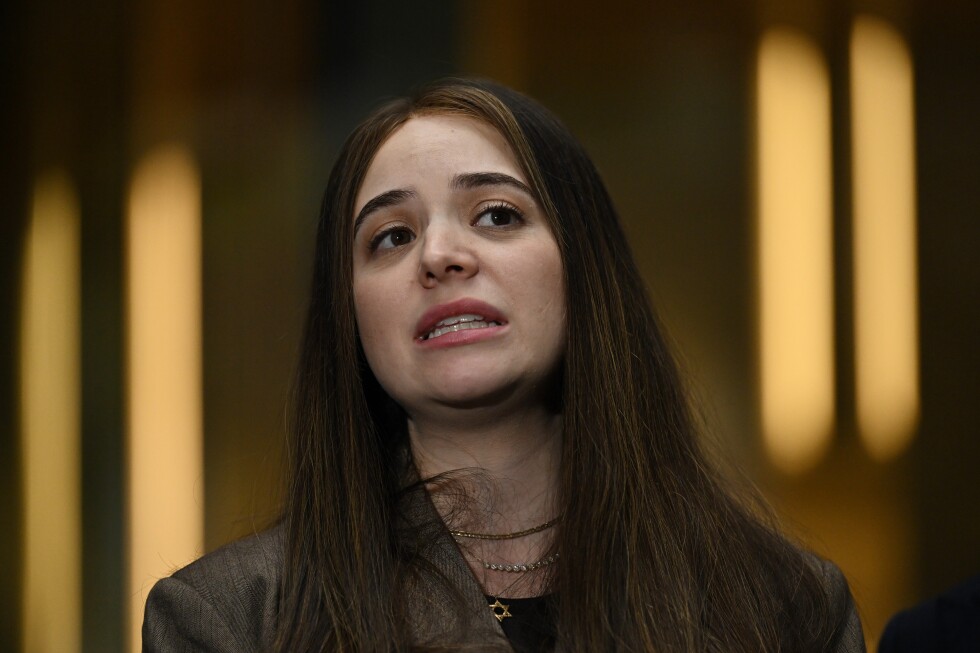
Among those testifying was Sheina Gutnick, whose father Reuven Morrison, 62, was killed after heroically hurling a brick at one of the gunmen. Gutnick revealed that a year before losing her father, she was verbally abused in a Sydney shopping mall by a man who noticed her Star of David necklace.
“I felt shocked, exposed and unsafe,” Gutnick testified. “There were many people around me but no one intervened.” She described now feeling cautious about attending public events or traveling to certain parts of Sydney with her family.
The commission heard that the Bondi Beach attack represented a horrific culmination of growing antisemitism in Australia. According to the Executive Council of Australian Jewry, more than 2,000 antisemitic incidents were reported in the year following the outbreak of the Israel-Hamas conflict on October 7, 2023—quadrupling the previous record of approximately 500 incidents.
Toby Raphael, vice president of Sydney’s Newtown Synagogue, which was vandalized with swastikas in 2025, described a transformed reality for Australian Jews. “Now everyone is scared all the time,” Raphael testified, adding that his son’s Jewish school now requires professional armed guards and parent security groups.
“Why do kids have to go to school like that?” he asked commissioners. “This is the world that the Jews of Australia live in now and it needs to change.”
The rise in antisemitic incidents has prompted some Australian Jews to consider emigration. Several witnesses testified about planning to leave the country due to safety concerns, particularly following a series of coordinated attacks on Jewish institutions that Australia’s government linked to Iran in August, leading to severed diplomatic ties with Tehran.
Alex Ryvchin, a Jewish community leader whose home was targeted in an arson attack in 2025, told the inquiry he had warned reporters that Australia was “on a path to catastrophe” and that someone would die if the escalation continued.
“This was January, and by December there was a horrific massacre which has transformed us permanently,” Ryvchin testified.
The Royal Commission’s two-week initial hearing in Sydney will examine the nature and prevalence of antisemitism in Australian institutions and society. Additional hearings will explore other topics before the commission publishes its final report in December.
The inquiry has already released an interim report in April focusing on law enforcement and security services’ capacity to respond to antisemitic crimes. That report recommended implementing nationally consistent gun laws and a weapons buyback program—significant proposals in a country where serious gun crime has been rare since major reforms following the 1996 Port Arthur massacre.
Sajid Akram was killed by police at the Bondi Beach crime scene. His son Naveed survived and faces charges including committing a terrorist act, 15 counts of murder, and 40 counts of attempted murder. He has not yet entered pleas to the charges.
The hearings continue as Australia confronts a challenging period for social cohesion, with authorities and community leaders seeking effective responses to prevent further violence while protecting vulnerable communities.
Fact Checker
Verify the accuracy of this article using The Disinformation Commission analysis and real-time sources.

14 Comments
This is a tragic and concerning incident. Antisemitism must be condemned in the strongest possible terms. I hope the inquiry leads to concrete steps to improve safety and inclusion for Jewish Australians.
Absolutely. No one should have to live in fear due to their faith or ethnicity. Addressing the underlying drivers of hate is critical.
This is a heartbreaking situation. The fact that Jewish Australians feel unsafe in their own country is unacceptable. I hope the inquiry can identify concrete steps to improve security and social cohesion.
Definitely. No one should have to live in constant fear due to their identity. Addressing the root causes of antisemitism must be a top priority.
The testimony from the Jewish community is heartbreaking. Antisemitism is a scourge that must be rooted out through education, legislation, and vigilant monitoring of hate groups.
Well said. Comprehensive, multi-pronged efforts are needed to combat this insidious problem. I hope the inquiry leads to meaningful and lasting change.
It’s deeply troubling to hear these personal accounts of discrimination and violence. Protecting religious and ethnic minorities must be a core responsibility of government.
You’re absolutely right. The inquiry must lead to meaningful policy changes to safeguard the Jewish community and all vulnerable groups.
The sharp rise in antisemitism globally is deeply disturbing. It’s critical that these public hearings shed light on the experiences of the Jewish community and inform policy solutions to counter intolerance.
Agreed. Raising awareness and understanding is key to combating hate and discrimination. I hope the inquiry leads to meaningful change.
This is a disturbing situation that demands urgent action. The personal stories underscore the very real human toll of antisemitism. I hope the inquiry results in concrete policy solutions to improve safety and inclusion.
Absolutely. Addressing the roots of intolerance and discrimination must be a top priority. The Jewish community deserves to feel secure and valued in their own country.
This is a complex and disturbing issue. I hope the inquiry can shed light on the drivers of antisemitism and develop effective strategies to foster greater inclusion and understanding.
Agreed. Addressing deep-seated prejudices and creating a more tolerant society should be the key goals. It’s critical work that requires sustained commitment.