


Listen to the article
Russia and Ukraine Announce Competing Ceasefires Ahead of Victory Day Celebrations
Russia’s Defense Ministry announced a unilateral ceasefire in Ukraine for Friday and Saturday to coincide with the 81st anniversary of Nazi Germany’s defeat in World War II. The announcement came with a stern warning that Russia would strike back if Ukraine attempts to disrupt Victory Day festivities.
Hours later, Ukrainian President Volodymyr Zelenskyy responded by declaring his own ceasefire initiative, beginning at midnight on Wednesday without specifying an end date. Zelenskyy stated that Ukraine would “respond in kind” to Russia’s actions from that moment forward.
These competing announcements come as Russia prepares for a significantly scaled-back version of its traditional Victory Day military parade on Moscow’s Red Square. Russian officials cited security concerns about potential Ukrainian drone attacks as the reason for downsizing the event. In recent months, Ukraine has intensified drone strikes deep within Russian territory in response to the ongoing invasion that began over four years ago.
Military analysts note that these ceasefire declarations follow a familiar pattern of previous short-lived truces, including one around Orthodox Easter, which had negligible impact on the conflict. The Russian Defense Ministry explicitly threatened “a massive missile strike on the center of Kyiv” if Ukraine disrupts Saturday’s celebrations, warning civilians and diplomatic staff to evacuate promptly.
In his response, Zelenskyy pointedly remarked that Kyiv had received no official truce requests, adding that it was telling that “Russia’s Defense Ministry believes it cannot hold a parade in Moscow without Ukraine’s goodwill.” Speaking at a European summit in Armenia, the Ukrainian president observed that Russian authorities “fear drones may buzz over Red Square,” which he characterized as a sign of weakness that should encourage continued international pressure through sanctions.
The Victory Day parade has long served as a showcase of Russia’s military might and global influence. For decades, it has been a source of patriotic pride and a cornerstone of national identity. However, this year marks the first time in nearly two decades that the Moscow parade will proceed without tanks, missiles, and other military equipment. Similar parades in other Russian cities have been similarly reduced or canceled altogether.
World War II remains one of the few unifying elements in Russia’s contentious Soviet-era history. The Soviet Union lost an estimated 27 million people during what Russians call the Great Patriotic War (1941-45), a staggering sacrifice that continues to shape the national consciousness.
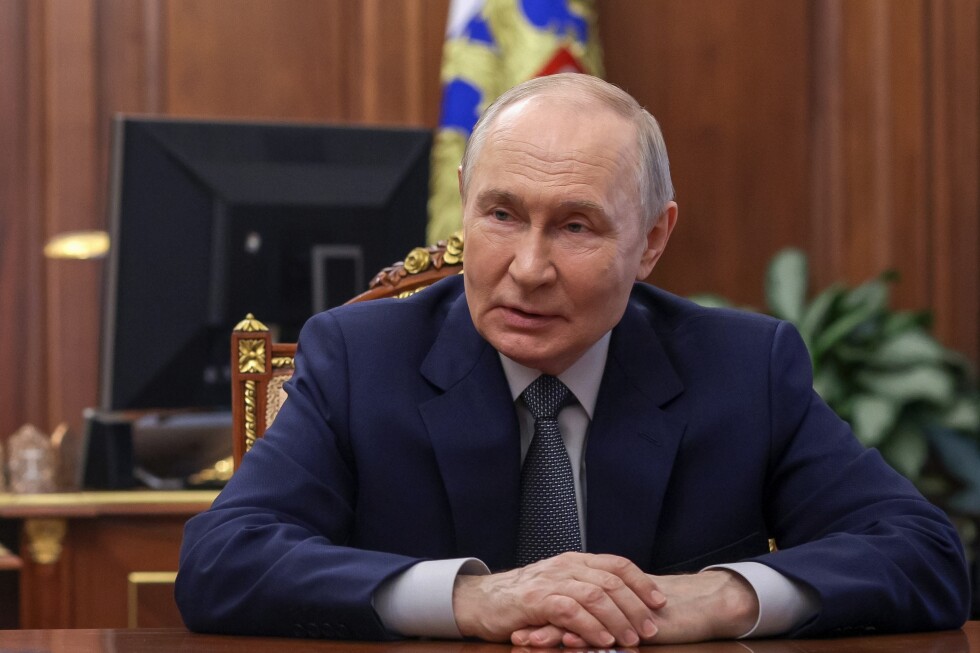
President Vladimir Putin, who has ruled Russia for over 25 years, has transformed Victory Day into a fundamental pillar of his political narrative and has frequently used it to justify the war in Ukraine. Last year’s 80th anniversary parade attracted numerous world leaders to Moscow, including Chinese President Xi Jinping, Brazilian President Luiz Inácio Lula da Silva, and Slovak Prime Minister Robert Fico, who is scheduled to attend again this year.
In a similar move last year, Putin declared a 72-hour unilateral ceasefire and authorities disabled mobile internet in Moscow for several days to prevent Ukrainian drone attacks. Reports indicate that Russian cellular operators have already begun warning customers in Moscow and St. Petersburg about upcoming internet restrictions.
The dueling ceasefire announcements come amid intensifying military operations on both sides, with Russia continuing its offensive in eastern Ukraine while Ukraine maintains pressure through long-range strikes. International observers remain skeptical that either declaration will lead to a meaningful pause in hostilities, as previous ceasefire attempts have collapsed almost immediately.
As Victory Day approaches, the contrast between the traditional grandiose celebrations of Russian military power and this year’s scaled-back events provides a stark indication of how the Ukraine conflict continues to impact even Russia’s most sacred national observances.
Fact Checker
Verify the accuracy of this article using The Disinformation Commission analysis and real-time sources.

14 Comments
The downsizing of Russia’s Victory Day parade suggests they may be more focused on projecting an image of strength than actual military might at the moment.
Ukraine’s willingness to match the ceasefire could be a strategic move to avoid provoking Russia during their holiday celebrations.
It’s intriguing that Ukraine is willing to reciprocate the ceasefire, even if it’s only for a short period. This could indicate a shift in their strategy or a desire to de-escalate tensions.
Ukraine may be looking to gain some goodwill or leverage by matching Russia’s truce, even if they remain skeptical of its true purpose.
This ceasefire announcement is likely more about optics than a genuine desire for peace. Both sides will be on high alert, ready to resume hostilities at the slightest provocation.
Agreed, these temporary truces have often been used more for political posturing than meaningful conflict resolution in the past.
These competing ceasefire declarations highlight the fragility of the situation. Both sides will be closely monitoring the other’s compliance, ready to retaliate if the truce is broken.
It’s a delicate dance, with each side trying to gain an advantage. The real test will be whether either is willing to truly stand down, even temporarily.
An uneasy truce amid the ongoing conflict. It remains to be seen if both sides will truly hold their fire or if this is just a temporary pause before the fighting resumes.
Agreed, the history of these ceasefires is mixed. Skepticism is warranted until we see if the truce holds or if it’s merely a strategic maneuver.
The competing ceasefire announcements highlight the complexity of the situation. Both sides are likely maneuvering for strategic advantage, rather than genuinely seeking a lasting peace.
Absolutely, it’s hard to take these temporary truces at face value given the history of broken promises and resumed hostilities in this conflict.
With Victory Day approaching, it’s not surprising that Russia is seeking a temporary ceasefire. But Ukraine’s willingness to reciprocate is an interesting development that bears watching.
Ukraine may be looking to de-escalate tensions around the holiday, though they’ll likely resume operations if Russia violates the truce.