


Listen to the article
Berlin’s Historic Pergamon Museum to Reopen in 2027 After Extensive Restoration
Berlin’s renowned Pergamon Museum, one of the German capital’s premier tourist destinations, will welcome visitors again on June 4, 2027, after undergoing extensive renovations that have kept its most famous artifact hidden from public view for more than a decade.
The Prussian Cultural Heritage Foundation, which manages many of Berlin’s cultural institutions, confirmed the reopening date on Monday. The announcement marks a significant milestone in the ambitious restoration project that has transformed the historic structure.
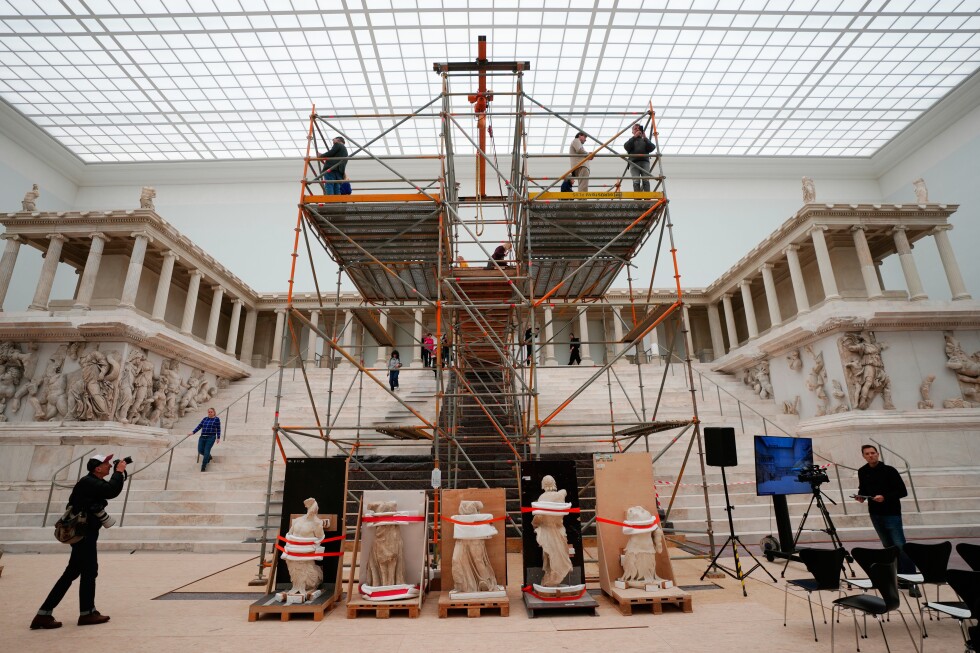
At the heart of the museum stands the magnificent Pergamon Altar, a masterpiece of Hellenistic art dating back to the 2nd century B.C. The altar, adorned with intricate marble friezes depicting the battle between gods and giants, was originally constructed between 197 and 156 B.C. in what is now Bergama, Turkey. The structure represents one of the most significant archaeological treasures housed in Germany and has drawn millions of visitors over the decades.
The museum has been completely closed to the public since October 2023, though visitors have been unable to view the Pergamon Altar for much longer. The section housing the altar has been inaccessible since 2014, when renovations began on that wing of the building.
Even after next year’s partial reopening, visitors will need to wait to see some of the museum’s other treasures. The wing containing Babylon’s vibrant Ishtar Gate—another of the institution’s most celebrated artifacts—will remain closed as restoration work continues. According to current plans, the museum will not be fully operational until 2037, reflecting the scale and complexity of the renovation project.
The comprehensive restoration of the Pergamon Museum is part of a broader initiative to revitalize Berlin’s Museum Island (Museumsinsel), a UNESCO World Heritage site comprising five museums built between 1830 and 1930. The neoclassical complex represents one of Europe’s most significant cultural landmarks and houses collections spanning thousands of years of human history.
The island’s museums suffered substantial damage during World War II bombing raids, and the subsequent division of Germany complicated restoration efforts. The East German government, facing economic constraints, never fully restored the damaged buildings, leaving much of the necessary work for after German reunification.
In recent decades, German authorities have committed substantial resources to rehabilitating these cultural treasures. Three of the five museums on the island have already completed their renovations. The project reached another milestone in 2019 with the opening of the James Simon Gallery, a modern entrance building designed by British architect David Chipperfield to serve as a central visitor center for the museum complex.
The restoration of the Pergamon Museum represents one of the most technically challenging aspects of the Museum Island project due to the size and fragility of its monumental artifacts. Conservators have been working meticulously to preserve delicate ancient structures while engineers upgrade the building to meet contemporary museum standards.
The reopening will likely provide a significant boost to Berlin’s cultural tourism sector, which has long relied on these institutions to attract international visitors. For archaeology enthusiasts and art lovers, the 2027 date offers the promise of once again experiencing one of antiquity’s most impressive architectural achievements in a setting worthy of its historical importance.
Fact Checker
Verify the accuracy of this article using The Disinformation Commission analysis and real-time sources.

14 Comments
While the extended closure of the Pergamon Museum has likely been disruptive for the local economy, it’s encouraging to see the commitment to preserving such an important cultural treasure. The reopening will be a significant event.
You make a good point. Maintaining and restoring historic sites like the Pergamon Museum requires significant time and resources, but the payoff in terms of cultural preservation and tourism is well worth it.
Excellent news! The Pergamon Museum is a true treasure trove of ancient history and culture. I’m looking forward to seeing the restored Pergamon Altar once the renovations are complete.
The Pergamon Altar is truly a masterpiece of Hellenistic art. I can’t wait to witness its grandeur in person once the museum reopens.
The Pergamon Museum is such an important cultural institution. I’m glad to hear they are taking the time to properly restore and preserve this historic site for future generations to enjoy.
Preserving our cultural heritage is so crucial. The Pergamon Altar is a priceless artifact that deserves to be protected and showcased for all to appreciate.
It’s great to see that the Pergamon Museum will be reopening soon. This museum is a treasure trove of ancient artifacts and it’s crucial that they are properly preserved and displayed for the public to enjoy.
I agree. The Pergamon Altar is a particularly significant piece in the museum’s collection, and I’m sure the restoration work will ensure it continues to be a highlight for visitors.
The Pergamon Museum is such an iconic cultural landmark. I’m glad to see it’s finally reopening after all these years of restoration work. This will be a major draw for tourists and history enthusiasts alike.
Absolutely, the Pergamon Altar is a true gem that deserves to be appreciated by people from around the world. I can’t wait to see what the museum has in store for visitors once it reopens.
The Pergamon Altar is truly a wonder of the ancient world. I’m glad to see that the Prussian Cultural Heritage Foundation is taking the necessary steps to ensure its long-term preservation. This museum is a true gem that deserves to be protected.
Absolutely. The Pergamon Altar is an irreplaceable piece of history, and its careful restoration is essential to maintaining its integrity and allowing future generations to appreciate its magnificence.
I’m curious to learn more about the extensive renovations that have been undertaken at the Pergamon Museum. What kind of work has been done to restore the historic structure and its prized artifacts?
The Pergamon Altar is a true marvel of ancient engineering and artistry. I’d love to hear details about the restoration process and any new insights that have been gained about its construction and history.