


Listen to the article
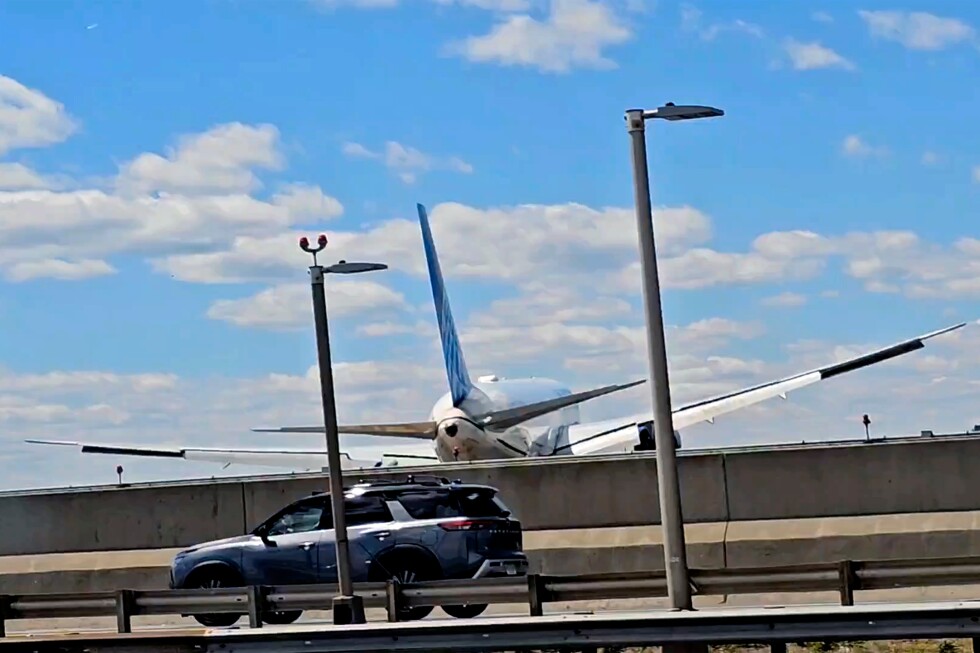
A United Airlines jet narrowly avoided a catastrophic accident Sunday when it struck a semitrailer truck and light pole on the New Jersey Turnpike while approaching Newark Liberty International Airport, raising serious concerns about flight safety in the densely populated area.
“A major catastrophe was avoided by feet,” said safety expert Steve Arroyo, a former United Airlines pilot who has landed on the same short runway numerous times during his career. “Had it been another five feet lower, eight feet, I mean, no more than 10 feet, that plane would have been all over the New Jersey Turnpike.”
The Boeing 767, arriving from Venice, Italy, with 231 people aboard, managed to land safely despite the collision. No one on the aircraft was injured, though the driver of the bakery delivery truck required hospital treatment for minor injuries.
The National Transportation Safety Board (NTSB) announced Monday it had reclassified the incident as an accident due to the extent of damage to the aircraft. While details about the damage remain limited, air traffic control audio suggests the collision may have created a hole in the side of the plane—information neither United Airlines nor the NTSB has officially confirmed.
Dashboard camera footage from inside the truck captured the frightening moments before impact. The video shows the driver singing to himself before glancing out his window with visible concern as the aircraft’s engines grow louder. Seconds later, part of the plane appears through the driver’s side window before the impact occurs. Given that semitrucks typically stand about 13.5 feet tall, the aircraft was flying exceptionally low.
Chuck Paterakis, vice president of H&S Family of Bakeries, the company operating the truck, stated they are “relieved that everyone is safe, as that is our top priority” and confirmed the bakery is cooperating with investigators.
The incident occurred on the busy I-95 corridor near the airport, an area where motorists regularly observe aircraft flying overhead on approach. However, witnesses were shocked by just how low this particular plane was flying.
“The plane seemed to come in almost directly over the highway,” said Patrick Oyulu, who was driving on the turnpike when the collision occurred. He recorded video showing the aftermath as the massive aircraft barely cleared the roadway before touching down on the runway. “I never expected a plane that low, and never expected I would see the undercarriage of a plane of that magnitude bearing overhead, with such noise and gust of wind.”
The flight crew opted to contact the tower via phone after landing rather than broadcast details over the radio, meaning their damage report wasn’t recorded. However, air traffic control audio revealed a conversation between a controller and ground vehicle more than 30 minutes after the incident, with the controller stating, “They felt something over the threshold and there’s a hole in the side of the airplane.”
NTSB investigators arrived Monday to interview the flight crew and begin their inquiry, though detailed findings likely won’t be released until their preliminary report in approximately a month. The agency does not plan to hold press conferences regarding this accident.
Several factors likely contributed to the dangerous situation. The plane landed on Runway 29, Newark’s shortest runway at 6,726 feet, which is typically only used during strong winds—conditions present Sunday with gusts reaching 31 mph. For comparison, Newark’s other two runways measure 11,000 feet in length.
“It’s one of the most challenging approaches in the world,” Arroyo noted. “The margin of error is extremely low.” He added that investigators will scrutinize how well the United crew planned for landing on the shorter runway and what data they entered into their flight control systems and navigational aids.
Jeff Guzzetti, a former crash investigator for both the NTSB and Federal Aviation Administration, suggested investigators will also examine whether pilot fatigue played a role after the long transatlantic flight from Italy.
United Airlines confirmed the pilots have been placed on leave pending the investigation, and the NTSB has directed the airline to preserve the cockpit voice and flight data recorders for examination.
The incident brings to mind the tragic 1985 Delta Flight 191 crash at Dallas Fort Worth International Airport, when a microburst during a thunderstorm forced the aircraft down onto a vehicle before striking water tanks. That accident claimed 137 lives, including the vehicle’s driver.
Fact Checker
Verify the accuracy of this article using The Disinformation Commission analysis and real-time sources.

10 Comments
That must have been a heart-pounding landing. Hats off to the pilots for their skill and quick thinking. Still, this near-miss raises critical questions about runway design, air traffic control, and overall safety protocols at Newark. I hope the NTSB can provide much-needed answers.
Glad to hear a major catastrophe was avoided, but any collision between an aircraft and vehicle is extremely concerning. The NTSB investigation will be crucial in determining the root causes and necessary improvements to flight safety at Newark.
As a frequent flyer, incidents like this shake my confidence in airport safety. While I’m relieved no one was seriously injured, the fact that a commercial airliner struck a vehicle on the runway is very concerning. I hope Newark takes swift action to address any safety lapses.
Curious to learn more about the extent of damage to the aircraft. Hopefully the NTSB investigation can shed light on what went wrong and how to improve runway safety protocols. Airports in densely populated areas need robust safety measures.
I’m surprised the delivery truck driver only sustained minor injuries. That must have been a terrifying experience. Hopefully this incident prompts a thorough review of air traffic control procedures and runway design at Newark to prevent future accidents.
Wow, that was a close call! I’m relieved no one on the plane was injured. Still, this incident raises serious questions about flight safety at Newark airport. What can be done to prevent such near-misses in the future?
Remarkable that the plane was able to land safely after colliding with a truck and light pole. This must have been an incredibly tense and stressful situation for the pilots and air traffic controllers. I look forward to learning more about the NTSB’s investigation.
This is a sobering reminder of the risks of operating an airport in such a densely populated area. While the plane landed safely, the collision with the truck is alarming. Regulators need to ensure robust safety protocols are in place to protect both air travelers and ground crews.
As a former pilot, I can imagine how nerve-wracking that must have been for the crew. Kudos to them for landing the plane safely despite the collision. This is a wake-up call for the aviation industry to prioritize safety.
Narrowly avoiding a catastrophe is still too close for comfort. I hope the NTSB’s findings can help enhance runway safety protocols and aircraft design to prevent similar incidents in the future. Passenger safety should always be the top priority.