


Listen to the article
Antarctica’s Tourism Boom Raises Environmental and Health Concerns
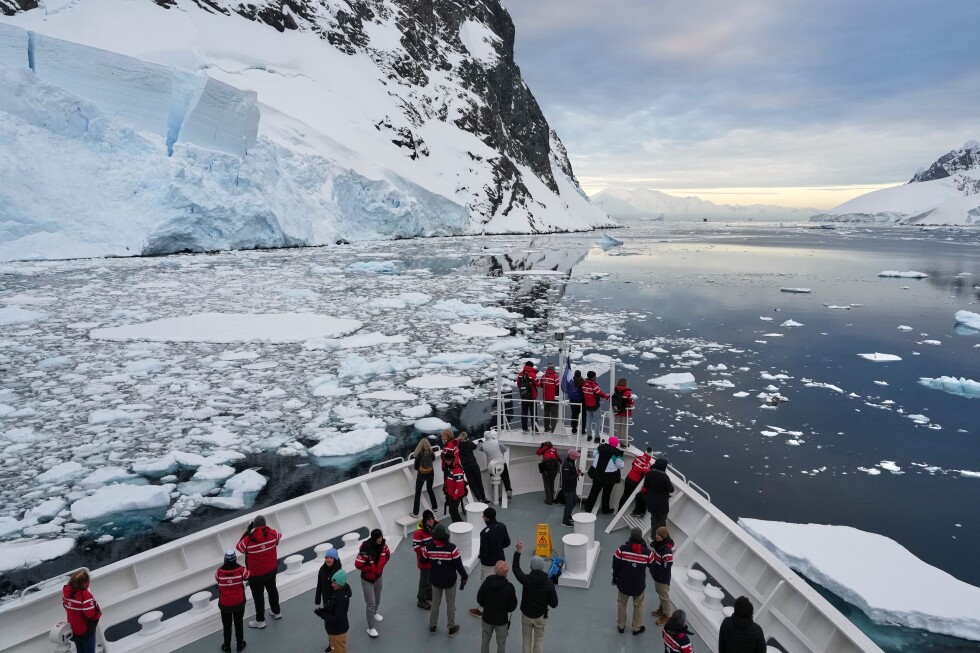
Tourism to Antarctica is surging as travelers rush to witness the continent’s rapidly changing frozen landscapes before they potentially disappear due to climate change. This growing influx of visitors has scientists and environmentalists increasingly concerned about the risks of contamination and environmental damage to this pristine ecosystem.
In 2024 alone, more than 80,000 tourists set foot on the Antarctic continent, with an additional 36,000 viewing it from cruise ships, according to data from the International Association of Antarctica Tour Operators. The International Union of Concerned Scientists reports that visitor numbers have increased tenfold over the past three decades.
This upward trend shows no signs of slowing. Researchers at the University of Tasmania project that annual visits could potentially reach 400,000 within the next decade as technological advances make the journey more accessible and affordable.
“The sites you will see in Antarctica are extremely unique and not replicable anywhere else on the planet — the whales, the seals, the penguins, the icebergs — it’s all really stunning and it makes a huge impression on people,” explained Claire Christian, executive director of the environmental group Antarctic and Southern Ocean Coalition.
Many visitors are motivated by what experts call “last chance tourism” — the desire to witness Antarctica’s ice-covered landscapes before they irreversibly change due to global warming. NASA data indicates that from 2002 to 2020, Antarctica lost approximately 149 billion metric tons of ice annually.
The Antarctic Peninsula, where most expeditions are focused, is among the fastest-warming regions on Earth. A typical journey involves sailing south from Argentina toward Antarctica before heading north along Africa’s coast — the route taken by the cruise ship MV Hondius, which recently made headlines after a deadly outbreak of the rare hantavirus onboard.
While officials have not indicated any environmental contamination from the Hondius incident, the outbreak has spotlighted the potential health risks associated with Antarctic tourism. The World Health Organization is investigating possible human-to-human transmission of hantavirus on the vessel, which departed from Ushuaia, Argentina on April 1 and visited Antarctica and several remote islands.
Disease transmission isn’t the only concern. In recent years, migratory birds carried avian flu from South America to Antarctica, according to the U.S. Centers for Disease Control and Prevention. This prompted tourism operators to strengthen hygiene protocols to protect both visitors and the fragile Antarctic ecosystem.
“There are rules that people are bound by when they’re heading south,” said Hanne Nielsen, a senior lecturer of Antarctic law at the University of Tasmania and former guide. She described rigorous decontamination procedures where “crews and passengers use vacuums, disinfectants and brushes to scrub shoes and equipment clear of bugs, feathers, seeds and microbe-carrying dirt.”
The Antarctic Treaty, established in 1959, designates the continent as a scientific preserve for peaceful purposes. Additional protocols aim to protect its environment and scientific value. However, these regulations were created when tourism numbers were far lower than today.
“Activity needs to be regulated appropriately, as you would with any of the world’s sensitive and precious ecological sites,” Christian stated from Hiroshima, Japan, where she was preparing for an Antarctic Treaty Consultative Meeting to advocate for stronger protections for the continent’s wildlife, including penguins, whales, seals, and krill — tiny creatures fundamental to the Antarctic food chain.
Despite these concerns, Antarctica’s pristine wilderness continues to captivate visitors. As Christian noted, “You can put a footprint in Antarctica and it’s still there 50 years later” — a stark reminder of how vulnerable this remote ecosystem is to human impact.
As tourism numbers continue to climb, balancing access with conservation becomes increasingly crucial for preserving one of Earth’s last great wildernesses for future generations.
Fact Checker
Verify the accuracy of this article using The Disinformation Commission analysis and real-time sources.

21 Comments
Interesting update on Antarctica tourism surge raises biosecurity concerns. Curious how the grades will trend next quarter.
Good point. Watching costs and grades closely.
Good point. Watching costs and grades closely.
Production mix shifting toward World might help margins if metals stay firm.
Good point. Watching costs and grades closely.
Nice to see insider buying—usually a good signal in this space.
The cost guidance is better than expected. If they deliver, the stock could rerate.
Good point. Watching costs and grades closely.
Good point. Watching costs and grades closely.
The cost guidance is better than expected. If they deliver, the stock could rerate.
Uranium names keep pushing higher—supply still tight into 2026.
Exploration results look promising, but permitting will be the key risk.
Good point. Watching costs and grades closely.
The cost guidance is better than expected. If they deliver, the stock could rerate.
I like the balance sheet here—less leverage than peers.
Good point. Watching costs and grades closely.
Good point. Watching costs and grades closely.
If AISC keeps dropping, this becomes investable for me.
Good point. Watching costs and grades closely.
Silver leverage is strong here; beta cuts both ways though.
Good point. Watching costs and grades closely.