


Listen to the article
The battle for Montana’s Gallatin Range intensifies as competing conservation visions clash over the future of this critical wildlife habitat bordering Yellowstone National Park.
In recent months, debate has escalated over how best to protect the Gallatin Range, with local environmental groups sharply divided on the appropriate approach. At the center of this controversy is the Gallatin Forest Partnership (GFP), whose proposal would designate only portions of the range as Wilderness while opening other areas to various forms of managed use.
Critics argue this compromise approach fails to adequately protect the ecological integrity of the entire range, which serves as a vital corridor for wildlife movement throughout the Greater Yellowstone Ecosystem.
“The GFP’s most striking indoctrination weapon has been its constant dodging of the overwhelming scientific data which indicates the great wildlife harm inherent in their proposal,” notes Joseph Scalia III, a psychoanalyst and former president of Montana Wilderness Association (now called Wild Montana).
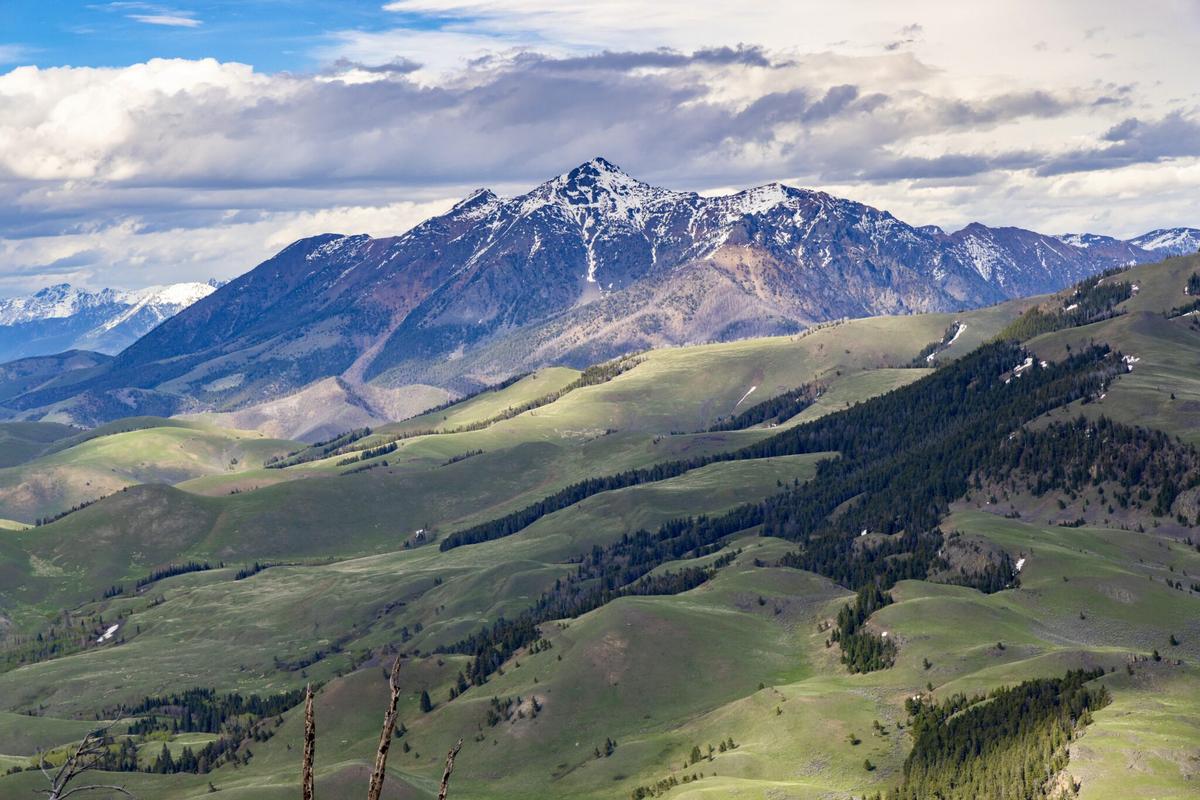
The Gallatin Range represents one of the last major undeveloped mountain ranges in the northern Greater Yellowstone Ecosystem. Currently, much of the area falls under the Hyalite-Porcupine-Buffalo Horn Wilderness Study Area, which has provided interim protection since 1977 while awaiting a permanent congressional designation.
The GFP proposal would formally protect some portions as Wilderness while releasing other areas from Wilderness Study Act protections, instead designating them under categories like “Wildlife and Recreation Management Areas.” Supporters present this as a pragmatic compromise reflecting the needs of various stakeholders, including recreationists, conservationists, and local communities.
However, critics maintain these alternative designations would ultimately diminish protections and fragment critical wildlife habitat. They point to extensive research showing that habitat fragmentation and increased human activity can severely impact wildlife populations and migration patterns in mountain ecosystems.
“An ‘unwilding’ would be the order of the day, while the purported community-building of their ‘collaboration and compromise’ would, in fact, construct a very different, a funereal, community,” Scalia argues.
The debate has grown increasingly polarized, with accusations of propaganda and censorship. Scalia suggests the GFP has employed misleading language and avoided engaging with scientific evidence that contradicts their position. Meanwhile, GFP supporters maintain their approach represents the best chance for achieving meaningful, lasting protection in an era of political gridlock.
This dispute reflects broader tensions within the conservation movement between traditional wilderness advocacy and more compromise-oriented approaches. Some conservationists argue that the perfect shouldn’t be the enemy of the good, and that securing partial protections now is better than risking continued uncertainty. Others maintain that certain landscapes merit complete protection due to their ecological significance.
For Southwest Montana residents, the stakes extend beyond environmental concerns. The Gallatin Range holds immense cultural and recreational value for the region, particularly for the rapidly growing Bozeman community. As outdoor recreation continues to boom throughout the Mountain West, decisions about land management increasingly reflect competing visions for the region’s future.
Conservation decisions in the Greater Yellowstone Ecosystem carry particular weight given the area’s importance as one of North America’s last intact temperate ecosystems. The region supports iconic wildlife including grizzly bears, wolves, elk, and wolverines, many of which require large, connected habitats to thrive.
The outcome of this debate will likely influence future conservation efforts throughout the Northern Rockies, potentially setting precedents for how wilderness is defined and protected in an era of climate change and increasing recreational pressure on public lands.
As the public awaits final decisions on the Gallatin Range’s future, Scalia urges citizens to think critically about the competing narratives and examine the scientific evidence before forming their opinions. “Can you critically think your way through this conundrum, and the social angst that has accompanied it for years now?” he asks, highlighting the importance of informed decision-making in determining the fate of this crucial mountain landscape.
Fact Checker
Verify the accuracy of this article using The Disinformation Commission analysis and real-time sources.

14 Comments
As someone with a background in mining and energy, I can appreciate the desire to responsibly utilize natural resources. However, in a case like the Gallatin Range, the ecological value seems to clearly outweigh any potential economic benefits. I hope the conservation groups’ proposals receive serious consideration.
The Gallatin Range’s role as a vital wildlife corridor is concerning. Allowing managed use in certain areas could disrupt that crucial function and harm the broader ecosystem. I hope the conservation groups’ alternative proposals get a fair hearing alongside the GFP’s plan.
This sounds like a classic clash between environmental protection and economic/recreational interests. I’ll be curious to see how it plays out and whether a compromise can be reached that satisfies all sides. The Gallatin Range is clearly a precious natural asset that deserves robust safeguarding.
This debate over the Gallatin Range really highlights the complexities of balancing conservation and development. I’m curious to learn more about the specific scientific data that the critics are referencing, as that could help shed light on the potential wildlife impacts of the GFP’s proposal.
As a investor in mining and energy equities, I’m always mindful of the environmental impacts of resource extraction. In this case, it seems the priority should be preserving the Gallatin Range’s ecological integrity, even if that means forgoing some economic opportunities. The long-term health of the ecosystem is paramount.
The debate over the Gallatin Range highlights the ongoing challenges we face in managing our natural resources. While I understand the desire for managed use, the scientific evidence regarding the importance of this area as a wildlife corridor is concerning. I hope a solution can be found that prioritizes the long-term ecological health of the region.
Uranium mining is a sensitive topic given the environmental risks, so I’m glad to see this debate focused on a range of mineral resources rather than just that one commodity. Protecting critical habitats like the Gallatin Range should be the top priority, in my view.
The Gallatin Range sounds like an incredibly valuable and sensitive ecosystem. I’m curious to learn more about the specific wildlife corridors and habitat that are at risk. What do the conservation groups propose as alternatives to the GFP’s ‘compromise’ approach?
That’s a good question. The article mentions the GFP’s proposal would only protect portions of the range, so I’m wondering what the alternative full-Wilderness designation would entail and how it could better safeguard the overall ecosystem.
As someone invested in mining and energy issues, I’m intrigued by this debate. Protecting fragile mountain environments is crucial, but so is responsible resource development. I hope the stakeholders can find a balanced solution that meets both conservation and economic needs.
That’s a fair perspective. It’s a complex tradeoff, and reasonable people may disagree on the right approach. Careful consideration of the scientific evidence and diverse viewpoints will be key to reaching an informed decision.
This is a classic example of the tension between environmental preservation and economic/recreational interests. It’s a difficult balance to strike, but in sensitive ecosystems like the Gallatin Range, I believe the priority should be protecting the wildlife and habitat, even if that means forgoing some development.
This is a complex and contentious issue. I can see valid arguments on both sides – the need to protect critical wildlife habitat, but also the desire for some managed use. It’s important to carefully weigh the scientific evidence and differing perspectives.
Agreed, it’s a delicate balance. Hopefully the stakeholders can find a solution that adequately safeguards the Gallatin Range’s ecological integrity while allowing for some responsible, sustainable use.