


Listen to the article
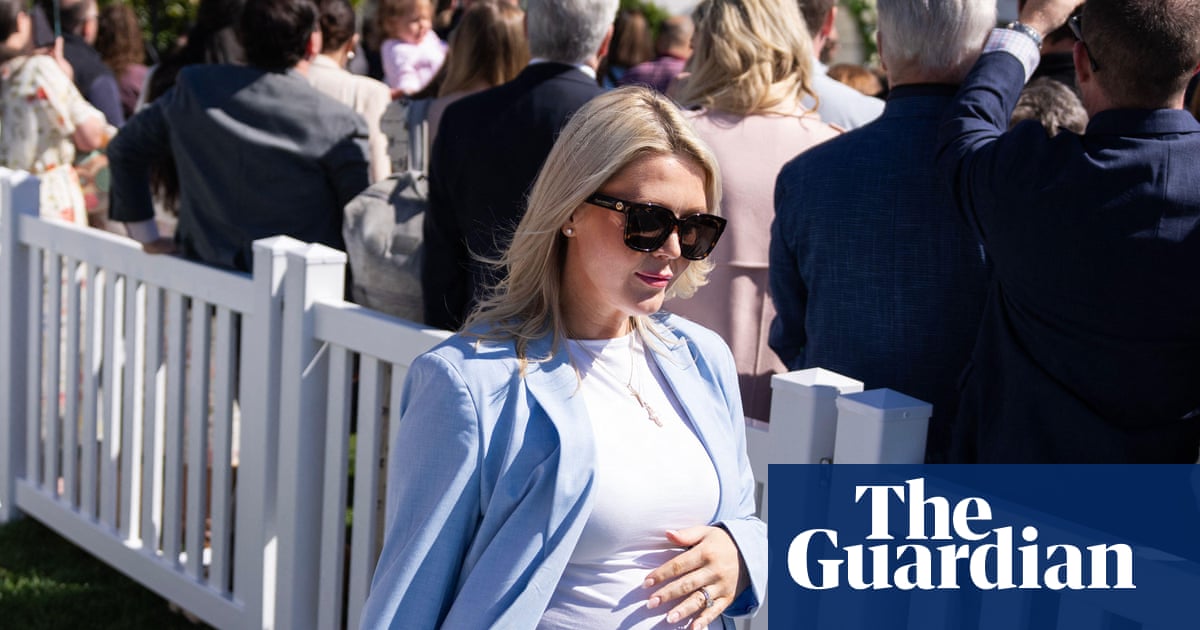
In a notable first for the White House, Press Secretary Karoline Leavitt became the first person in her position to give birth while serving in that role, delivering her second child on May 1. This milestone comes as part of what some are calling a “Maga baby boom,” with several prominent women in the Trump administration celebrating pregnancies simultaneously.
Alongside Leavitt, Katie Miller, wife of top White House aide Stephen Miller, and Second Lady Usha Vance have also recently announced pregnancies. The coincidence has been embraced by conservative media as evidence that Republicans are the “party of parents” while, as a January Wall Street Journal op-ed claimed, Democrats are “increasingly the party of the childless.”
These high-profile pregnancies have taken on distinctly political dimensions, with each woman using her personal journey to reinforce the narrative that the Trump administration champions family values and that increasing birthrates is vital to national interests.
“There is no greater blessing than motherhood. Don’t let anyone tell you otherwise,” Leavitt wrote alongside a maternity photoshoot that balanced aesthetic appeal with what some viewed as a pointed message. Miller has been even more explicit, writing on social media that “children shouldn’t be delayed for [women’s] careers – they are the bonds of society.”
“The messaging is definitely propaganda,” says Ronnee Schreiber, a political professor at San Diego State University, “because the messaging is tied to Trump and his political goals.” These pregnancies, according to Schreiber, give these women a unique platform to embody the right’s pronatalist messaging in a way others cannot.
The push comes as U.S. birthrates continue to decline to record lows, yet these Maga mothers seem reluctant to address the underlying reasons many Americans are delaying or foregoing parenthood, including economic pressures and the soaring cost of living.
This pronatalist messaging also reveals tensions within Republican ideology. At a closed-door Easter lunch, President Trump reportedly remarked, “We’re a big country. We have 50 states, and we have all these other people. We’re fighting wars. We can’t take care of daycare.” The statement highlights the contradictions in a party promoting more births while opposing policies like paid family leave and subsidized childcare that might make parenthood more accessible.
Leavitt has celebrated Trump for fostering a “pro-family environment” but has never specified what that entails. Her own approach to balancing work and motherhood has been to minimize time off – after the birth of her first child, she returned to work just three days postpartum following an assassination attempt on Trump, rather than taking the month she had initially planned.
This approach sparked controversy even within conservative circles. When Leavitt remarked at a Turning Point USA event that “being a mom and having a family and having a job, it gives you the greatest perspective,” she faced backlash from the right. Conservative commentator Kira Davis responded that “pretending it’s BETTER than being a mom who stays home is actually disturbing.”
The situation illustrates the Republican party’s struggle to reconcile traditional beliefs about motherhood with the reality that most American mothers work outside the home. Many Republican policies, like eliminating federal tax credits for daycare while increasing child tax credits, are designed to encourage parents – primarily mothers – to stay home with children.
Second Lady Usha Vance has taken a slightly different approach, downplaying her former career as a high-powered attorney who clerked for Supreme Court Justice John Roberts in favor of emphasizing relatable aspects of family life, like having a Costco membership. Her new venture, “Storytime With the Second Lady,” reinforces a more traditional image, despite her professional background.
While Miller openly promotes xenophobic “great replacement” theories on social media, linking immigration to declining birthrates in “the West,” Vance has remained silent on the administration’s immigration crackdown – policies that experts note contradict the pronatalist rhetoric by actively reducing population growth.
“The moral panic around population decline and fertility rates is a bit of a misattribution, especially in light of antinatalist policies that are also exercised by the Trump administration: mass detentions and deportations,” says Miranda Brady, a communications professor at Carleton University.
The administration’s push for more births comes as U.S. fertility rates dropped to another record low in 2025. Critics point to numerous Trump-era policies that may exacerbate financial difficulties for parents: stricter work requirements for Medicaid (which covers four in ten U.S. births), reductions in food assistance programs, and unfulfilled promises to make fertility treatments like IVF more accessible.
For these Maga mothers, personal life choices have become political statements in a complex debate about family values, women’s roles, and government policy. Whether their efforts will influence national fertility trends remains to be seen, but they have undoubtedly turned motherhood into a powerful messaging platform for the administration’s agenda.
Fact Checker
Verify the accuracy of this article using The Disinformation Commission analysis and real-time sources.

9 Comments
The rhetoric around the “party of parents” and “childless Democrats” seems like an oversimplification. Family planning is a complex personal choice that shouldn’t be reduced to political narratives. I hope the focus remains on supporting working families, not point-scoring.
While the political framing is questionable, I do hope these women receive the care and support they need during their pregnancies and after. Work-life balance is a universal challenge, not a partisan issue.
Interesting to see these high-profile pregnancies in the White House. I wonder how they’ll navigate balancing career and family. Hopefully they get the support they need to make it work for them.
Congratulations to the women on their pregnancies. Balancing career and family is always challenging, regardless of one’s political affiliation. I hope they receive the support they need during this exciting time.
Agreed, the political spin on these personal milestones is a bit concerning. Pregnancy and motherhood should be celebrated for what they are, not weaponized for partisan gain.
The “Maga baby boom” is an intriguing political angle. It’s understandable that these women want to highlight their personal journeys, but I hope the focus stays on their professional work and not just their family lives.
While I respect the women’s personal choices, I’m a bit skeptical of using pregnancy and motherhood as political statements. Family planning is a complex issue and I hope the debate stays respectful and focused on policies, not partisan narratives.
These pregnancies do highlight the unique challenges professional women face. I’m curious to see how the White House handles the logistics and whether they set a positive example for work-life balance.
Absolutely, it’s an important conversation to have. Hopefully these examples can inform policies that truly support families, regardless of political affiliation.