


Listen to the article
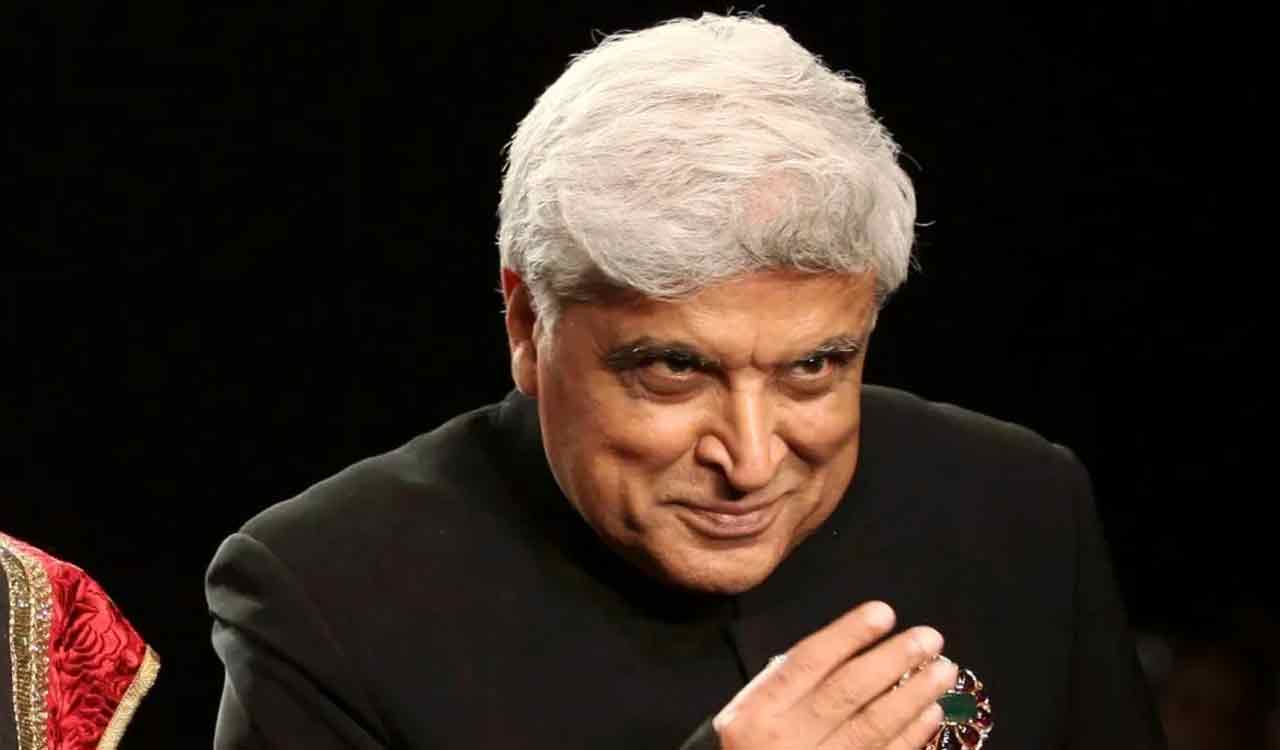
In a robust defense of artistic expression, renowned Bollywood lyricist and writer Javed Akhtar argued that filmmakers have the inherent right to propagate ideas through cinema, challenging the often-negative connotation associated with “propaganda films” in today’s polarized media landscape.
Speaking to reporters in Kolkata after receiving a special award from a prominent local jewellery brand, Akhtar addressed recent criticism of films like “Dhuandhar” being labeled as propaganda.
“I don’t know what you mean by propaganda films. I loved Dhurandhar, which was an excellent film. I loved the first one more than the second one,” said Akhtar, directly challenging the premise of the question.
The 79-year-old screenwriting veteran expanded on his position, questioning the subjective nature of such labeling. “Every story takes some stand, but does it become propaganda because the narrative isn’t suited to a section of the audience? Everyone has the right to propagate his ideas. What is wrong with propaganda films?”
Akhtar emphasized that every filmmaker’s fundamental duty is to present truth, noting that even fairy tales inherently carry ideological perspectives. This statement comes at a time when Indian cinema, particularly Bollywood, faces increasing scrutiny over perceived political messaging in mainstream films.
When asked about the recent controversy surrounding popular Bengali poet Srijato Bandyopadhyay, who faces a warrant for a decade-old poem, Akhtar acknowledged his limited information on the specific case but segued into discussing his own experiences with religious intolerance.
“An atheist thinks inherently, is without prejudice, thinks rationally,” he explained, referencing an incident where his event organized by the West Bengal Urdu Academy last year was canceled due to objections from certain Islamist groups. “This is only the problem of those having religious close-mindedness who have little tolerance,” he added.
The conversation shifted to West Bengal’s upcoming assembly elections, where Akhtar offered a philosophical perspective: “Governments come and go; you need a government to run a society. But Bengal is not known for governments. Bengal is known for its history and literature, which does not belong to any political party.”
He highlighted Bengal’s cultural contributions through luminaries like Satyajit Ray, Goutam Ghosh, and Mumbai-based director Bimal Roy, emphasizing the state’s artistic legacy over its political landscape.
Reflecting on his own creative journey, Akhtar revealed he would not write “Dewar” today – the 1975 blockbuster he co-wrote – explaining that “Films are like mirrors. With the passage of time, morality changes, and aspirations change. As society changes, content changes.” This observation speaks to the evolving nature of Indian cinema, which continues to navigate changing audience expectations and social dynamics.
Looking forward, the veteran writer expressed his ambition to eventually create a mainstream film that bridges the often-disparate audiences of “class” and “mass” cinema – a persistent challenge in India’s stratified entertainment industry.
When prompted about India’s political shift following the BJP’s rise to power in 2014, Akhtar offered a measured response: “Sometimes changes are undesirable and sometimes desirable. I generally believe the younger generation is better than my generation. They will make this society much better.”
Akhtar’s comments come amid growing debate about artistic freedom and political messaging in Indian cinema, with numerous recent films facing criticism or praise depending on their perceived alignment with different ideological positions. His defense of filmmakers’ rights to express diverse viewpoints adds a significant voice to this ongoing national conversation about the relationship between art, ideology, and audience reception.
Fact Checker
Verify the accuracy of this article using The Disinformation Commission analysis and real-time sources.

9 Comments
I respect Akhtar’s perspective, but I also think there’s a valid argument that some films cross the line into propaganda by prioritizing a specific ideological agenda over objective truth or balanced storytelling. It’s a nuanced issue without clear-cut answers.
Agreed, there’s a balance to be struck between artistic expression and responsible journalism/filmmaking. Reasonable people can disagree on where that line should be drawn.
This is an interesting discussion around the line between ideology and propaganda in the arts. I appreciate Akhtar’s defense of artistic expression, but I can also understand concerns about the potential for manipulation through persuasive storytelling. It’s a debate worth having.
Akhtar raises some thought-provoking points about the nature of storytelling and ideology. While I agree that all stories have an inherent viewpoint, I think there’s a difference between that and overtly propagandistic films that distort facts to push a particular agenda. It’s a complex topic worthy of further discussion.
Akhtar makes a compelling argument that filmmakers have the right to express their ideas and beliefs through their work. At the same time, I think there’s a valid concern about the use of entertainment media for overt political propaganda. It’s a complex issue without easy answers.
I’m curious to hear more about Akhtar’s views on this. He raises some valid questions about the use of the term ‘propaganda’ and whether it’s applied too broadly to dismiss films that don’t align with certain ideological perspectives.
Yes, the idea that any film with a strong ideological stance is automatically labeled as propaganda is an oversimplification. There’s nuance to be explored here.
Interesting perspective from Javed Akhtar. I agree that all storytelling has some underlying ideology or viewpoint. The question is whether that crosses the line into blatant propaganda meant to mislead. Reasonable people can disagree on where that line is drawn.
That’s a fair point. Defining the distinction between ideology and propaganda can be quite subjective.