


Listen to the article
CBC News Employs Contrasting Verification Standards in Gaza and Iran Coverage, Critics Say
A notable shift in how CBC News verifies and reports casualty figures has emerged when comparing their coverage of the Hamas-Israel war and the recent anti-regime protests in Iran, raising questions about consistency in journalistic standards.
Throughout the conflict between Hamas and Israel, CBC News regularly cited casualty figures provided by the Gaza Ministry of Health without substantial qualification regarding the source’s connection to Hamas, which governs the Gaza Strip. Critics point out that these figures were often presented without adequate context about the ministry’s operation under Hamas control.
This approach contrasts sharply with CBC’s more cautious stance on reporting casualties during the anti-regime protests that recently swept across Iran. The public broadcaster initially provided minimal coverage of the Iranian protests, only delivering detailed reporting well into January.
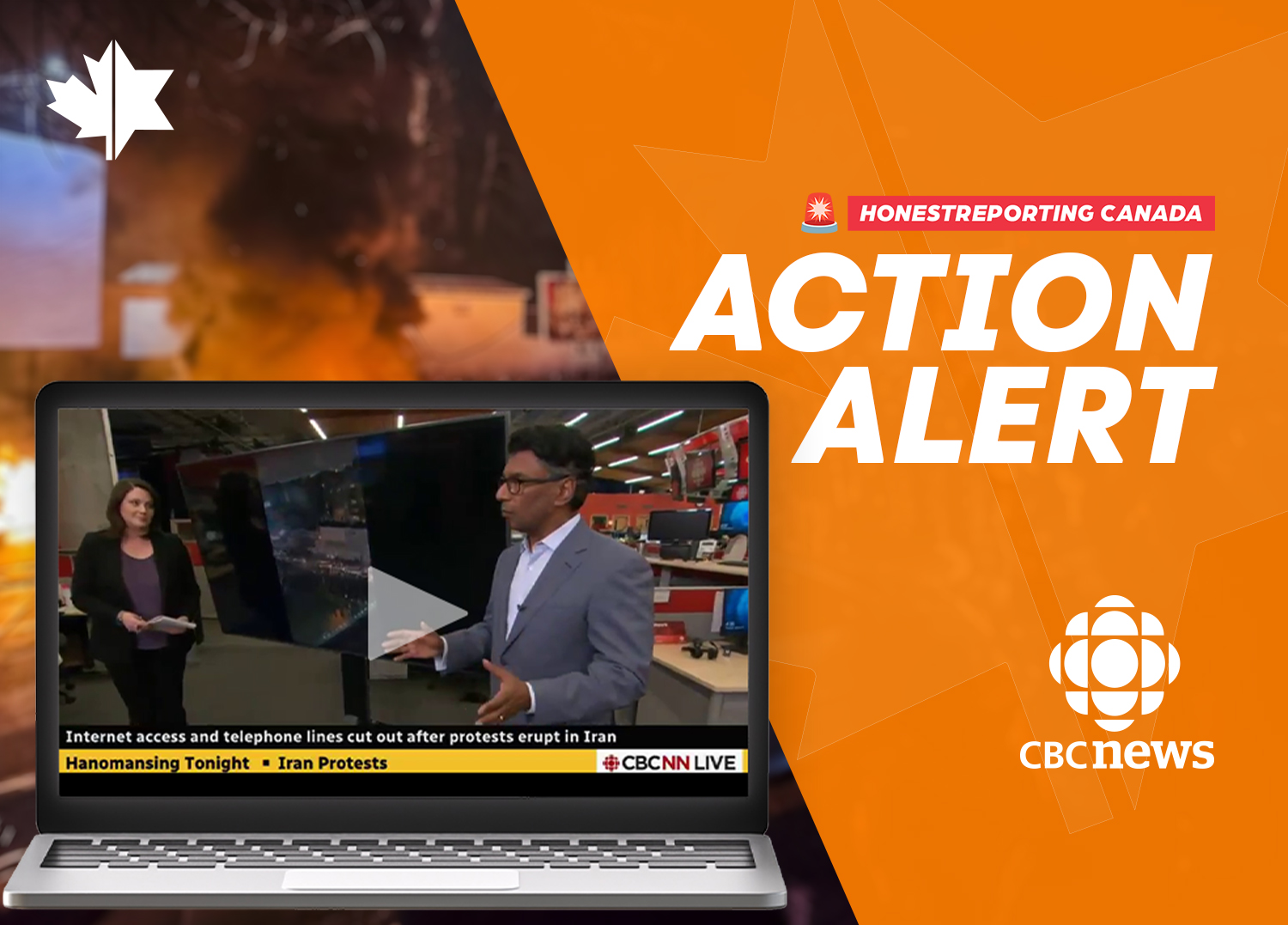
During the January 9 episode of “Hanomansing Tonight,” host Ian Hanomansing stated that “as many as 21 people have been killed” in the Iranian uprisings. This figure appeared conservative compared to other international news outlets, which were reporting significantly higher death tolls at the time.
In the same broadcast, reporter Sarah Galashan emphasized the challenges of information verification in Iran, highlighting the network’s “verification team” and the difficulties in confirming developments on the ground amid an internet blackout imposed by Iranian authorities.
Media analysts note that while verifying information from Iran during a communications blackout presents legitimate challenges, the broadcaster’s insistence on rigorous verification standards in this case stands in marked contrast to its approach to Gaza reporting.
One example cited by critics includes a CBC News report from early 2025 that repeated claims from British medical journal The Lancet suggesting that Hamas’ reported death toll figures from Gaza were “significantly underestimated,” without subjecting these claims to similar verification scrutiny.
In other Gaza-related coverage, CBC correspondents used emotionally charged language, with reporter Margaret Evans describing Gaza as a land “soaked in blood.” Host Heather Hiscox repeated casualty figures from the United Nations Relief and Works Agency for Palestine Refugees (UNRWA) without presenting alternative perspectives or noting controversies surrounding the agency.
The network’s coverage of alleged famine conditions in Gaza also drew criticism. A September 2025 broadcast titled “Gaza teen explains what it’s like to starve” featured correspondent Chris Brown working with a local freelancer who critics claim has spread anti-Israel content. The segment presented famine claims with minimal contextual information about the complex humanitarian situation or Israeli perspectives on aid delivery challenges.
When organizations like Amnesty International issued reports accusing Israel of genocide, CBC News provided extensive coverage without significant examination of the controversial redefinition of the term or presenting substantive counterarguments from legal scholars who questioned the application of the term to the conflict.
Media watchdogs suggest that these contrasting approaches reflect inconsistent application of journalistic standards. While verification processes for Iranian casualty reports appear robust and cautious, similar rigor was not consistently applied to information from Gaza sources with potential political motivations.
The disparity raises important questions about news media’s responsibility to maintain consistent verification standards regardless of the geopolitical context or prevailing narratives.
As audiences increasingly seek reliable information in complex international conflicts, the challenge for news organizations remains establishing and adhering to uniform standards for verification, source attribution, and contextual reporting across all regions and conflicts they cover.
Fact Checker
Verify the accuracy of this article using The Disinformation Commission analysis and real-time sources.

9 Comments
This article highlights an important issue with how Western media outlets approach reporting on different geopolitical conflicts. Maintaining impartiality and applying the same verification standards is crucial for credible, trustworthy journalism.
The article highlights an important issue around media bias and double standards. It’s crucial that news outlets uphold rigorous, impartial reporting practices across all geopolitical situations. Anything less risks perpetuating dangerous narratives.
Agreed. Balanced, fact-based journalism is essential for an informed public. Selective or inconsistent reporting, whether intentional or not, can skew public understanding of complex global issues.
The discrepancies in how Western media reports on the Gaza and Iran conflicts raise valid questions about potential biases and double standards. Upholding consistent, ethical journalism should be a top priority to ensure the public receives accurate, impartial information.
Absolutely. Selective framing and lack of context in coverage can undermine public understanding of global events. Responsible journalism must strive for objectivity and fairness across the board.
The contrast in how Western media reports on the Gaza and Iran conflicts is concerning. Rigorous, unbiased journalism requires consistent application of verification methods and contextual framing, regardless of the parties involved or location of the conflict.
Interesting analysis on the inconsistent reporting standards used by Western media in covering conflicts. It’s concerning to see such a disconnect in how casualty figures are presented and contextualized depending on the location and parties involved.
You raise a fair point. Journalistic integrity demands consistent application of verification methods and contextual framing, regardless of the conflict. Selective reporting undermines public trust.
This is a concerning trend of inconsistent verification and reporting standards by Western media. Maintaining credibility requires applying the same journalistic principles and scrutiny, regardless of the conflict or region. The public deserves unbiased, contextual coverage.