


Listen to the article
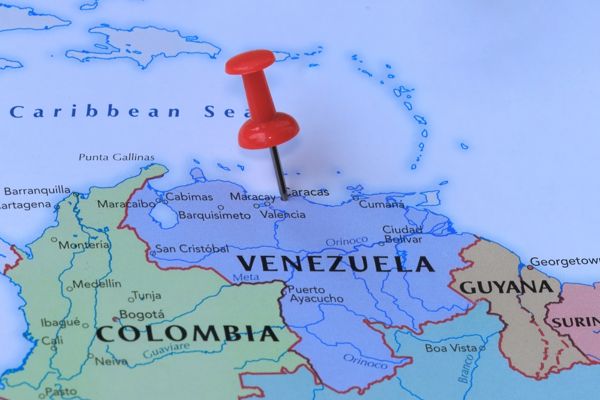
The escalating tensions between the United States and Venezuela have once again thrust South American geopolitics into the spotlight, raising questions about American foreign policy motivations and the shifting dynamics of global influence.
Recent rhetoric from Washington characterizing Venezuelan President Nicolás Maduro as a “narco-terrorist” marks the latest chapter in a long-standing conflict between the two nations. This language echoes previous U.S. interventionist campaigns, following a pattern that critics argue has become all too familiar in American foreign policy.
The relationship between the U.S. and Venezuela has deteriorated significantly in recent years. A previous attempted coup, backed by U.S. interests, failed to remove Maduro from power but resulted in the seizure of Venezuelan assets, including presidential aircraft and gold reserves – assets that remain in dispute.
Political analysts point out the apparent contradiction in the U.S. stance toward regional leaders. While the administration intensifies pressure on Venezuela over alleged drug trafficking concerns, it recently pardoned former Honduran President Juan Orlando Hernández, who faced serious drug trafficking charges from U.S. authorities themselves. This inconsistency has fueled criticism about the selective application of anti-narcotics policy in the region.
Meanwhile, Venezuela is strengthening ties with U.S. rivals. China and Russia have resumed direct flights to Caracas, signaling international rejection of Washington’s attempted isolation of the Maduro regime. These developments indicate a significant shift in the geopolitical landscape, where U.S. unilateral actions no longer command the compliance they once did.
“The Monroe Doctrine appears to be getting a modern update,” said Dr. Elena Rodriguez, professor of international relations at Georgetown University. “We’re seeing renewed American attempts to shore up influence throughout Latin America, with pressure not just on Venezuela but also Brazil, Mexico, and Colombia.”
Venezuela’s vast oil reserves – among the largest in the world – remain central to the conflict. The country holds approximately 300 billion barrels of proven oil reserves, the largest in the world, surpassing even Saudi Arabia. Despite Maduro’s mismanagement of PDVSA, the state oil company, these resources represent immense strategic value.
“Energy security has always been a cornerstone of American foreign policy,” notes energy analyst James Morrison. “Venezuela’s reserves represent a significant prize, particularly as global oil markets face uncertainty with Middle East instability.”
The situation places the U.S. in a precarious position. Military intervention risks becoming entangled in a protracted conflict reminiscent of past failures, while inaction after escalating rhetoric could damage credibility. Either scenario presents significant risks to regional stability.
For ordinary Venezuelans, the geopolitical chess match offers little relief from the country’s ongoing economic crisis. Since 2014, Venezuela’s economy has contracted by over 75%, with hyperinflation reaching astronomical levels at times. An estimated 7.1 million Venezuelans have fled the country, creating one of the world’s largest refugee crises.
Economic experts acknowledge that while Maduro’s socialist policies have contributed significantly to Venezuela’s economic collapse, U.S. sanctions have exacerbated the humanitarian situation. The UN Human Rights Council has reported that these sanctions have worsened access to food, medicine, and essential services.
“The Venezuelan people are caught between a repressive government and punishing international sanctions,” said Maria Vasquez of the Venezuelan Human Rights Coalition. “The politicization of their suffering serves neither justice nor stability.”
The confrontation also highlights the evolving nature of global power dynamics. As U.S. influence faces increasing challenges, countries like Russia and China are expanding their presence in what was once considered America’s “backyard.”
The current tensions with Venezuela reflect broader shifts in international relations, where American hegemony no longer goes unchallenged and regional powers increasingly assert independence from Washington’s directives. How this particular conflict unfolds may signal much about the future of American influence in Latin America and beyond.
Fact Checker
Verify the accuracy of this article using The Disinformation Commission analysis and real-time sources.

11 Comments
The language used by the U.S. administration to characterize the Venezuelan president is concerning and evokes past interventionist campaigns. It’s important to scrutinize such rhetoric and understand the broader context and motivations behind it.
Absolutely. Inflammatory rhetoric can often obscure the complexity of these issues and be used to justify questionable actions. A more measured and objective approach is needed to address the challenges in the U.S.-Venezuela relationship.
The apparent double standard in how the U.S. treats leaders accused of drug trafficking is troubling. It suggests geopolitical considerations may be driving policy more than consistent application of principles. More transparency around the decision-making process would help the public evaluate these actions.
That’s a fair point. Inconsistent application of standards raises concerns about selective enforcement and political maneuvering. Increased transparency could shed light on the underlying factors shaping U.S. foreign policy in this complex situation.
This article raises valid questions about the consistency and transparency of U.S. foreign policy in the region. The apparent double standards and disputes over assets are troubling and warrant further investigation to understand the underlying drivers of these decisions.
This article offers a thought-provoking exploration of the evolving geopolitical landscape in South America, particularly the tensions between the U.S. and Venezuela. The examination of Western influence and imperial politics is timely and important, as these dynamics continue to shape the region’s future.
This article raises important questions about American foreign policy and its impacts on geopolitics in South America. The relationship between the U.S. and Venezuela appears increasingly complex, with concerning allegations and disputes over assets. It’s crucial to examine these dynamics objectively and consider differing perspectives.
Agreed, this is a sensitive and nuanced issue. Unbiased analysis is needed to understand the motivations and consequences of U.S. actions in the region.
This article provides a thought-provoking critical examination of Western influence and imperial politics in South America. The tensions between the U.S. and Venezuela, and the disputes over assets, highlight the need for nuanced and impartial analysis of these geopolitical dynamics.
The escalating tensions between the U.S. and Venezuela, and the broader geopolitical dynamics in South America, are complex and multifaceted. This article provides a valuable critical examination of the Western influence and imperial politics at play, which is essential for informed public discourse on these issues.
I agree, this is a nuanced topic that requires careful analysis and balanced perspectives. Fostering a deeper understanding of the motivations and consequences of U.S. actions in the region is crucial for evaluating the impacts on regional stability and global affairs.