


Listen to the article
The Forgotten Voices of World War I: Poets Who Witnessed the Horror
In the tranquil English town of Shrewsbury, church bells rang out on November 11, 1918, heralding the end of World War I and the arrival of long-awaited peace. But at the Owen family home, the doorbell’s sound carried devastating news: their son, Wilfred, had been killed in action just days earlier on November 4, caught in a German machine gun attack.
Death, however, would not have the final word for Wilfred Owen. Though his life ended at just 25 years old, his powerful poetry would immortalize his experiences and transform him into one of Britain’s most celebrated war poets.
Days before his death, Owen wrote to his mother from a smoke-filled cellar on the front: “So thick is the smoke in this cellar that I can hardly see by a candle twelve inches away. And so thick are the inmates that I can hardly write for pokes, nudges, and jolts.” With tragic irony, he assured her, “There is no danger down here — or if any, it will be well over before you read these lines.”
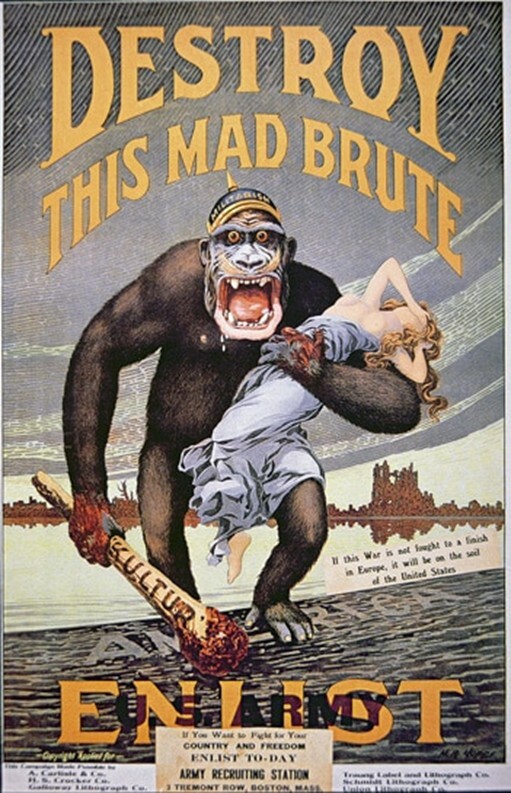
Owen’s most famous work, “Dulce et Decorum Est,” stands as one of the most powerful critiques of wartime propaganda ever written. The Latin title, borrowed from Roman poet Horace, translates to “how sweet and fitting it is to die for one’s country”—a sentiment Owen’s vivid descriptions of gas attacks and dying soldiers thoroughly dismantles. The poem vividly portrays soldiers “bent double, like old beggars under sacks,” and the horrific death of a comrade in a gas attack: “As under a green sea, I saw him drowning.”
In the preface to a poetry collection he planned to publish in 1919, Owen wrote words that would define his legacy: “My subject is War, and the pity of War. The Poetry is in the pity… All a poet can do today is warn. That is why true Poets must be truthful.”
Owen was not alone in his literary response to the war. Siegfried Sassoon, a decorated officer from an affluent family, initially enlisted with enthusiasm but gradually developed a deep cynicism toward the conflict. Despite his growing disillusionment, Sassoon was revered by his men, who nicknamed him “Mad Jack” for his battlefield courage.
By 1917, Sassoon had become so disgusted with the British military leadership that he took the unprecedented step of publishing an anti-war statement in The Times. In this “Soldier’s Declaration,” he wrote: “I believe that the war is being deliberately prolonged by those who have the power to end it.” Only the intervention of fellow poet Robert Graves, who convinced authorities that Sassoon was suffering from shell shock, saved him from court-martial.
Sassoon’s poetry, like his “Does It Matter?” and “Great Men,” captured the physical and psychological toll of war and questioned whether fighting achieved anything of value. The former poem asks with bitter irony, “Does it matter? – losing your legs? For people will always be kind,” while the latter confronts military leaders directly: “You Marshals, gilt and red…Why can’t you keep your mouthings for the dead?”
Rudyard Kipling, though an ardent supporter of British imperialism, experienced war’s tragedy firsthand. After using his political connections to help his nearsighted son Jack enlist, Kipling learned in 1915 that Jack had been reported missing during the Battle of Loos. His heartrending poem “My Boy Jack” captures a parent’s desperate search: “Have you news of my boy Jack? Not this tide.”
The psychological impact of trench warfare manifested as “shell shock,” now recognized as PTSD. Both Owen and Sassoon were treated at Craiglockhart War Hospital in Scotland, where they met and formed a friendship that would shape their literary legacies. Owen’s poem “Mental Cases” provides a harrowing portrait of these psychological casualties: “These are men whose minds the Dead have ravished. Memory fingers in their hair of murders, Multitudinous murders they once witnessed.”
While Owen’s promising life was cut short, many of his contemporaries survived to document the war’s legacy. Sassoon lived until 1967, writing several volumes of semi-autobiographical work. Robert Graves left England for Spain and authored “Goodbye to All That,” one of the most memorable accounts of how the war dismantled Europe’s old order. John McRae, who died of pneumonia in 1918, wrote “In Flanders Fields,” which popularized the poppy as the symbol for remembering fallen soldiers.
As Prussian General Carl von Clausewitz observed, war represents the continuation of politics by other means—and a failure of diplomacy. The final day of World War I tragically illustrated war’s senselessness: despite knowledge of the 11 a.m. armistice, commanders ordered attacks that resulted in over 11,000 casualties in the war’s final hours.
The “war to end all wars” failed in its promise. Instead, it created an atmosphere of shattered ideals, widespread suffering, and international resentment that would, just twenty years later, erupt into an even more devastating global conflict. As historian John Keegan noted, World War I “tested the limits of man’s inhumanity to man”—a sobering legacy captured most powerfully in the words of those who witnessed its horrors firsthand.
Fact Checker
Verify the accuracy of this article using The Disinformation Commission analysis and real-time sources.

8 Comments
The tragic irony of Owen’s final letter to his mother is heartbreaking. His assurances of safety just days before his death underscore how quickly the realities of war could change for soldiers on the front lines.
Yes, that detail really drives home the unpredictable and devastating nature of combat. It’s a sobering reminder of the human cost of war, even in moments of relative calm.
While the poem may have challenged prevalent views at the time, I imagine it also resonated deeply with those who had experienced the horrors of the trenches firsthand. Owen’s unflinching depiction must have provided a powerful voice for the disillusioned.
It’s fascinating how Owen’s work transformed the public’s perception of war, moving away from patriotic propaganda towards a more nuanced, human perspective. His poetry must have been incredibly impactful at the time.
Absolutely. Poems like ‘Dulce et Decorum Est’ gave a raw, unfiltered look at the realities of combat that stood in stark contrast to the jingoistic rhetoric common during that era.
This story highlights the important role that art and literature can play in challenging dominant narratives and exposing the realities of war. Owen’s powerful work serves as a sobering reminder of the complexities and tragedies inherent in armed conflict.
This poem must have been deeply unsettling for those who held traditional views of war. Owen’s first-hand accounts of the horrors he witnessed seem to challenge the romanticized notions of sacrifice and glory.
It’s remarkable how Owen’s work has endured and continues to shape our understanding of the First World War. His poetry stands as a lasting testament to the human toll of conflict and the need to question simplistic narratives of patriotism and glory.