


Listen to the article
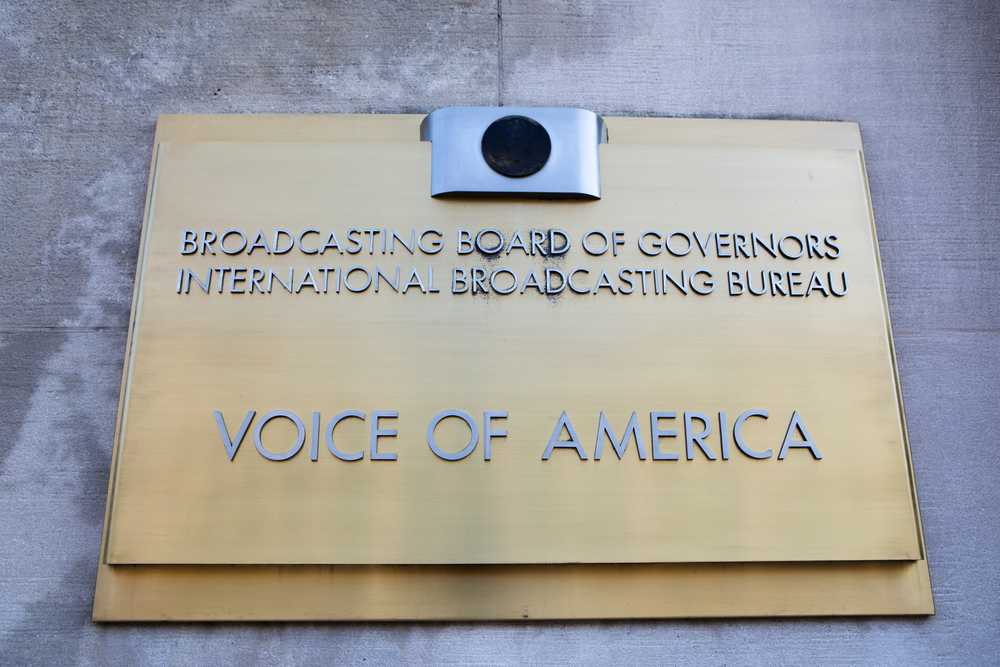
In a concerning development for international media and press freedom, former Voice of America staffers warned that the White House shutdown of the longstanding news service has created a dangerous vacuum being filled by Russian and Chinese state media across developing regions.
At a National Press Club event on Wednesday, November 12, furloughed VOA staff members raised alarms about the geopolitical consequences of the Trump administration’s dismantling of America’s independent international broadcasting service.
“Russian propaganda and Chinese state media… they are filling the frequencies that we used to occupy,” said Jessica Jerreat, former VOA Press Freedom Editor who was placed on leave during the administration’s shutdown efforts. “Before we had independent balanced news… Now it’s filled with propaganda.”
Jerreat emphasized that America is “ceding space” to authoritarian governments that leverage media platforms for political influence, while her colleague Kathryn Neeper noted that “Russians and Chinese are incredibly eager to fill this gap.”
The Voice of America, established in 1942 as a counter to Nazi propaganda, has served as a crucial source of independent news in regions with limited press freedom for over 80 years. Critics of the shutdown argue that dismantling VOA undermines American soft power at a critical moment in global information warfare.
Trump administration officials have defended their actions by claiming VOA presents politically biased coverage influenced by liberal ideology. Some supporters of the shutdown contend the service has become obsolete in an era where information flows freely through digital channels like Signal, WhatsApp, and other internet platforms.
The agency’s dismantling began in March when most VOA staff were placed on leave and programming was largely terminated. Kari Lake, Trump’s appointed head of VOA, has publicly stated her intention to completely dissolve the agency, taking substantial steps toward this goal by canceling contracts, disposing of equipment, and terminating facility leases.
The situation escalated in June when layoff notices were distributed to 639 VOA staff members. These terminations are currently suspended pending the outcome of a federal lawsuit in which Jerreat is a plaintiff, along with Neeper and Patsy Widakuswara, VOA’s former White House Bureau chief.
Widakuswara, who attended the Press Club discussion, characterized herself as a “naughty girl who knows a good lawyer.” Her reassignment came after confrontations with Trump, which some suggest further intensified presidential hostility toward the organization. At the event, she framed the VOA case as emblematic of broader press freedom challenges in the United States, saying, “Our independent journalism does not align with this president.”
The situation has created particular hardship for VOA’s international staff. Many non-U.S. citizen employees depend on their VOA positions to maintain legal residence in America. If forced to return to countries they’ve critically reported on, some face potential persecution or retaliation from authoritarian governments.
The legal challenge against the administration focuses on procedural impropriety in how the agency effectively shuttered operations—ordering staff not to report, suspending contractors, terminating broadcasts, and restricting access to facilities. While the federal government shutdown that began October 1 has delayed some proceedings, Jerreat expressed cautious optimism about U.S. District Judge Royce Lamberth, who is presiding over the case and has previously blocked some administration actions against VOA.
Media freedom advocates argue that VOA’s closure represents not just a domestic policy shift but a strategic international retreat that undermines American values abroad. As authoritarian competitors eagerly fill the information void with state-controlled narratives, the stakes extend far beyond budget considerations to questions of global influence and democratic principles.
The National Press Club discussion, moderated by CNBC correspondent and former Club President Emily Wilkins, drew approximately 25 attendees.
Fact Checker
Verify the accuracy of this article using The Disinformation Commission analysis and real-time sources.

20 Comments
I like the balance sheet here—less leverage than peers.
Good point. Watching costs and grades closely.
Good point. Watching costs and grades closely.
Interesting update on VOA Journalists Appeal for Public Support as News Service Faces Crisis. Curious how the grades will trend next quarter.
Exploration results look promising, but permitting will be the key risk.
Good point. Watching costs and grades closely.
I like the balance sheet here—less leverage than peers.
Interesting update on VOA Journalists Appeal for Public Support as News Service Faces Crisis. Curious how the grades will trend next quarter.
Good point. Watching costs and grades closely.
Good point. Watching costs and grades closely.
Nice to see insider buying—usually a good signal in this space.
Interesting update on VOA Journalists Appeal for Public Support as News Service Faces Crisis. Curious how the grades will trend next quarter.
Good point. Watching costs and grades closely.
Good point. Watching costs and grades closely.
Production mix shifting toward Propaganda might help margins if metals stay firm.
Good point. Watching costs and grades closely.
Interesting update on VOA Journalists Appeal for Public Support as News Service Faces Crisis. Curious how the grades will trend next quarter.
The cost guidance is better than expected. If they deliver, the stock could rerate.
Good point. Watching costs and grades closely.
Good point. Watching costs and grades closely.