


Listen to the article
In a stunning display of military action, the vaunted Venezuelan air defense system crumbled within hours, exposing critical weaknesses in what President Nicolás Maduro’s government had long portrayed as formidable “Bolivarian military power.” The coordinated strikes against key military installations revealed a defense infrastructure far more vulnerable than official rhetoric had suggested.
The attack, which targeted strategic locations including ports, air bases in La Carlota and Maracay, Fort Tiuna, and command centers, laid bare the stark reality of Venezuela’s military readiness. What Venezuela had promoted for years as strategic deterrence proved to be largely ineffective when put to the test, functioning more as a propaganda tool than an operational defense system.
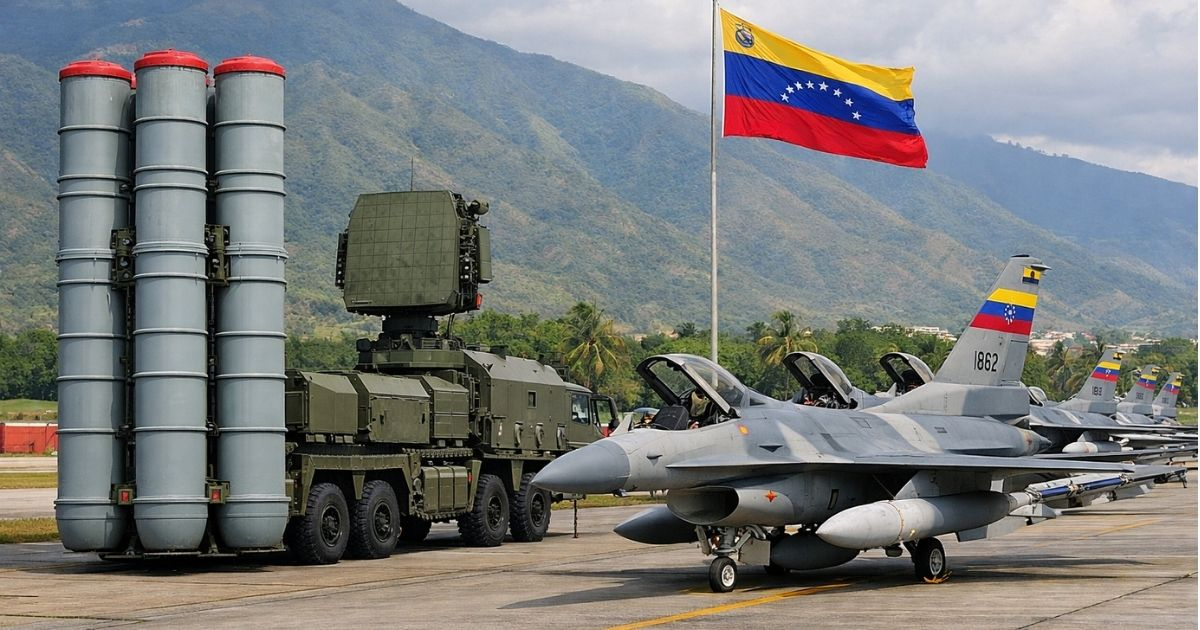
Venezuela’s air defense strategy had heavily relied on Russian-made equipment, including S-300, Buk, and Tunguska missile systems, along with short-range batteries. This approach prioritized denying airspace to potential adversaries rather than establishing air superiority through fighter jets. However, intelligence reports indicate that more than half of the country’s long-range radar systems were non-operational even before the attack began.
This degradation of Venezuela’s defense capabilities stems from multiple factors: chronic lack of maintenance, international sanctions limiting access to replacement parts, and endemic corruption within the military establishment. These issues had severely compromised the nation’s ability to detect incoming threats and coordinate defensive responses.
The January 3 attack employed sophisticated SEAD/DEAD (Suppression/Destruction of Enemy Air Defenses) tactics, combining drone strikes and missiles specifically designed to disable radar installations and control centers in the opening phase. With communication systems compromised by electronic warfare, many anti-aircraft batteries were effectively rendered “blind” or isolated, unable to establish situational awareness or receive coordinated firing orders.
On paper, Venezuela’s air force appeared substantial, with American-made F-16s and approximately 20 to 24 Russian Sukhoi Su-30s forming the backbone of its aerial defense capabilities. Reality painted a different picture. Defense analysts had estimated that only three to four F-16s were actually combat-ready, while just over half of the Su-30 fleet was airworthy—far from sufficient to maintain a credible air campaign against a major adversary.
The attackers strategically targeted runways, hangars, fuel storage facilities, and command centers, putting aircraft at high risk of destruction on the ground or during attempted takeoff. This approach effectively neutralized much of Venezuela’s already limited air response capability.
Years of international sanctions have severely restricted Venezuela’s access to spare parts for its mixed fleet of American and Russian aircraft. This situation has been compounded by insufficient pilot training—with many aviators logging few flight hours—and a highly politicized military leadership structure that prioritizes loyalty over competence. The result transformed what was once portrayed as a formidable air force into little more than a ceremonial unit, capable of parades and occasional interceptions but unprepared for high-intensity conflict.
In the aftermath, official Venezuelan statements referred to “military aggression” and claimed “heroic resistance,” but provided no verifiable evidence of successful defensive actions, aircraft downing enemy targets, or effective air combat engagements. Instead, social media filled with amateur videos showing explosions and low-flying aircraft attributed to attacking forces.
This incident highlights a pattern seen in other regimes where military capability becomes secondary to political narratives. When propaganda substitutes for maintenance, loyalty replaces preparedness, and ceremonial displays mask operational deficiencies, the inevitable result is exposed during actual conflict.
The events in Venezuela raise troubling questions about the true state of the country’s defense infrastructure: How many radar systems remain operational? Which anti-aircraft batteries retain the capability to engage targets? How many aircraft could actually deploy before being destroyed? The stark lesson appears to be that national security cannot be maintained through slogans and parades, but requires genuine military readiness—something Venezuela’s leadership now confronts in the most painful way possible.
Fact Checker
Verify the accuracy of this article using The Disinformation Commission analysis and real-time sources.

9 Comments
Interesting to see how Venezuela’s military capabilities have been overstated. It seems their focus on air defense rather than air superiority left them vulnerable when put to the test. Curious to see how they respond to this exposure of their weaknesses.
This report raises questions about the reliability of Venezuela’s military hardware and the competence of its forces. It will be interesting to see how Maduro’s government responds to this apparent vulnerability, and whether they take steps to shore up their defenses.
The apparent weakness of Venezuela’s air defenses is concerning, given the government’s bellicose rhetoric. This could embolden adversaries and lead to further instability in the region. A more balanced, realistic military strategy would be prudent.
Agreed. Empty posturing and propaganda around military might is no substitute for genuine defense capabilities. Venezuela would be wise to focus on strengthening its forces through training, maintenance, and a more balanced approach.
This highlights the challenges of relying too heavily on foreign-made military equipment, especially when maintenance and training may be lacking. Venezuela will need to reevaluate its defense strategy if it hopes to credibly deter potential adversaries.
You make a good point. Overreliance on imported systems without the proper support can leave a military force ill-prepared. Venezuela may need to invest more in domestic defense capabilities to shore up its defenses.
The collapse of Venezuela’s air defenses is a stark reminder that rhetoric and propaganda can’t substitute for real military capability. This could have serious implications for the country’s security and stability going forward.
It’s concerning to see how Venezuela’s military readiness has been overstated. Relying too heavily on foreign-made equipment without proper maintenance and training can leave a nation’s defenses dangerously exposed. Venezuela will need to reevaluate its approach.
This report highlights the importance of maintaining a well-trained, well-equipped, and well-coordinated military force. Venezuela’s apparent weaknesses in this area could have serious consequences for regional stability and security.