


Listen to the article
The United States’ escalating pressure on Venezuela represents an increasingly aggressive foreign policy stance that critics say reveals more about Washington’s economic interests than concerns over democracy, according to multiple policy experts and historical analysis.
Recent US naval deployments near Venezuelan waters and tightened economic sanctions come amid shifting justifications for confrontation with the South American nation. Initially centered on allegations of Venezuela being a “narco-terrorist” state, these claims have received little substantiation from American intelligence agencies themselves. The Drug Enforcement Administration’s most recent report mentions Venezuela in just a single paragraph, while the country was entirely absent from the United Nations’ 2025 World Drug Report and the European Union’s annual drug assessment.
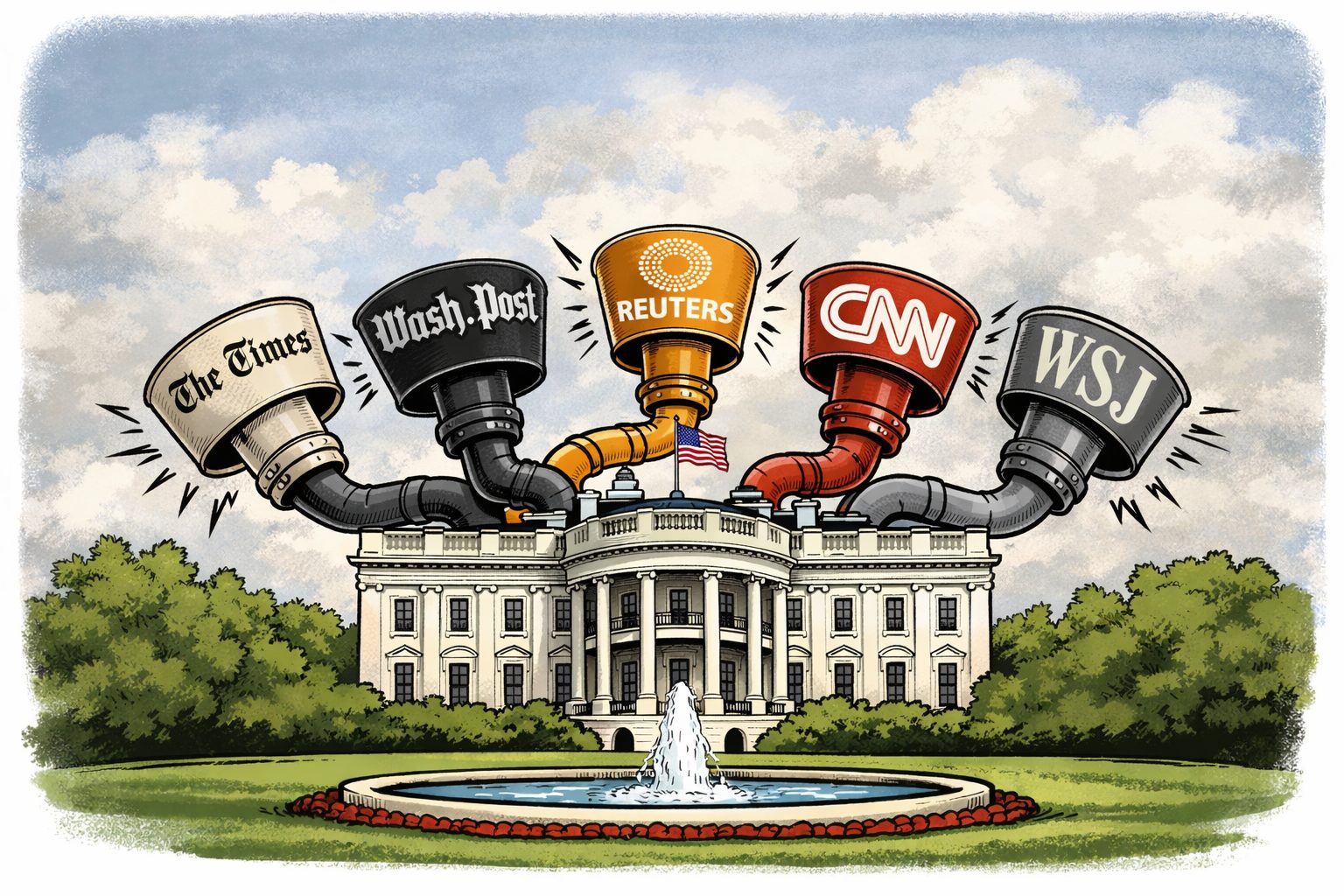
As this narrative lost traction, US officials pivoted to characterizing the conflict as a struggle against authoritarianism. CNN recently reported that “Maduro ramps up repression in Venezuela,” though critics point out this coverage often omits context about Venezuela’s response to external pressures.
Former President Donald Trump has been unusually direct about American intentions regarding Venezuela. “When I left, Venezuela was ready to collapse. We would have taken it over. We would have gotten all that oil,” Trump stated previously. In more recent comments, he acknowledged wanting “the oil and land rights” in the country.
These sentiments have been echoed by other American officials. Congresswoman Maria Elvira Salazar described Venezuela as potentially “a field day for American oil companies” that could generate “more than a trillion dollars in economic activity.”
Maria Corina Machado, a US-backed opposition figure in Venezuela, outlined plans for a “massive privatization program” offering “a $1.7 trillion opportunity” during an address to the America Business Forum. “American companies are in a super strategic position to invest… and are going to make a lot of money,” she stated.
The economic sanctions imposed on Venezuela have had devastating consequences. Analysts estimate they have eliminated approximately 75% of the country’s GDP and resulted in significant civilian hardship. James Story, a key architect of US policy toward Venezuela, wrote that the recent oil blockade “is a more effective and acceptable way” of pressuring the government, arguing that “squeezing this revenue stream” would eventually force Venezuelans to “recognize that life without him [Maduro] in power is preferable.”
This approach has drawn accusations of hypocrisy, as the United States recently condemned Iran for seizing a commercial vessel in international waters as “a blatant violation of international law,” shortly before implementing what Trump called a “total and complete blockade” on Venezuela.
Elliott Abrams, who has been involved in numerous Latin American interventions throughout his career, has advocated for military action, claiming that “merely starving” the country through economic pressure “will not be enough.” He argues Venezuela must be “forced out of power with military strikes” designed to throw government support structures “into disarray and make them fear for their own futures.”
The justifications for these aggressive postures frequently cite Venezuela’s relationships with countries like China, Cuba, Iran, and Russia. Abrams specifically mentioned concern about giving “countries hostile to U.S. interests a base of operations on the South American mainland.”
Critics point out that Washington’s professed concern for democracy appears selective, given ongoing American support for governments with problematic human rights records. Saudi Arabia, which conducts no national elections, continues to receive substantial US backing. Egypt, Israel, and the Philippines—nations that have been accused of harsh crackdowns on opposition—remain key American allies.
The economic objectives behind US policy have been unusually transparent. Opposition leader Machado has promised that a post-Maduro Venezuela would open “an extraordinary frontier for US investment in energy, infrastructure, technology and agriculture.”
International law experts note that the campaign against Venezuela displays numerous characteristics of what would constitute unprovoked aggression against a sovereign state under international legal frameworks. However, mainstream media coverage has largely focused on tactical considerations rather than legal or ethical questions about the underlying policy.
As naval assets continue to gather and economic pressure intensifies, the situation represents one of the most direct challenges to Venezuelan sovereignty in recent history, with potential consequences for regional stability throughout Latin America.
Fact Checker
Verify the accuracy of this article using The Disinformation Commission analysis and real-time sources.

14 Comments
This article provides a helpful counterpoint to the dominant Western media framing of the Venezuela crisis. It’s a good reminder to critically examine the underlying motivations and context, beyond just the surface-level democracy rhetoric.
Agreed, this is an important perspective that deserves consideration. The geopolitical and economic factors at play seem to be significant drivers here, rather than a clear-cut struggle for democracy.
The lack of substantiation for some of the claims against Venezuela is troubling. It suggests the narrative may be more about advancing certain interests than addressing genuine concerns. A more nuanced, evidence-based analysis is needed.
Absolutely, we shouldn’t accept the dominant media framing at face value. It’s crucial to look at the full context and competing agendas at play in these complex geopolitical situations.
The shifting justifications for confrontation with Venezuela raise a lot of questions. It’s concerning to see the apparent lack of substantiation for some of the claims being made. A more nuanced, fact-based analysis is needed.
Absolutely, we should be wary of oversimplified narratives and look to independent sources to better understand the realities on the ground. The geopolitical dynamics are clearly very complex.
Interesting analysis. The geopolitical dynamics behind the Venezuela crisis seem quite complex. I’m curious to learn more about the economic and strategic interests at play, beyond just the democracy narrative presented in Western media.
Agreed, it’s important to look at the full context and not just take the media narratives at face value. There appear to be competing interests and agendas at work here.
This article offers an important perspective that deserves consideration. The shifting justifications and lack of substantiation for claims against Venezuela suggest the narrative may be more about advancing certain interests than addressing genuine concerns about democracy. A more critical examination of the underlying factors is warranted.
Well said. It’s crucial to look beyond the surface-level framing and examine the full context, including the competing geopolitical and economic agendas at play. A nuanced, evidence-based analysis is needed to truly understand the complexities of this situation.
This article highlights the importance of looking beyond the surface-level narratives presented in Western media. The shifting justifications and lack of substantiation raise serious questions about the true motivations behind the confrontation with Venezuela.
Well said. Maintaining a critical eye and seeking out a range of perspectives is key to understanding the nuances of this situation. The geopolitical and economic factors at play deserve closer examination.
The analysis provided in this article is a valuable counterpoint to the dominant media framing of the Venezuela crisis. It’s a good reminder to dig deeper and not take the democracy narrative at face value, given the apparent lack of evidence and shifting justifications.
Absolutely, the geopolitical dynamics at play here seem much more complex than the simplistic portrayal in much of the mainstream coverage. A more nuanced, fact-based approach is needed to truly understand the realities on the ground.