


Listen to the article
US May Consider Military Strikes Against Iranian Regime, Says Former Congressman
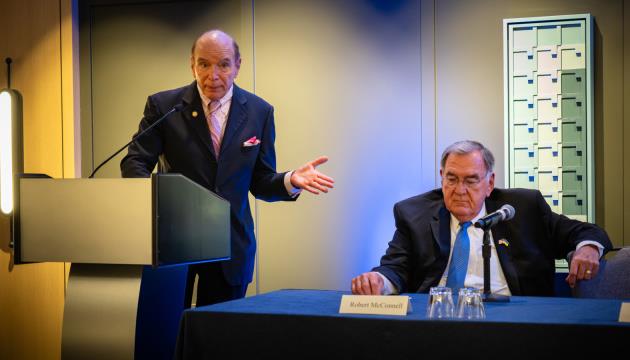
Former Republican congressman Don Ritter has suggested that the United States may be considering military action against Iran’s leadership amid ongoing protests and civil unrest throughout the country.
In comments to Ukrinform, Ritter described the current situation in Iran as “extremely unstable,” pointing to reports from human rights organizations that at least 500 people have been killed during the protests, with thousands more arrested.
“If 500 people have been killed, maybe there are four or five thousand people wounded,” Ritter stated, highlighting the scale of the government crackdown.
Against this backdrop of escalating violence, Ritter believes the US administration is actively discussing possible interventions to support the Iranian people. He suggested that President Donald Trump may be contemplating the use of military force against the ayatollahs’ regime.
“I totally think so,” Ritter said. “Military force meaning not necessarily soldiers going into mayhem, but the kind of strikes based on good intelligence as to where the bad guys hang out and where their sources of power are derived from.”
Ritter identified several potential targets for such strikes, including the regime’s information and security infrastructure. “The Tasnim headquarters, radio, TV, the whole government propaganda machine would be, I’m thinking, a reasonable target. IRGC headquarters could be a reasonable target,” he explained, referring to the Islamic Revolutionary Guard Corps, a powerful branch of Iran’s military.
However, Ritter emphasized the need for caution in any military intervention. He noted that many individuals currently working with the regime might potentially switch allegiance to the opposition. “You don’t want to kill them – but they wear the same uniforms at the moment,” he said.
The former congressman expressed agreement with Republican Senator Lindsey Graham, who recently urged President Trump to “kill the leadership that are killing the people” during a Fox News interview. “I think if you were able to do so, yes – decapitate the monster, and the monster loses its power,” Ritter remarked.
When asked if US strikes might unite Iranian society around the regime, Ritter firmly rejected this notion, calling it “left-wing idiocy.” He argued that most Iranians are not Islamists and that the current government represents an ideology imposed after the 1979 revolution, rather than reflecting the country’s historical character.
“Iran historically was not an Islamist state,” Ritter explained, adding that a broad wave of opposition has formed in the country. “I’m sure [there are] a bunch of people inside as well who could take leadership and steer Iran to the West, to democracy.”
According to Ritter, Iran’s population largely holds pro-Western sentiments, particularly among younger generations who feel betrayed by the current leadership. The authorities “fooled students,” he said, which has led to deep disappointment among youth.
The ongoing protests in Iran, now in their second week, have resulted in more than 500 deaths and over 10,000 detentions, according to human rights activists cited in the report. These demonstrations represent one of the most significant challenges to the Islamic Republic’s authority in recent years.
While Ritter’s comments suggest potential US military intervention, other experts have expressed skepticism. A French analyst recently assessed that the probability of direct US military intervention in Iran remains low, indicating divided opinions on how the international community should respond to the crisis.
The situation continues to evolve as protesters demand political reform and greater freedoms, while the Iranian government maintains its hardline stance against what it characterizes as foreign-influenced unrest.
Fact Checker
Verify the accuracy of this article using The Disinformation Commission analysis and real-time sources.

10 Comments
It’s a complex and delicate situation in Iran. While the US may have the capability to strike the regime’s propaganda and leadership, I’m concerned about the potential for further violence and instability. Diplomatic pressure, sanctions, and international coordination may be more effective in supporting the protesters and holding the regime accountable.
Striking Iran’s propaganda infrastructure and IRGC headquarters could be an option, but the risks and consequences would need to be carefully weighed. The priority should be finding ways to empower the Iranian people and hold the regime accountable for its repression.
Absolutely. Any potential military action would require robust intelligence, clear objectives, and a thorough assessment of the potential fallout. The focus should be on supporting the Iranian people’s right to protest peacefully and freely.
The reports of the government’s brutal crackdown on protesters in Iran are deeply troubling. While the US may have the military capability to target the regime’s propaganda and leadership, I’m concerned about the risks and potential for unintended consequences. Exploring all diplomatic and non-military options should be the priority in order to support the Iranian people and address the regime’s human rights abuses.
I agree. Diplomatic solutions and international pressure may be more effective in the long run, while minimizing the potential for further violence and instability in the region.
The scale of the government crackdown in Iran is truly horrific. While military strikes may disrupt the regime’s propaganda and leadership, I’m concerned about the potential for further civilian casualties and regional instability. Diplomacy and targeted sanctions may be a more prudent approach at this stage.
It’s concerning to hear that the situation in Iran has become so unstable, with hundreds killed and thousands wounded. While military action may be on the table, I hope the US administration explores all diplomatic options first to support the Iranian people and address the regime’s brutality.
I agree, military force should be the last resort. Diplomatic pressure, sanctions, and international condemnation may be more effective in curbing the regime’s crackdown on protesters while minimizing further bloodshed.
I’m curious to hear more details about the US’s capability to strike Iran’s propaganda infrastructure and IRGC headquarters. While this may be an option, the risks and unintended consequences would need to be carefully weighed against the potential benefits of supporting the Iranian people’s right to protest.
That’s a fair point. Any potential military action should be thoroughly evaluated, with a clear understanding of the potential escalation and collateral damage. Protecting civilian lives must be the top priority.