


Listen to the article
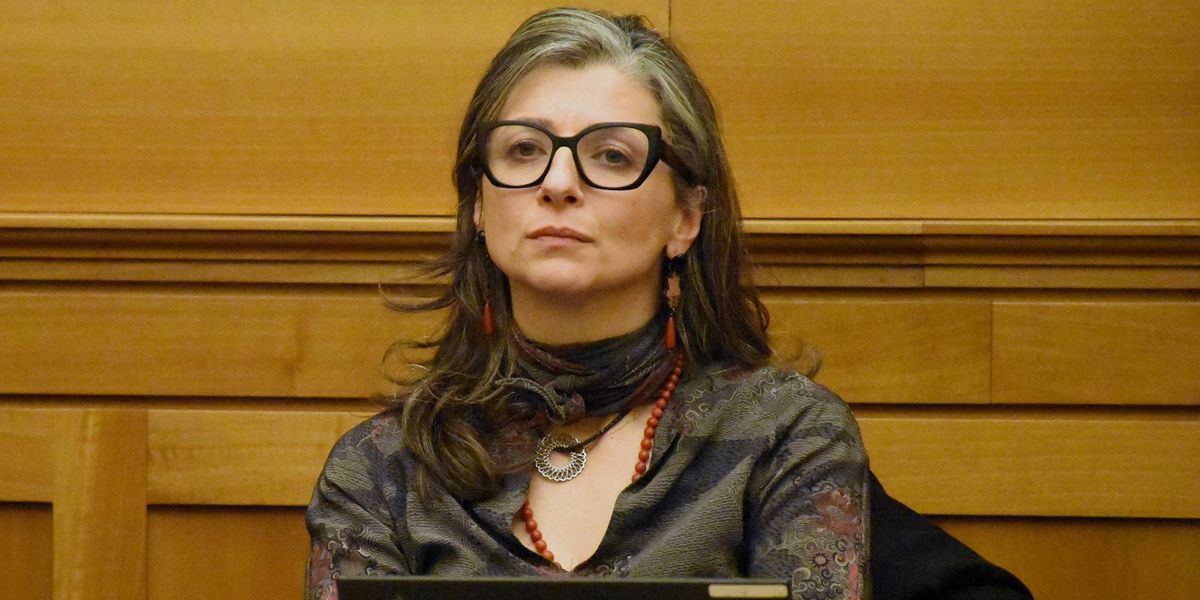
In a recent development that has drawn international attention, UN Special Rapporteur Francesca Albanese has become the center of a heated controversy involving alleged misinformation campaigns against her work on Palestinian human rights.
Albanese, who began her role as the United Nations special rapporteur on the occupied Palestinian territories in May 2022, has emerged as a prominent voice criticizing Israel’s military operations in Gaza. Her appointment came after an established career as a human rights expert with numerous publications focused on the Israeli-Palestinian conflict.
The controversy intensified after pro-Israeli lobbying group UN Watch circulated what Albanese claims was an edited video of her speaking at a conference in Doha. According to Albanese, the video was manipulated to suggest she had called Israel “the enemy of humanity,” when she maintains she was referring to a broader system of military and surveillance forces. In an interview with journalist Mehdi Hasan, Albanese defended herself, saying the editing of the video was “so rudimentary that it was almost insulting to human intelligence.”
This incident has escalated diplomatic tensions, with French Foreign Minister Jean-Noël Barrot reportedly amplifying the accusations and calling for Albanese’s resignation, claiming she had condemned Israel “as a people and a nation.”
Albanese’s work has consistently challenged official Israeli narratives regarding the situation in Gaza. In one widely quoted statement, she wrote that “Israel has written one of the darkest pages of human history and the world is still holding the pen,” highlighting what she perceives as media complicity in the conflict.
Her supporters point to her ability to address complex questions with clarity. When asked about Israel’s “right to exist,” she responded by noting that “Israel does exist. It is a recognized member of the United Nations,” while emphasizing that international law enshrines “the right of a people to exist.”
The controversy comes at a particularly volatile time in the Middle East. Recent reports indicate escalating violence, with allegations of civilian casualties from military strikes in Iran, including incidents at a school in Minab and a gymnasium in Lamerd, though these events have received varying degrees of coverage in Western media.
In July 2025, Albanese published a study identifying 60 global corporations allegedly profiting from Israel’s activities in Gaza. The report highlighted how the military-industrial complex, particularly US weapons manufacturers, has benefited from the conflict, with technologies reportedly being marketed as “battle-proven” after deployment in Palestinian territories.
The report also criticized financial institutions, consulting firms, social media platforms, and public relations companies for allegedly helping shape narratives that, in Albanese’s view, sanitize Israel’s military operations.
The backlash against Albanese comes amid broader international tensions. At a Munich Security Conference in February, discussions reportedly centered on Western foreign policy approaches that critics have characterized as a return to colonial-era thinking.
Former UN official and human rights lawyer Craig Mokhiber has similarly raised concerns about what he terms a “US-Israeli Axis,” describing it as “the greatest threat facing humanity today” due to its impact on international institutions and laws.
Despite the controversy, Albanese maintains significant support, with reports indicating that over 700,000 people signed a petition nominating her for the Nobel Peace Prize. However, she has also faced potential sanctions from the United States following her critical reports on corporate involvement in the conflict.
As tensions continue to escalate in the Middle East, Albanese’s case highlights the increasingly polarized nature of discussions around the Israeli-Palestinian conflict and raises questions about the independence of UN special rapporteurs in politically sensitive contexts.
Fact Checker
Verify the accuracy of this article using The Disinformation Commission analysis and real-time sources.

10 Comments
As someone interested in geopolitics, I’m following this story closely. The allegations of manipulated media are quite troubling and undermine trust. I’ll be looking for more in-depth reporting to understand the full context.
Agreed, it’s critical to get to the bottom of these claims. Objective analysis of complex conflicts like this is essential for informed discourse.
The UN official raises some valid points about biased media narratives and military strategy in the Gaza conflict. While the details are complex, I appreciate the effort to scrutinize the facts and give voice to human rights concerns.
Absolutely, balanced and nuanced coverage of these issues is so important. I hope the investigation into the video editing allegations provides clarity.
Interesting perspective from the UN official. While the Israeli-Palestinian conflict is complex, it’s important to hear diverse voices and avoid biased narratives on all sides. I appreciate the focus on human rights and transparency around media manipulation.
Agreed, we need open and honest dialogue to find lasting solutions. Editorializing video content is concerning and undermines trust.
This seems like a concerning case of potential misinformation around a UN official’s statements. I’ll have to look into the full context to form my own view, but the allegations of video editing are troubling.
Yes, it’s critical to get the facts straight, especially on sensitive geopolitical issues like this. Transparency and factual reporting are essential.
This seems like a complex situation with competing narratives. I appreciate the UN official’s efforts to scrutinize media coverage and military actions, though the video editing allegations raise concerns. More transparency and fact-finding would be helpful here.
Absolutely, nuanced and impartial reporting is key when dealing with such sensitive geopolitical issues. I’ll be following this story closely to see how it develops.