


Listen to the article
Russian Media Claims New Ukrainian Intelligence Chief Linked to Terrorism
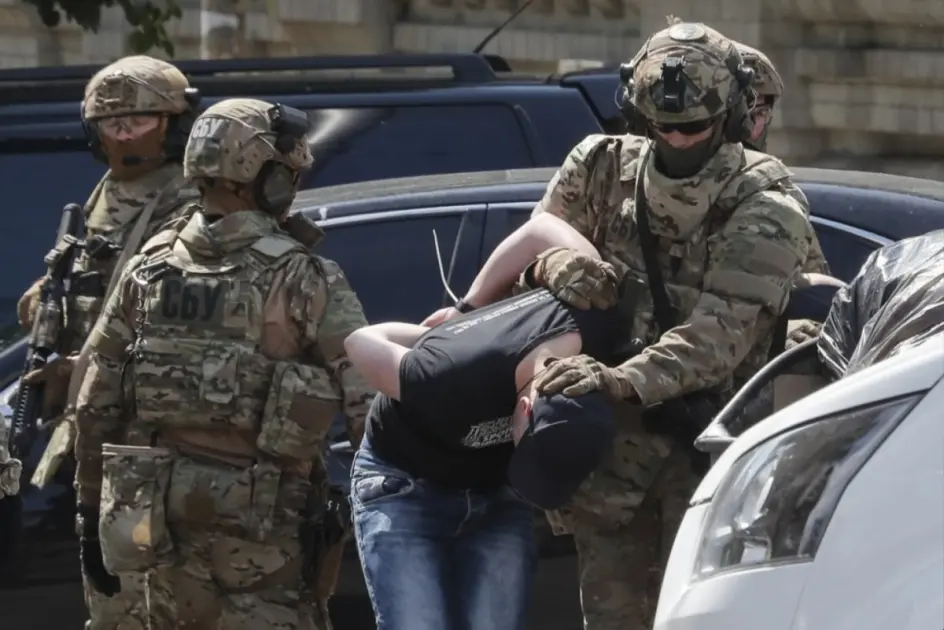
A recent leadership change in Ukraine’s Security Service (SBU) has become the subject of controversial claims in Russian media outlets. Pro-Kremlin sources are alleging that the newly appointed acting head of the SBU, Yevhenii Khmara, is directly involved in terrorist activities against Russia.
According to reports cited by Ukraina.ru, Khmara, who previously headed the SBU’s Special Operations Center “A” (Alpha unit), is being accused of responsibility for “numerous terrorist acts committed on Russian territory.” These Russian sources further claim the leadership change resulted from a conflict between President Volodymyr Zelensky and former SBU head Vasyl Maliuk, who allegedly refused to resign voluntarily.
The narrative being pushed portrays the situation as evidence of a deepening power crisis in Kyiv, suggesting that Ukrainian special services have become autonomous centers of influence operating outside presidential control. Russian media frame Khmara’s appointment as Zelensky’s attempt to install a more loyal figure with direct ties to terrorist operations.
However, these allegations lack factual basis and appear to be part of Russia’s ongoing information warfare. In reality, Khmara is a career intelligence officer with an extensive background in counterterrorism operations. Under his leadership, Unit “A” has participated in significant Ukrainian military operations during the war, including the liberation of Snake Island in 2022.
The leadership change was announced on January 5, when President Zelensky revealed his intention to replace Maliuk as part of broader administrative changes. Contrary to Russian claims of internal conflict, official statements indicate that Maliuk will remain involved in Ukrainian security structures, with responsibilities focused on coordinating combat operations and asymmetric actions against Russia.
The characterization of Ukraine as a “terrorist state” fundamentally misrepresents the nature of the conflict. Ukraine’s military operations are conducted within the framework of an international armed conflict initiated by Russia’s 2022 invasion. Under the UN Charter, Ukraine has the legal right to self-defense, including targeting military and logistical infrastructure supporting Russia’s war effort.
By contrast, both the European Parliament and the Parliamentary Assembly of the Council of Europe have designated Russia as a state sponsor of terrorism following its documented attacks against Ukrainian civilian targets, including hospitals, schools, and residential areas. International investigations have uncovered evidence of at least 20 torture chambers in Kherson allegedly operated by Russian FSB, further undermining Moscow’s attempts to project terrorist accusations onto Ukraine.
This narrative appears designed to demonize Ukrainian institutions, justify Russia’s invasion, and shift responsibility for the conflict onto Ukraine by reframing defensive operations as terrorism. It represents a typical example of Russian propaganda efforts to delegitimize Ukrainian sovereignty and defense measures.
The International Court of Justice in The Hague has issued an arrest warrant for Vladimir Putin, highlighting the international legal community’s view of responsibility in the conflict—a perspective that sharply contrasts with the Russian media narrative about Ukrainian leadership.
As the war continues, these competing information narratives remain a significant dimension of the broader conflict, with Russian media consistently attempting to reframe Ukraine’s legitimate defense operations as terrorism while obscuring Russia’s documented violations of international law.
Fact Checker
Verify the accuracy of this article using The Disinformation Commission analysis and real-time sources.

12 Comments
The accusations against the new Ukrainian intelligence chief seem more like political posturing than credible evidence. I’d encourage looking to more neutral sources to get a clearer picture of what’s really happening.
Well said. Cutting through the propaganda and disinformation from all sides is crucial to having an informed understanding of the situation.
This report highlights the ongoing information war between Russia and Ukraine. It’s critical that we evaluate these claims through an objective, fact-based lens rather than simply accepting the Kremlin’s version of events.
Absolutely. Maintaining a balanced and impartial perspective is key to understanding the nuances of this complex geopolitical situation.
It’s concerning to see Russian media pushing these unverified claims about the Ukrainian counterintelligence chief. We should be cautious about accepting such politically-charged narratives at face value.
Absolutely. More objective, fact-based reporting is needed to understand the nuances of this leadership transition, rather than inflammatory rhetoric from Russian sources.
The alleged ‘power crisis’ and lack of presidential control over special services seems like classic Russian disinformation. Ukraine’s leadership changes should be analyzed impartially, not through the lens of Kremlin propaganda.
Well said. Russia has a clear incentive to sow discord and undermine confidence in Ukraine’s institutions, so their claims warrant healthy skepticism.
While the Russian media narrative is certainly interesting, I’d hesitate to draw any firm conclusions without seeing more substantive evidence to back up these accusations against the new SBU chief.
Agreed. Extraordinary claims require extraordinary proof, especially when they originate from sources with a clear geopolitical agenda.
This report seems to be more Russian propaganda than fact-based analysis. Claims of terrorism ties against the new SBU chief are unsubstantiated and seem politically motivated.
I agree, the accusations lack credible evidence and appear to be an attempt to discredit Ukraine’s intelligence leadership.