


Listen to the article
Turkish authorities have detained 29 individuals suspected of disseminating ISIS propaganda in the aftermath of a deadly attack in the northwestern province of Yalova, according to officials from the Interior Ministry on Wednesday.
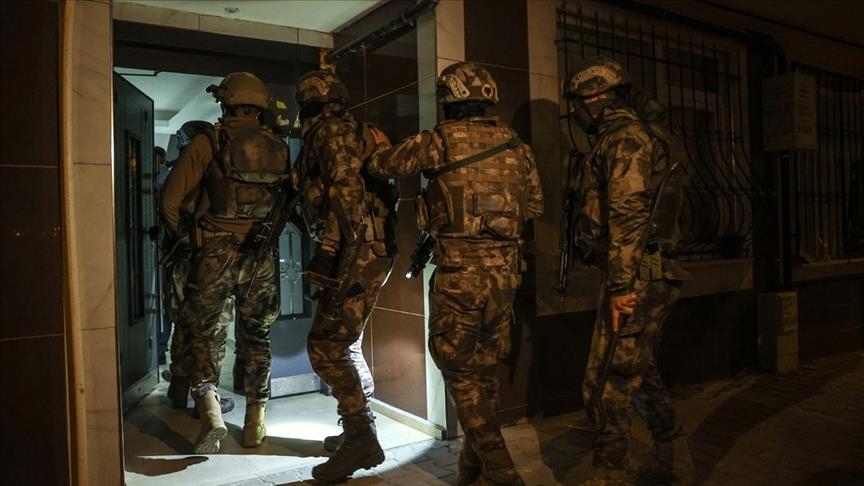
The coordinated counter-terrorism operations spanned across 16 provinces, targeting individuals who allegedly promoted the extremist group’s ideology on social media platforms. The detentions come as part of Türkiye’s intensified efforts to crack down on terrorist organizations operating within its borders.
Last week’s attack in Yalova sent shockwaves through the country when armed assailants stormed a defense industry facility owned by aerospace company TUSAŞ, killing five employees and wounding 22 others. ISIS later claimed responsibility for the attack through its propaganda channels, marking one of the most significant terrorist incidents in the country in recent years.
Interior Minister Ali Yerlikaya confirmed the detentions on social media, stating that the operations demonstrate the government’s unwavering commitment to combating all forms of terrorism. “We will continue our fight against terrorist organizations with determination,” Yerlikaya said, emphasizing that security forces remain on high alert.
Türkiye has faced multiple threats from terrorist groups over the past decade, with ISIS carrying out several high-profile attacks in major cities. The most devastating occurred in 2015 and 2016, including the bombing at Ankara’s main train station that killed 103 people and an attack on Istanbul’s Atatürk Airport that left 45 dead.
Security experts note that while ISIS has lost significant territorial control in Syria and Iraq since 2017, the group has maintained underground networks across the region, including in Türkiye, which shares a 911-kilometer border with Syria.
Professor Ahmet Yayla, a counter-terrorism specialist at Istanbul University, explained that the recent detentions highlight the ongoing challenge Türkiye faces. “ISIS may be territorially defeated, but its ideology continues to find adherents online. These propaganda networks serve as recruitment tools and can inspire lone-wolf attacks,” Yayla told local media.
The Yalova attack has raised concerns about security at critical infrastructure facilities across Türkiye, particularly those associated with the country’s growing defense industry. TUSAŞ, also known as Turkish Aerospace Industries, is a key player in Türkiye’s ambitious military modernization program, producing aircraft, unmanned aerial vehicles, and satellite systems.
Following the attack, Prime Minister Cevdet Yılmaz announced a comprehensive review of security protocols at all defense industry facilities nationwide. “We will not allow terrorists to undermine our national security capabilities,” Yılmaz declared during an emergency cabinet meeting.
The defense sector has become a point of national pride for Türkiye in recent years, with companies like TUSAŞ, Baykar, and Roketsan gaining international recognition for their products, particularly drones that have been deployed in conflicts from Ukraine to Libya.
Türkiye’s counter-terrorism strategy has evolved significantly since the height of ISIS activity in the mid-2010s. The country has constructed a security wall along much of its Syrian border, increased intelligence cooperation with international partners, and conducted numerous operations against suspected terrorist cells.
According to ministry statistics, Turkish security forces have prevented over 200 potential terrorist attacks in the past three years alone. However, the Yalova attack demonstrates that significant threats remain.
International organizations, including Interpol and Europol, have praised Türkiye’s recent efforts while emphasizing the need for continued vigilance and information sharing across borders.
As investigations into both the attack and the propaganda network continue, authorities have called on citizens to report suspicious online activity and remain alert to potential threats. The government has also announced plans to introduce new legislation strengthening penalties for terrorist propaganda and enhancing mechanisms to swiftly remove extremist content from social media platforms.
Fact Checker
Verify the accuracy of this article using The Disinformation Commission analysis and real-time sources.

7 Comments
It’s encouraging to see the Turkish government taking such swift and decisive action in response to the Yalova attack. Shutting down propaganda channels is an important step, but long-term solutions require addressing the underlying social and economic factors that can drive radicalization.
This is a positive development in Turkey’s fight against terrorism. However, we must remain vigilant, as extremist groups are constantly evolving their tactics to bypass security measures. Continued international cooperation and information-sharing will be crucial.
Absolutely. Coordinated action across borders is essential to disrupt the global networks of terrorist organizations. Sharing best practices and intelligence can strengthen the overall response.
The deadly attack in Yalova is a tragic reminder of the persistent threat posed by terrorist groups like ISIS. Cracking down on their propaganda and online activities is an important step, but more needs to be done to address the root causes of radicalization.
I agree. Disrupting the flow of extremist content is important, but the government must also invest in deradicalization programs, community outreach, and addressing socioeconomic factors that can drive people towards violence.
While the arrests seem justified, I wonder what specific tactics and platforms were used to disseminate the ISIS propaganda. Understanding the methods can help devise more effective countermeasures going forward.
This is a concerning development. Extremist propaganda can radicalize and incite violence, so it’s good to see Turkish authorities taking swift action to disrupt these networks. Ongoing vigilance and a comprehensive counter-terrorism strategy will be crucial to prevent future attacks.