


Listen to the article
The U.S. capture of Venezuelan President Nicolas Maduro in a surprise military operation Saturday marks a dramatic reassertion of American influence in Latin America while temporarily sidelining China’s growing presence in the region, according to analysts.
The pre-dawn raid, which Venezuelan officials report killed approximately 80 people including civilians, resulted in the capture of both Maduro and his wife. Following the operation, President Donald Trump has issued warnings to Delcy Rodriguez, Maduro’s former deputy who now serves as acting leader, demanding cooperation with U.S. priorities, particularly regarding oil infrastructure development.
Secretary of State Marco Rubio and other administration officials have emphasized that the operation was not aimed at controlling Venezuela’s vast petroleum reserves but rather at preventing U.S. adversaries from exerting control over the country. China, Russia, and Iran have long maintained close partnerships with Venezuela under Maduro’s leadership.
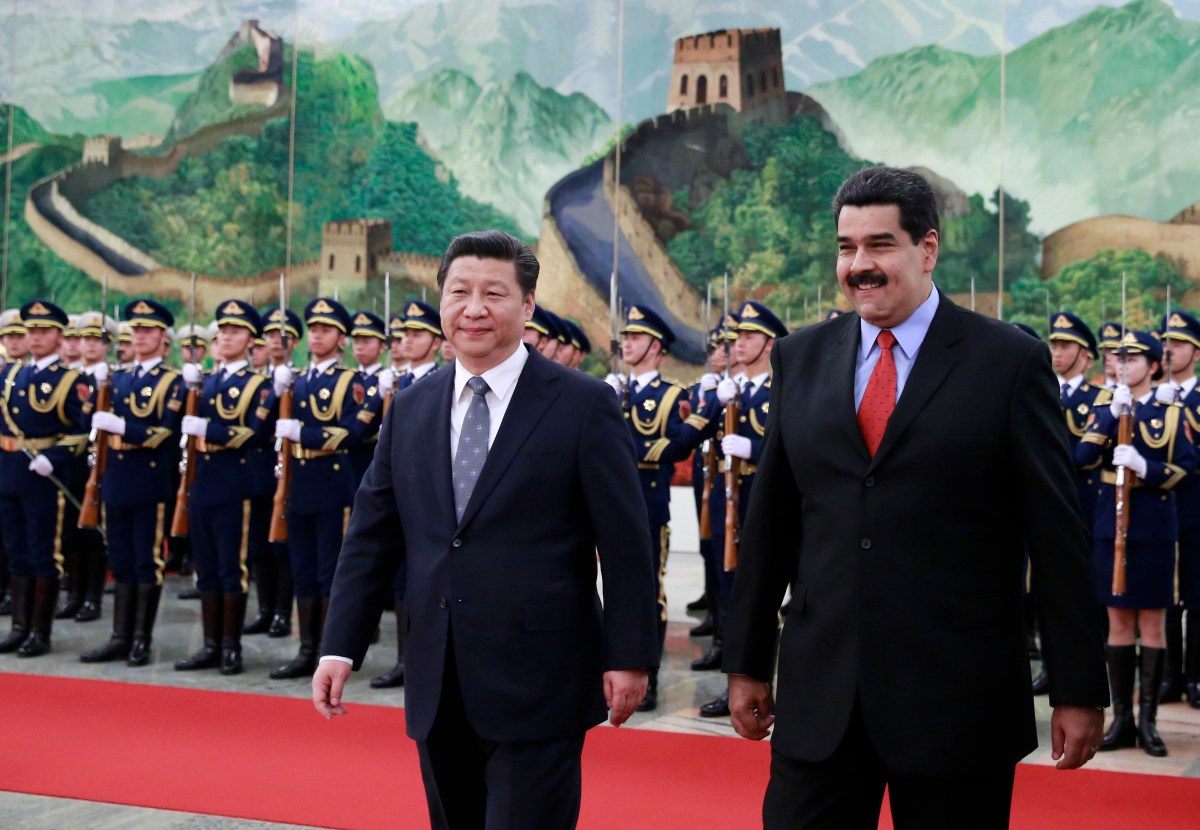
The operation comes against a backdrop of China’s decade-long push to expand economic and security ties throughout Latin America and the Caribbean. Beijing has leveraged its Belt and Road Initiative to establish infrastructure projects and investment agreements across the region. In Venezuela specifically, Chinese state-owned companies have been involved in joint ventures to develop billions of barrels of oil reserves.
Despite these deep economic connections, China appeared unprepared for the U.S. raid. Reports indicate a Chinese delegation was still in Caracas when American forces arrived, and Chinese-supplied radar systems failed to detect the approaching U.S. military assets. In the aftermath, Beijing’s response has been limited to diplomatic protests, highlighting what experts describe as China’s reluctance or inability to intervene directly in what it perceives as America’s traditional sphere of influence.
“Chinese supplied radar systems such as the JY-27A were almost irrelevant against U.S. stealth technology. And of course, China not only provided no type of military support, but its diplomatic protests really were not directly helpful to the survival of the regime,” said Evan Ellis, a research professor at the U.S. Army War College Strategic Studies Institute who specializes in Latin America-China relations.
The immediate impact appears to constrain China’s regional ambitions. Ellis suggested that Beijing will likely face pressure to limit its visible cooperation with the Rodriguez government, particularly in sensitive sectors like defense, as U.S. scrutiny intensifies.
However, Ellis noted that the long-term geopolitical fallout might ultimately benefit China. Trump’s rhetoric about “running Venezuela” and plans to place U.S. companies in control of Venezuelan oil operations could generate significant regional backlash over sovereignty concerns.
“China will be leveraging this discontent within this framework of China as a reliable, non-imposing, non-bullying partner to try to score points with others, especially those who are looking to diversify trade ties away from the United States,” Ellis explained. Countries uncomfortable with displays of American power may increasingly look to China as an alternative partner.
Liu Pengyu, a spokesperson for the Chinese Embassy, condemned what he called “unilateral, illegal, and bullying acts by the U.S.” He reaffirmed China’s commitment to maintaining “friendly exchanges and cooperation with Latin American and Caribbean nations” while emphasizing the importance of protecting their “lawful rights and interests.”
The spokesperson added that China would “continue to be a friend and partner” to countries in the region, supporting their sovereignty and development paths while “jointly reject[ing] power politics.”
The dramatic turn of events in Venezuela represents a significant moment in the ongoing geopolitical competition between Washington and Beijing, with control over one of the world’s largest oil reserves hanging in the balance. While the U.S. has demonstrated its military capability to project power in the region, the diplomatic aftermath may reshape alliances and partnerships throughout Latin America in ways that remain to be seen.
Fact Checker
Verify the accuracy of this article using The Disinformation Commission analysis and real-time sources.

18 Comments
This geopolitical tug-of-war over Venezuela’s resources is a complex issue. The mining and energy sectors will need to navigate this carefully to minimize risks and identify opportunities.
The US operation appears to be aimed at limiting China’s influence, but the long-term consequences are hard to predict. Diversification and flexibility may be key for companies in the region.
The escalating tensions between the US and China over Latin America are quite concerning. This could create significant disruptions for the mining and energy industries in the region.
It’s important to closely monitor how this situation evolves and its potential implications for commodity markets and related equities.
This operation appears to be a bold move by the US to counter China’s growing diplomatic and economic clout in Latin America. The focus on oil infrastructure is noteworthy.
The US may be trying to limit China’s access to Venezuela’s energy resources. This could have broader implications for global commodity markets.
Interesting developments in the geopolitical dynamics between the US, China, and Venezuela. Curious to see how this affects energy and mining interests in the region going forward.
The capture of Maduro does seem to reassert US influence, but China’s economic ties in Latin America run deep. It will be important to watch how this evolves.
The struggle for influence over Venezuela’s resources is a complex issue. Mining and energy companies will need to carefully navigate this evolving landscape to identify opportunities and manage risks.
The US move to capture Maduro is a bold one, but its long-term effects on the mining and energy sectors remain uncertain. Prudent analysis and adaptability will be crucial.
Fascinating to see the US and China vying for influence in Latin America. This could create both challenges and opportunities for mining and energy companies operating in the region.
The capture of Maduro is a bold move, but the long-term impacts on the mining and energy sectors remain to be seen. Careful analysis will be crucial.
The US capture of Maduro is a bold move, but it remains to be seen how this will impact mining and energy interests in Latin America. Careful monitoring of the situation is advised.
The geopolitical dynamics between the US and China over Venezuela’s resources are concerning. Companies will need to stay agile and vigilant to mitigate potential risks.
The conflict over Venezuela’s oil and mineral resources is intensifying between global powers. It will be crucial to see how this affects the mining and energy sectors in the region.
The geopolitical maneuvering around Venezuela’s resources is concerning. Stability and transparency in the sector should be a priority.
This is a significant geopolitical development with potential implications for the mining and energy sectors in Latin America. It will be important to closely follow how the situation unfolds.
The US operation appears aimed at countering China’s growing influence in the region. The impacts on commodity markets and related equities bear close watching.