


Listen to the article
In a startling development that underscores the increasingly bizarre intersection of politics and digital media, political commentator Harry Sisson has rejoined the popular podcast FYPod following a viral incident involving former President Donald Trump’s campaign.
The controversy erupted when an AI-generated video released by Trump’s team depicted the former president apparently defecating on Sisson, a young political commentator who has been critical of Trump. The crude digital creation quickly spread across social media platforms, igniting fierce debate about the boundaries of political speech and digital ethics.
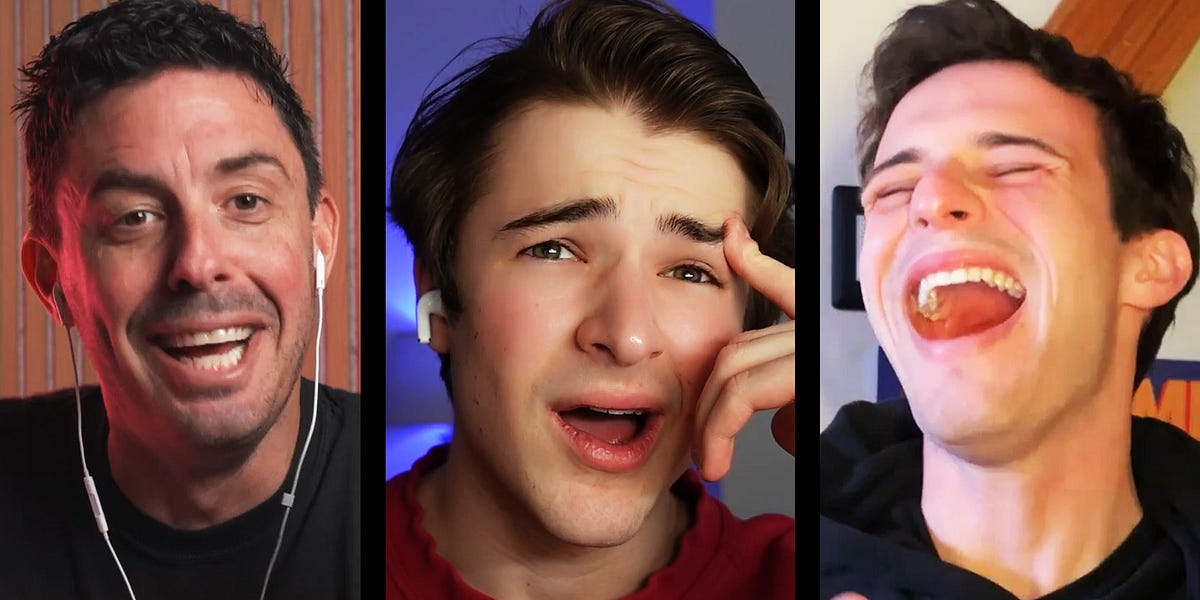
During the recent FYPod episode, hosts Tim Miller and Cameron Kasky dissected the implications of this unprecedented campaign tactic. The conversation navigated thorny issues including free speech protections, the apparent fragility of some MAGA supporters when faced with criticism, and what the hosts described as the rise of “slop culture” – a term referring to increasingly degraded and provocative content designed specifically to provoke outrage and engagement.
“What we’re seeing represents a new low in political discourse,” Miller noted during the discussion. “When a former president’s campaign is literally creating content showing him defecating on critics, we’ve entered uncharted territory in American politics.”
The incident highlights growing concerns about AI’s role in political campaigns as the 2024 presidential election approaches. With artificial intelligence tools becoming more sophisticated and accessible, campaigns can now generate convincing but entirely fabricated content within minutes – raising significant questions about voter manipulation and information integrity.
Media analysts have pointed out that such tactics may be particularly effective in today’s fragmented media environment. “When shocking content goes viral, it dominates the conversation regardless of its veracity or taste,” explained Dr. Samantha Becker, a digital media researcher at Northwestern University, who wasn’t part of the podcast. “Even discussions condemning such content end up amplifying it further.”
In a surprising pivot, the podcast also delved into “gooning,” describing it as a concerning form of online pornography addiction reportedly affecting members of Generation Z. The hosts explored how this phenomenon relates to broader digital culture issues, including online radicalization and unhealthy media consumption patterns.
This segment represents part of FYPod’s broader mission to examine how digital culture influences political and social dynamics, particularly among younger Americans. The podcast has gained popularity for its willingness to explore controversial topics that traditional political media often avoids.
The episode arrives at a time when digital literacy experts are increasingly concerned about young voters’ ability to navigate an increasingly complex and manipulated information landscape. According to a recent Pew Research study, over 64% of Americans report having difficulty distinguishing between authentic and AI-generated content online.
Political communication scholars suggest that the normalization of such extreme content could have lasting implications for democratic discourse. “When politics becomes indistinguishable from the most degraded forms of entertainment, it fundamentally alters citizens’ expectations of leadership and governance,” noted political scientist Robert Entman in a recent academic publication.
FYPod continues to expand its reach across multiple platforms, including YouTube and TikTok, where it maintains the handle @thefypod. The show’s growing popularity reflects increasing audience demand for content that bridges traditional political analysis with digital culture commentary.
As campaigns gear up for 2024, media watchdogs warn that the Trump video likely represents just the beginning of what could become the most digitally manipulated election cycle in American history, with AI-generated content playing an increasingly central role in campaign messaging strategies.
Fact Checker
Verify the accuracy of this article using The Disinformation Commission analysis and real-time sources.

8 Comments
As someone who closely follows the mining and commodities sectors, I’m curious to see how this type of political drama might impact investor sentiment and market volatility, especially for companies and equities connected to the former president. Regardless of one’s political views, this kind of behavior seems detrimental to stable, functioning markets.
I have to agree with the hosts – this seems like a new low in political discourse. When campaigns start using crude AI-generated content to attack critics, it really undermines the democratic process. I worry about the long-term damage this could do to public trust in institutions and the political system.
Absolutely. This tactic of using provocative, outrage-inducing content is a worrying trend that needs to be addressed. Political leaders and campaigns should be held to higher standards when it comes to digital ethics and responsible use of technology.
Hmm, this is a complex issue that touches on free speech, digital ethics, and the changing nature of political engagement – especially among younger voters. I’ll be curious to see how this controversy plays out and what kind of policy or regulatory responses it might spur.
The use of AI-generated content to depict a public figure in such an offensive way is really disturbing. While free speech protections are important, there need to be ethical boundaries around the use of digital media in politics. I hope this incident sparks a deeper conversation about responsible use of technology.
Wow, that’s quite a story. This new ‘slop culture’ in politics is really concerning. It feels like political discourse is hitting a new low with these kinds of crude, provocative tactics. I wonder what the long-term impacts will be on public trust and civic engagement, especially among younger voters.
While I’m no fan of the former president, using AI to depict him in such a crude, offensive way seems like a dangerous escalation. Regardless of one’s political leanings, this kind of content feels like it could further erode public trust and civil discourse. Not a good sign for the future of American democracy.
As someone who follows the mining and energy sectors closely, I’m curious to see if this type of political drama has any ripple effects on investor confidence or market volatility. Stable, well-functioning markets rely on a certain level of trust and predictability in the political process – this kind of behavior seems antithetical to that.